
Balaur
Debated (Carnivore, Omnivore, or Herbivore)·Late Cretaceous·Romania·Facultative Bipedal (adapted for strength and stability, possibly less for speed)
Balaur bondoc was a species of paravian theropod dinosaur that lived in what is now Romania during the Late Cretaceous period, approximately 70 million years ago. Known for its stocky build and unique double sickle claws, Balaur is thought to have been adapted to an island environment, exhibiting characteristics of island syndrome. Its exact classification remains debated, with some researchers placing it among dromaeosaurids and others considering it a basal avialan.
Key Facts
- ›Lived approximately 70 million years ago during the Late Cretaceous period.
- ›Fossils discovered in Romania, part of the ancient Hațeg Island ecosystem.
- ›Possessed large, retractable sickle claws on both the first and second toes of each foot.
- ›Estimated to be around 1.8–2.5 meters (5.9–8.2 ft) in length and weigh about 15 kg (33 lb).
- ›Exhibited characteristics of island syndrome, including reduced flight capacity and increased robustness.
- ›Its diet is debated, with possibilities ranging from carnivorous to omnivorous or herbivorous.

- Estimated length: 1.8–2.5 m
- Estimated weight: 15 kg
- Possessed large, retractable sickle claws on both the first and second toes of each foot.
- Short and stocky feet and legs.
- Large muscle attachment areas on the pelvis indicating adaptation for strength.
- Reduced and presumably nonfunctional third finger.
- Extensive fusion of limb bones.
Velociraptor, Adasaurus, Deinonychus, Elopteryx
Europe
About Balaur
Balaur Bondoc
Balaur bondoc was a unique species of paravian theropod dinosaur that inhabited the island ecosystem of what is now Romania during the Late Cretaceous period, approximately 70 million years ago. Its name, meaning "stocky dragon," reflects its robust build and its connection to Romanian folklore. Balaur is distinguished by several unusual anatomical features, particularly its feet, which bore large, retractable sickle claws on both the first and second toes, a trait not commonly seen in its relatives.
Discovery and Naming
The first fossil elements attributed to Balaur bondoc, consisting of small bones from its forelimbs, were discovered in Romania in 1997. However, their unusual morphology initially led to misidentification. A more complete partial skeleton was later unearthed in 2009. The species was formally described in 2010 by Zoltán Csiki, Mátyás Vremir, and Attila Ősi. The genus name, Balaur, is derived from a mythical Romanian dragon, while the species name, bondoc, means "stocky." This nomenclature highlights both its appearance and its potential connection to mythical creatures, possibly hinting at its avian ancestry.
Description and Paleobiology
Balaur bondoc is estimated to have been about 1.8–2.5 meters (5.9–8.2 feet) long and weighed around 15 kilograms (33 pounds). Its bones were notably shorter and heavier than those of other basal paravians, and it possessed a reduced, possibly nonfunctional third finger. The fusion of limb bones, such as the wrist and ankle bones, is characteristic of avian evolution. Balaur's feet were short and stocky, with large muscle attachment areas on the pelvis suggesting it was adapted for strength and stability rather than speed, perhaps making it more of a "kickboxer" than a "sprinter" compared to its relatives. The precise diet of Balaur remains a subject of scientific discussion, with possibilities ranging from carnivorous to omnivorous or herbivorous, influenced by its unique morphology and island habitat.
Island Syndrome and Classification
Balaur inhabited Hațeg Island, a subtropical landmass that was part of the European archipelago within the Tethys Sea. This isolation led to Balaur exhibiting characteristics of "island syndrome," a phenomenon where isolated species develop distinct traits compared to their mainland counterparts. These traits often include reduced flight capacity, a characteristic also observed in extant island birds like the ratites and extinct species such as the moa. The exact phylogenetic placement of Balaur has been debated, with some analyses suggesting it was a dromaeosaurid closely related to Velociraptor, while more recent studies propose it was a basal avialan, more closely related to modern birds. Some researchers also suggest that Balaur might be a junior synonym of another European theropod, Elopteryx.
Source: Wikipedia ↗
Frequently Asked Questions
What does the name "Balaur bondoc" mean?
The genus name, Balaur, comes from a Romanian dragon from folklore, and the specific name, bondoc, means "stocky" in Romanian. Together, Balaur bondoc translates to "stocky dragon," referring to its robust musculature compared to related species.
Where were the fossils of Balaur bondoc found?
Fossils of Balaur bondoc were discovered in Romania, specifically in the Densuș-Ciula and Sebeș Formations. These formations correspond to the ancient Hațeg Island, a subtropical landmass within the Tethys sea.
What was unique about Balaur's feet?
Balaur possessed large, retractable sickle claws on both the first and second toes of each foot, unlike most early paravians which typically had only one large sickle claw on the second toe. Its feet were also described as short and stocky.
What is "island syndrome" and how did it affect Balaur?
Island syndrome describes the unique adaptations and morphological changes seen in species isolated on islands. For Balaur, this likely contributed to its reduced capacity for flight and its robust, stocky build, mirroring changes seen in other island-dwelling animals.
What did Balaur eat?
The diet of Balaur is a subject of ongoing debate among scientists. While its close relation to Velociraptor initially suggested a carnivorous diet, its unique morphology and island environment have led to speculation that it might have been omnivorous or even herbivorous.
How large was Balaur bondoc?
Based on recovered skeletal elements, Balaur bondoc is estimated to have had an overall length of around 1.8 to 2.5 meters (5.9 to 8.2 feet) and a body mass of approximately 15 kilograms (33 pounds).
Is Balaur bondoc considered a bird or a dinosaur?
Balaur bondoc is classified as a theropod dinosaur, specifically a paravian. Some researchers suggest it may have been a basal avialan, a group that includes modern birds, placing it very close to the evolutionary lineage of birds.
Related Dinosaur species
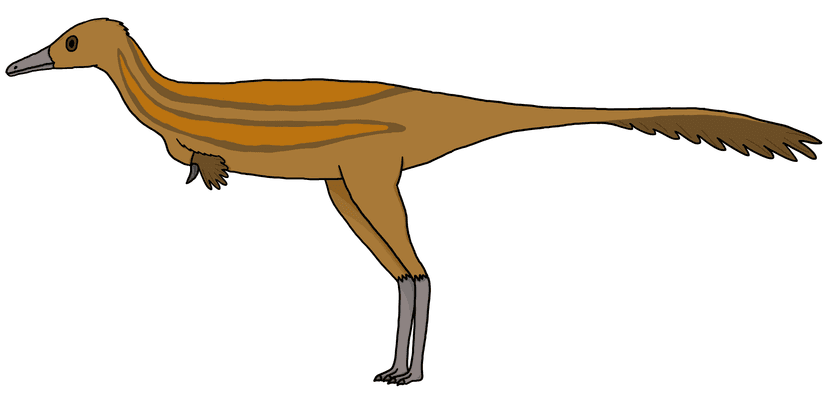
Bradycneme
Bradycneme is a genus of theropod dinosaur from the Late Cretaceous period of Romania. The type species, Bradycneme draculae, is known from a partial lower leg. Initially described as a giant owl, its remains have since been reassessed and are now generally considered to belong to a small theropod dinosaur.

Abelisaurus
Abelisaurus was a genus of predatory theropod dinosaur that lived in South America during the Late Cretaceous Period. Known primarily from a partial skull, it is estimated to have been a bipedal carnivore reaching around 7.4 meters in length.

Acheroraptor
Acheroraptor is an extinct genus of dromaeosaurid theropod dinosaur that lived in North America during the Late Cretaceous period. It is known from fossil remains discovered in the Hell Creek Formation of Montana, United States. Acheroraptor is notable for being one of the geologically youngest dromaeosaurids, existing just before the Cretaceous-Paleogene extinction event.