
Baryonyx
Piscivore·Early Cretaceous·Surrey, England·Bipedal
Baryonyx is a genus of theropod dinosaur that lived during the Early Cretaceous period, approximately 130 to 125 million years ago. Its name, meaning "heavy claw," refers to the exceptionally large claw on its first finger. Baryonyx is known for its piscivorous (fish-eating) diet, with evidence of fish scales found in its stomach region.
Key Facts
- ›Lived during the Barremian stage of the Early Cretaceous period (130-125 million years ago).
- ›Named for its large claw on the first finger, measuring up to 31 cm (12 inches).
- ›Estimated to be between 7.5 and 10 meters (25-33 feet) long and weigh 1.2 to 2 metric tons.
- ›Possessed a long, low, and narrow snout with a rosette-shaped tip, similar to a gharial.
- ›Primarily a fish-eater (piscivorous), but may have also scavenged or hunted larger prey.
- ›First theropod dinosaur scientifically demonstrated to be piscivorous.

- Estimated length: 7.5-10 meters
- Estimated weight: 1.2-2 metric tons
- Long, low, and narrow snout with a rosette-shaped tip
- Large, curved claw on the first finger
- Finely serrated, conical teeth
- Triangular crest on nasal bones
- S-shaped neck
- Possible hump or ridge along the back
Suchosaurus, Suchomimus, Cristatusaurus, Iberospinus, Vallibonavenatrix, Protathlitis, Ceratosuchops, Riparovenator
United Kingdom, Iberia
About Baryonyx
Baryonyx is a genus of theropod dinosaur that roamed the Earth during the Barremian stage of the Early Cretaceous period, roughly 130 to 125 million years ago. Its discovery in 1983 in Surrey, England, yielded one of the most complete theropod skeletons found in the United Kingdom, becoming the holotype specimen for Baryonyx walkeri. The creature's name, derived from Greek for "heavy claw," highlights its most striking feature: an exceptionally large, curved claw on its first finger, measuring up to 31 centimeters (12 inches) in length.
Physical Characteristics and Diet
Baryonyx is estimated to have reached lengths of 7.5 to 10 meters (25 to 33 feet) and weighed between 1.2 and 2 metric tons. It possessed a distinctive long, low, and narrow snout, comparable to that of a modern gharial, which ended in a rosette-shaped expansion. This skull morphology, along with the presence of finely serrated conical teeth, contributed to its specialized diet. Evidence from the holotype specimen, including fish scales in the stomach region, strongly indicates that Baryonyx was piscivorous, meaning it primarily ate fish. However, the discovery of juvenile iguanodontid bones suggests it may have also hunted larger prey or scavenged.
Habitat and Locomotion
Baryonyx is believed to have inhabited fluvial environments, such as river systems. It coexisted with a variety of other dinosaurs, including ornithopods and sauropods, as well as pterosaurs, crocodiles, and turtles. While classified as a theropod, Baryonyx is considered to have been bipedal, moving on its hind limbs. Its robust forelimbs, equipped with the formidable claws, were likely crucial tools for catching and processing its prey in its watery habitat.
Taxonomy and Discoveries
Initially, the affinities of Baryonyx were unclear, but it is now recognized as a member of the Spinosauridae family. Over time, other fossil remains from the United Kingdom and the Iberian Peninsula have been attributed to Baryonyx, though many have since been reassigned to different genera as research has progressed and new taxa have been described. The genus name Baryonyx was formally established by paleontologists Alan J. Charig and Angela C. Milner in 1986, honoring both the dinosaur's prominent claw and its discoverer, William J. Walker. The holotype specimen remains a significant contribution to our understanding of spinosaurid dinosaurs.
Source: Wikipedia ↗
Frequently Asked Questions
What does the name Baryonyx mean?
The name Baryonyx comes from Ancient Greek words: 'barús' meaning 'heavy' or 'strong,' and 'ónux' meaning 'claw.' This refers to the dinosaur's notably large claw on its first finger.
When and where did Baryonyx live?
Baryonyx lived during the Barremian stage of the Early Cretaceous period, approximately 130 to 125 million years ago. Its fossils have been found in what is now the United Kingdom and Iberia.
What did Baryonyx eat?
Baryonyx is primarily known to be piscivorous, meaning it ate fish, as evidenced by fish scales found in the holotype specimen's stomach. It may have also been an active predator of larger prey or a scavenger.
How large was Baryonyx?
Estimates suggest Baryonyx was between 7.5 and 10 meters (25 to 33 feet) long and weighed between 1.2 and 2 metric tons. The holotype specimen may not have been fully grown, indicating adults could have been larger.
What was unique about Baryonyx's physical features?
Baryonyx had a distinctive long, low, and narrow snout that expanded into a rosette-like tip, similar to a gharial. It also possessed a very large, curved claw on its first finger, which was its namesake.
Related Dinosaur species
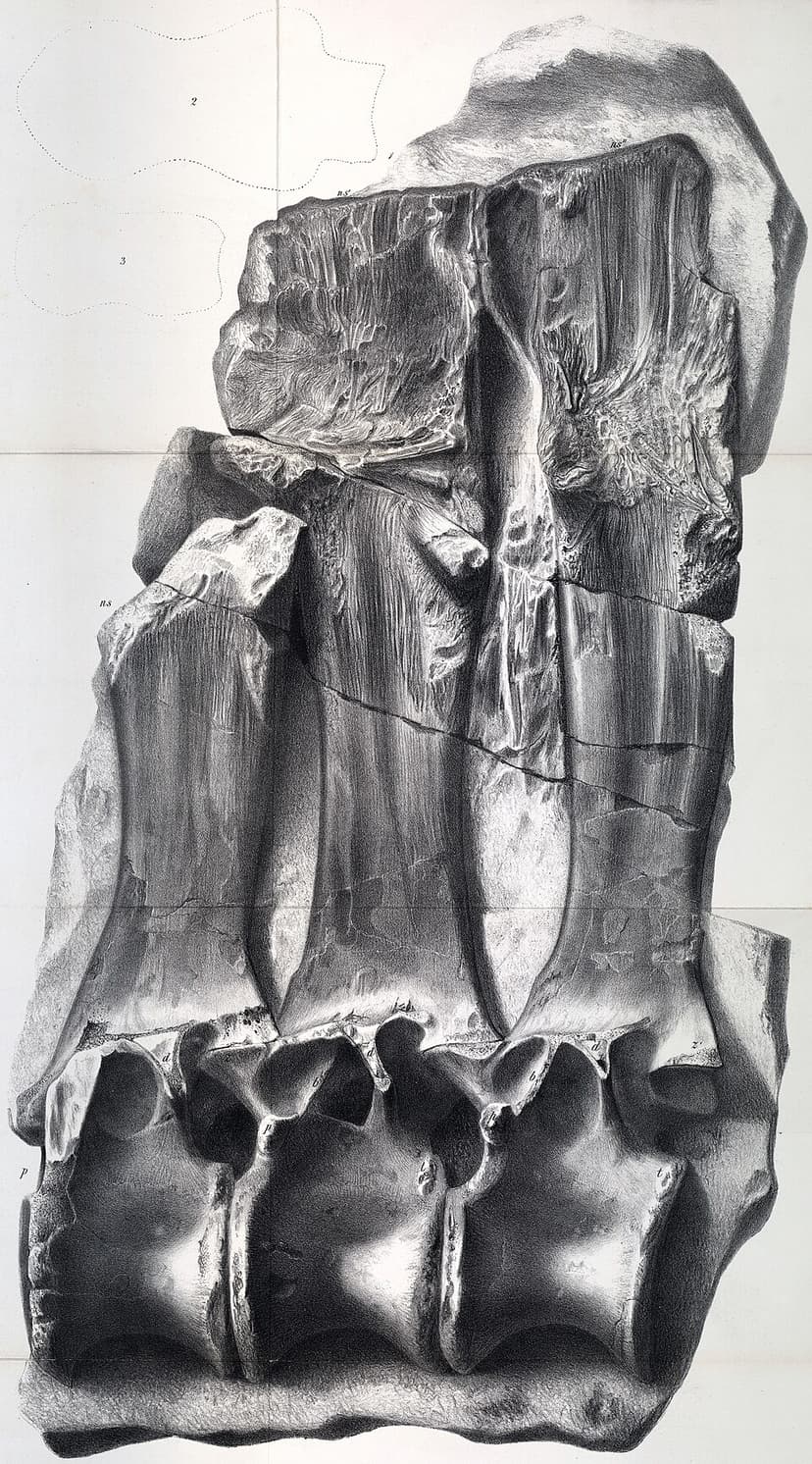
Altispinax
Altispinax was a large predatory theropod dinosaur that lived during the Early Cretaceous period in what is now England. It is known from a series of distinctive vertebrae featuring unusually tall spines, which gave the dinosaur its name. The classification and naming history of Altispinax have been complex, with several genera and species proposed over time.

Aratasaurus
Aratasaurus museunacionali is an extinct genus of basal coelurosaurian theropod dinosaur discovered in Brazil. Known from a partial right leg, it is the only tetrapod fossil found in the lower levels of the Romualdo Formation, dating to the Early Cretaceous period. The dinosaur's name commemorates its discovery during the preparation of fossils for the National Museum of Brazil, which was later damaged by a fire.

Aristosuchus
Aristosuchus was a small, bipedal, carnivorous theropod dinosaur that lived during the Early Cretaceous period. Its fossils were discovered on the Isle of Wight, England. Initially misidentified, it was later recognized as a distinct genus and is now generally placed within the Compsognathidae family.