
Batyrosaurus
Batyrosaurus is an extinct genus of herbivorous dinosaur from the Late Cretaceous period of Kazakhstan. Its single species, Batyrosaurus rozhdestvenskyi, was a medium-sized hadrosauroid, potentially representing the same taxon as the doubtful Arstanosaurus akkurganensis. The genus name honors Kazakh warrior heroes, reflecting its basal position in the evolutionary tree of duck-billed dinosaurs.
Key Facts
- ›Batyrosaurus lived during the Late Cretaceous period, specifically the Santonian to Campanian stages.
- ›Fossils were discovered in the Bostobe Formation of central Kazakhstan.
- ›It was a medium-sized herbivorous dinosaur, estimated to be between five to six meters in length.
- ›Distinctive features include bony flaps formed by parietal bones and elongated frontal bones.
- ›Batyrosaurus occupied a basal position within the Hadrosauroidea, above Altirhinus and below Probactrosaurus.
- ›It is considered one of the youngest known non-hadrosaurid hadrosauroids.
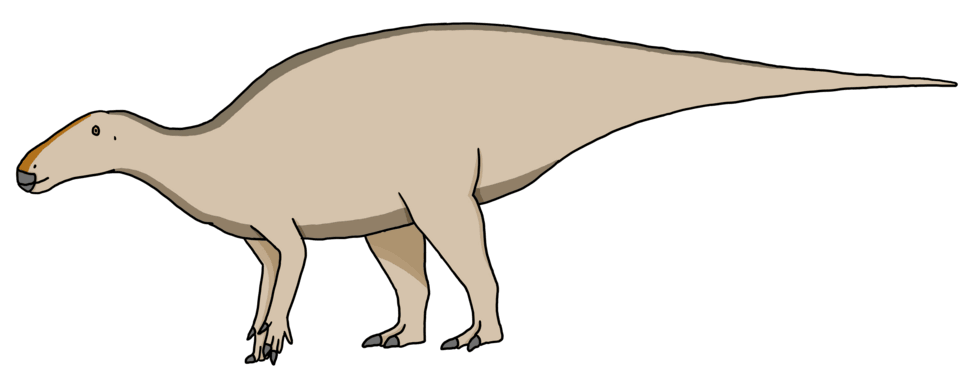
- Medium-sized hadrosauroid
- Partial skull and lower jaws
- Sixty individual teeth
- Sterna, right humerus, left radius, metacarpals, and phalanges
- About four centimeter long thumb claw
- Parietal bones form bony flaps at the rear
- Elongated frontal bones
- Deep horizontal trough on the outer side of the jugal's front branch
- Joint surface of the surangular pierced by a foramen
Altirhinus, Probactrosaurus, Arstanosaurus Akkurganensis
Asia
About Batyrosaurus
Batyrosaurus is an extinct genus of herbivorous dinosaur belonging to the basal hadrosauroid group. This dinosaur is known from the Late Cretaceous period, with fossils discovered in the Bostobe Formation of central Kazakhstan. The genus contains a single species, Batyrosaurus rozhdestvenskyi. The name "Batyrosaurus" is derived from the "Batyr," referring to Kazakh warrior heroes, and the species name honors Anatoly Konstantinovich Rozhdestvensky.
Discovery and Classification
The holotype specimen, consisting of a partial skeleton including a partial skull, lower jaws, sixty teeth, and limb bones, was found near Akkurgan. This fossil dates to the Santonian-Campanian stages of the Late Cretaceous, approximately eighty-four million years ago. In 2012, Pascal Godefroit and colleagues formally named and described Batyrosaurus rozhdestvenskyi. The researchers also noted the possibility that Batyrosaurus might be the same taxon as Arstanosaurus akkurganensis, another dinosaur found in the same formation, though Arstanosaurus akkurganensis is considered a doubtful taxon (nomen dubium).
Physical Characteristics and Evolutionary Significance
Batyrosaurus was a medium-sized hadrosauroid, with estimated lengths of five to six meters. Several unique derived traits, or autapomorphies, have been identified. These include bony flaps formed by the parietal bones at their rear, which overlap the supraoccipital but do not touch the paraoccipitals and are themselves overlapped by the squamosals. The frontal bones are notably elongated, being about 70% longer than wide. Additionally, the outer side of the front branch of the jugal exhibits a deep horizontal trough below the suture with the lacrimal, and the joint surface of the surangular is pierced by a foramen. Among the discovered material was a thumb claw approximately four centimeters long. A cast of the braincase revealed fine arterial impressions, suggesting it was almost entirely filled by brain tissue.
A cladistic analysis placed Batyrosaurus in a basal position within the Hadrosauroidea, situated above Altirhinus and below Probactrosaurus in the evolutionary lineage. Given that Tethyshadros was classified as a hadrosaurid in the same analysis, Batyrosaurus is recognized as one of the youngest known non-hadrosaurid hadrosauroids. This finding has been interpreted as evidence that hadrosauroids and hadrosaurids originally developed in Asia before migrating to North America.
Source: Wikipedia ↗
Frequently Asked Questions
When did Batyrosaurus live?
Batyrosaurus lived during the Late Cretaceous period. More specifically, its fossils are found in the Bostobe Formation, dating to the Santonian to Campanian stages, approximately eighty-four million years ago.
Where were Batyrosaurus fossils found?
Fossils of Batyrosaurus were discovered near Akkurgan in central Kazakhstan. They come from a layer of the Bostobinskaya Formation.
What did Batyrosaurus eat?
Batyrosaurus is classified as a herbivorous dinosaur. This means its diet consisted primarily of plants.
How large was Batyrosaurus?
Batyrosaurus was a medium-sized hadrosauroid. Estimates place its length at about five to six meters.
What is significant about Batyrosaurus's evolutionary position?
Batyrosaurus occupied a basal position within the Hadrosauroidea, meaning it was an early diverging member of this group. It is considered one of the youngest known non-hadrosaurid hadrosauroids.
Is Batyrosaurus related to Arstanosaurus?
It is possible that Batyrosaurus represents the same dinosaur taxon as Arstanosaurus akkurganensis, as both were found in the same formation. However, Arstanosaurus akkurganensis is considered a doubtful taxon (nomen dubium).
Related Dinosaur species
Aralosaurus
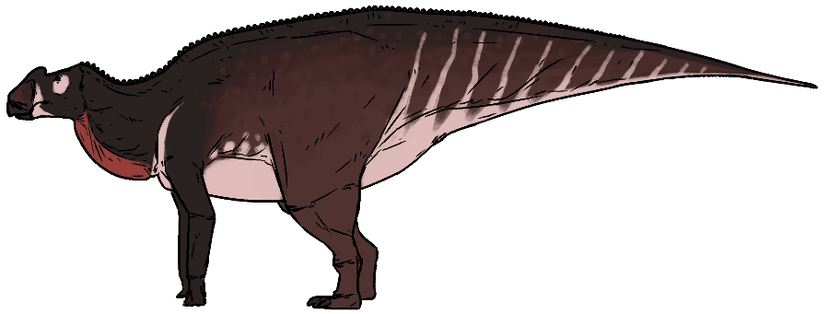
Aralosaurus is a genus of hadrosaurid dinosaur that lived during the Late Cretaceous period in what is now Kazakhstan. Known from a partial skull and post-cranial bones, it is classified as a primitive member of the Lambeosaurinae subfamily. The genus name means "Aral Sea lizard," referencing its discovery location, and the species name tuberiferus refers to a unique outgrowth on its nasal bone.

Arstanosaurus
Arstanosaurus is a genus of hadrosauroid dinosaur known from the Late Cretaceous Bostobe Formation of Kazakhstan. Its fossil record is sparse, consisting primarily of a partial left maxilla and a possibly associated femur, leading to a history of taxonomic confusion. It was once considered a hadrosaurid, then a ceratopsid, and is now regarded as an indeterminate hadrosauroid.

Abditosaurus
Abditosaurus is an extinct genus of titanosaurian sauropod dinosaur that lived during the Late Cretaceous period in what is now Catalonia, Spain. It is known from the most complete titanosaur skeleton ever discovered in Europe, representing a large species that inhabited the Ibero-Armorican Island. Phylogenetic analyses suggest it was related to South American and African saltasaurines, distinguishing it from other European dwarf sauropods.