
Aralosaurus
Aralosaurus is a genus of hadrosaurid dinosaur that lived during the Late Cretaceous period in what is now Kazakhstan. Known from a partial skull and post-cranial bones, it is classified as a primitive member of the Lambeosaurinae subfamily. The genus name means "Aral Sea lizard," referencing its discovery location, and the species name tuberiferus refers to a unique outgrowth on its nasal bone.
Key Facts
- ›Aralosaurus lived during the Late Cretaceous period, approximately 83.6 million years ago.
- ›Fossils were discovered in the Bostobe Formation in Kazakhstan.
- ›It is classified as a primitive lambeosaurine hadrosaurid.
- ›The genus name refers to the Aral Sea, near where it was found.
- ›A unique feature is a hollow bony structure on its nasal bone, though its exact shape and size are unknown.
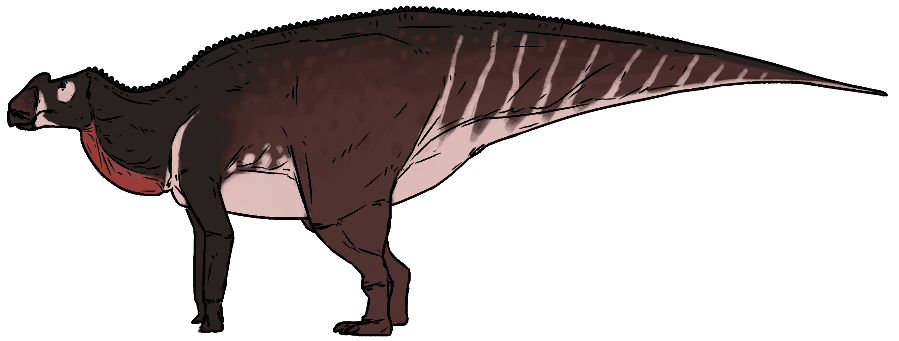
- Estimated skull length of about 65 cm.
- Estimated animal length of about 6.5 meters.
- Possessed a hollow bony structure on the nasal bone that communicated with the respiratory tract.
- Posterior part of the nasal bone rises sharply in front of the orbits.
Canardia
Asia
About Aralosaurus
Aralosaurus is a genus of hadrosaurid dinosaur that roamed the Earth during the Late Cretaceous period. Its fossils have been unearthed in what is now Kazakhstan, specifically within the Bostobe Formation, with geological dating placing it around the boundary of the Upper Santonian and lower Campanian stages, approximately 83.6 million years ago. The known remains consist of a posterior half of a skull, notably lacking its mandible, along with various post-cranial bones.
Discovery and Classification
The partial skull of Aralosaurus was discovered in 1957 by a Soviet expedition. It was formally described and named by Anatoly Konstantinovich Rozhdestvensky in 1968. Initially, Aralosaurus was classified as a hadrosaurine due to perceived similarities with North American genera like Kritosaurus, suggesting the presence of a nasal arch. However, later re-examinations in 2004 revealed that fragments previously interpreted as a nasal arch were likely part of a hollow cranial structure. These studies led to its reclassification among the Lambeosaurinae, a subfamily characterized by elaborate hollow crests. Aralosaurus is now considered one of the most primitive members of this group, forming the clade Aralosaurini with its close relative Canardia.
Physical Characteristics and Paleoecology
Based on an immature specimen, the skull of Aralosaurus was estimated to be around 65 cm long, with the entire animal reaching an estimated length of about 6.5 meters. A distinctive feature is a hollow bony structure on its nasal bone, which rose sharply in front of the orbits and communicated with the respiratory system. The exact shape and size of this structure remain unknown due to damage to the fossil. The sediments of the Bostobe Formation indicate that Aralosaurus inhabited floodplain and estuarine environments within a subtropical to tropical climate. This region was located on the west coast of the ancient Asian continent, bordering the Turgai Sea. The fauna found alongside Aralosaurus in the Shakh-Shakh locality suggests a diverse ecosystem, including various fish, turtles, crocodylians, pterosaurs, and other dinosaur species.
Source: Wikipedia ↗
Frequently Asked Questions
When did Aralosaurus live?
Aralosaurus lived during the Late Cretaceous period. Its fossils are dated to the Upper Santonian - lower Campanian boundary, approximately 83.6 million years ago.
Where were Aralosaurus fossils found?
The fossils of Aralosaurus were discovered in what is now Kazakhstan. Specifically, they were found in the Bostobe Formation near the Shakh-Shakh locality.
What kind of dinosaur was Aralosaurus?
Aralosaurus was a hadrosaurid dinosaur, belonging to the Ornithopoda group. It is classified as a primitive member of the Lambeosaurinae subfamily, known for their hollow cranial crests.
What does the name Aralosaurus mean?
The genus name Aralosaurus means "Aral Sea lizard." This name was given because its fossils were discovered in the vicinity northeast of the Aral Sea.
What is known about the skull of Aralosaurus?
The known skull is a posterior half, lacking the mandible and most of the snout. It exhibits features indicating a hollow nasal structure that communicated with the respiratory tract, a characteristic of lambeosaurines. However, this structure is broken at its base, so its full shape and size remain undetermined.
How large was Aralosaurus?
Based on an immature specimen, the skull was estimated to be about 65 cm long, and the animal was estimated to be around 6.5 meters in length. However, these are estimates based on incomplete remains.
Related Dinosaur species

Arstanosaurus
Arstanosaurus is a genus of hadrosauroid dinosaur known from the Late Cretaceous Bostobe Formation of Kazakhstan. Its fossil record is sparse, consisting primarily of a partial left maxilla and a possibly associated femur, leading to a history of taxonomic confusion. It was once considered a hadrosaurid, then a ceratopsid, and is now regarded as an indeterminate hadrosauroid.
Batyrosaurus
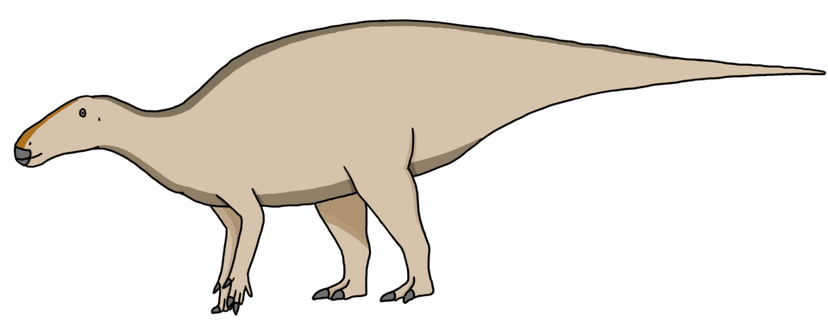
Batyrosaurus is an extinct genus of herbivorous dinosaur from the Late Cretaceous period of Kazakhstan. Its single species, Batyrosaurus rozhdestvenskyi, was a medium-sized hadrosauroid, potentially representing the same taxon as the doubtful Arstanosaurus akkurganensis. The genus name honors Kazakh warrior heroes, reflecting its basal position in the evolutionary tree of duck-billed dinosaurs.
Acrotholus
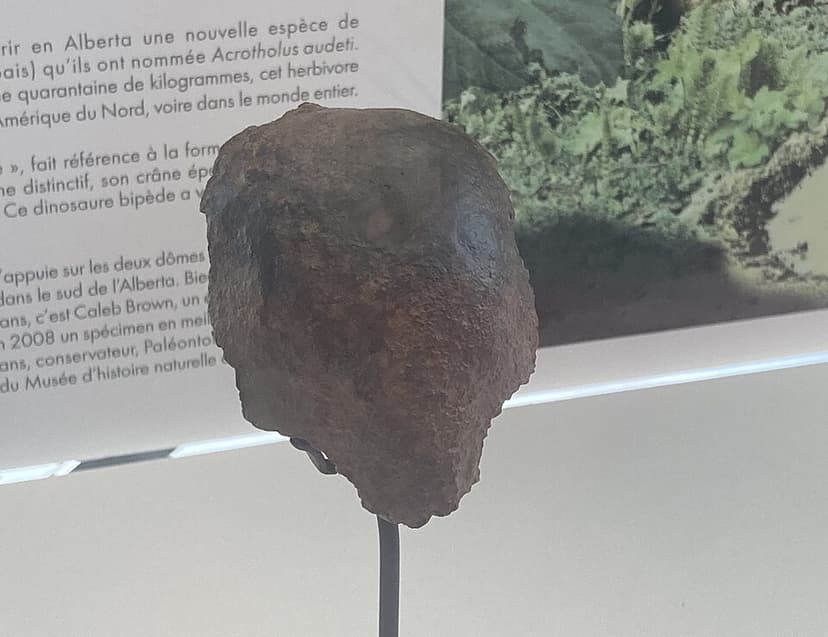
Acrotholus is an extinct genus of pachycephalosaurian dinosaur that lived during the Santonian stage of the Late Cretaceous period in what is now Canada. It is notable for being one of the earliest known members of the pachycephalosaur family with a well-developed, dome-shaped skull. Acrotholus was a bipedal herbivore whose cranial dome has been theorized to have been used for intraspecies combat or display.