
Beibeilong
Omnivore (inferred from group)·Late Cretaceous·Henan Province, China·Bipedal
Beibeilong is a genus of large caenagnathid dinosaurs that inhabited China during the Late Cretaceous epoch, approximately 96 to 88 million years ago. Known for its massive size, toothless jaws with a horny beak, and its association with some of the largest dinosaur eggs ever discovered, Beibeilong offers insights into the evolution and biology of giant oviraptorosaurs.
Key Facts
- ›Beibeilong lived in China during the Late Cretaceous period.
- ›It was one of the largest known oviraptorosaurs, estimated at 7.5 meters (25 ft) in length and weighing 1.5–2 metric tons.
- ›Its jaws were toothless and equipped with a horny beak (rhamphotheca).
- ›Beibeilong laid exceptionally large eggs, belonging to the oospecies Macroelongatoolithus.
- ›Nests were ring-shaped with a central area devoid of eggs, suggesting adults sat in this space to incubate.
- ›Its paleoenvironment consisted of humid floodplains with semi-arid to tropical climates.
- Estimated adult length of approximately 7.5 meters.
- Estimated body mass of 1.5–2 metric tons.
- Toothless jaws with a horny beak.
- Well-developed legs, indicating bipedal locomotion.
- Long fingers with large curved claws.
- Skull features unique to Beibeilong, including a pronounced antorbital fossa and a specific lacrimal bone structure.
Gigantoraptor, Microvenator, Apatoraptor
China
About Beibeilong
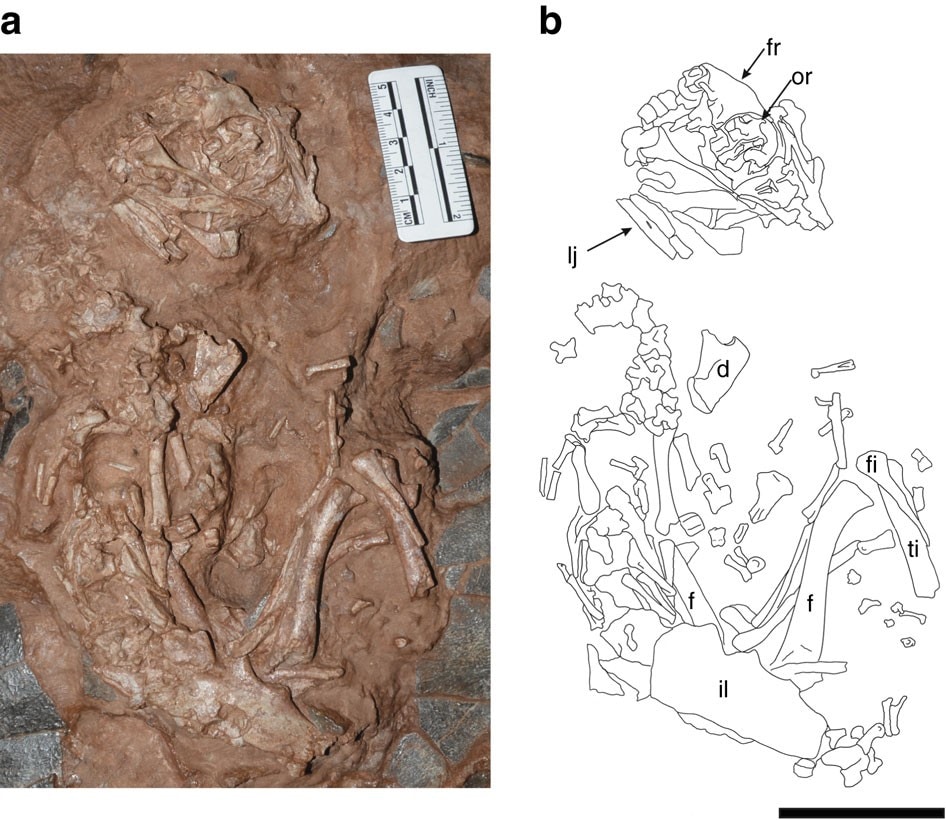
Beibeilong, a genus of large caenagnathid dinosaurs, roamed the Earth in China during the Late Cretaceous epoch, approximately 96 to 88 million years ago. The sole species, Beibeilong sinensis, is known from a remarkable embryonic skeleton, nicknamed "Baby Louie," discovered alongside a partial nest containing exceptionally large eggs. This find has provided significant insights into the biology and evolution of giant oviraptorosaurs.
Physical Characteristics and Biology
Beibeilong was a notably large member of the oviraptorosaur group, estimated to have reached about 7.5 meters (25 feet) in length with a substantial weight of 1.5 to 2 metric tons. Like many of its relatives, Beibeilong possessed toothless jaws equipped with a horny beak, or rhamphotheca. Its anatomy is largely consistent with other caenagnathids, placing it in a basal position within that family. While many oviraptorosaurs are known to have had feathers, the extent of integument in giant forms like Beibeilong remains a subject of discussion, with some suggesting it might have been reduced due to their immense size.
Reproduction and Nesting
A particularly striking aspect of Beibeilong is its association with the oospecies Macroelongatoolithus, representing some of the largest dinosaur eggs ever discovered, measuring around 40–45 cm (16–18 inches) in length. The nests were typically ring-shaped, with a central area devoid of eggs. This configuration suggests that large adult Beibeilong likely sat in the empty center of the nest while incubating, an adaptation to avoid crushing the eggs with their massive bodies. Evidence from the "Baby Louie" specimen, found in an advanced stage of incubation, further supports these hypotheses about Beibeilong's reproductive behaviors.
Paleoenvironment
Beibeilong inhabited the Gaogou Formation, a geological unit characterized by mesic (well-watered) floodplains, rivers, and a semi-arid to tropical climate. The sediments indicate a landscape shaped by braided rivers and alluvial fans. The presence of conifer trees, such as Araucariaceae, formed a significant part of the flora in this Late Cretaceous ecosystem. The dietary habits of herbivores in this region suggest a mix of C3 and C4 plants, indicative of sub-humid or sub-arid conditions.
Source: Wikipedia ↗
Frequently Asked Questions
What does the name Beibeilong mean?
The genus name Beibeilong is derived from the Chinese "bèibei," meaning "baby," and "lóng," meaning "dragon." Thus, Beibeilong translates to "baby dragon." The specific name, sinensis, refers to its discovery in China.
How large was Beibeilong?
Beibeilong was a very large oviraptorosaur, estimated to be around 7.5 meters (25 feet) long. Its weight is estimated to be between 1.5 and 2 metric tons (1.7–2.2 short tons), making it one of the largest in its group.
What did Beibeilong eat?
While the exact diet is not definitively stated, Beibeilong was an oviraptorosaur, a group generally considered omnivorous or herbivorous. Its toothless beak suggests it did not hunt large prey, and its jaw structure is consistent with processing plant material or smaller food items.
Where were Beibeilong fossils found?
Fossils of Beibeilong, including the holotype specimen of an embryonic skeleton and associated eggs, were discovered in the Gaogou Formation of Henan Province, China.
What is significant about Beibeilong's eggs?
Beibeilong laid some of the largest known dinosaur eggs, classified as Macroelongatoolithus. These eggs measured around 40–45 cm (16–18 in) in length and had ruggedly ornamented surfaces.
What kind of dinosaur was Beibeilong?
Beibeilong was a large caenagnathid dinosaur, belonging to the oviraptorosaur group. It is considered a basal member of the Caenagnathidae family.
Related Dinosaur species

Baotianmansaurus
Baotianmansaurus is an extinct genus of somphospondylian sauropod dinosaur that lived during the Late Cretaceous period. Its fossils were discovered in the Gaogou Formation of Henan Province, China. While not as massive as some of its contemporaries, it was a medium-sized sauropod with estimated lengths of up to 22.5 meters.

Abelisaurus
Abelisaurus was a genus of predatory theropod dinosaur that lived in South America during the Late Cretaceous Period. Known primarily from a partial skull, it is estimated to have been a bipedal carnivore reaching around 7.4 meters in length.

Acheroraptor
Acheroraptor is an extinct genus of dromaeosaurid theropod dinosaur that lived in North America during the Late Cretaceous period. It is known from fossil remains discovered in the Hell Creek Formation of Montana, United States. Acheroraptor is notable for being one of the geologically youngest dromaeosaurids, existing just before the Cretaceous-Paleogene extinction event.