
Bellusaurus
Herbivore·Late Jurassic·Junggar Basin, China·Quadrupedal
Bellusaurus was a sauropod dinosaur that lived during the Late Jurassic period. Known primarily from juvenile specimens, it is estimated to have reached about 4.8 meters (16 feet) in length. Its fossils were discovered in the Shishugou Formation in the Junggar Basin of China.
Key Facts
- ›Bellusaurus means "Beautiful lizard".
- ›It is known from juvenile specimens found in a single quarry.
- ›The fossils suggest a herd may have been killed by a flash flood.
- ›Its estimated length is 4.8 meters (16 ft).
- ›Bellusaurus fossils were discovered in China.
- ›It lived during the Late Jurassic period.
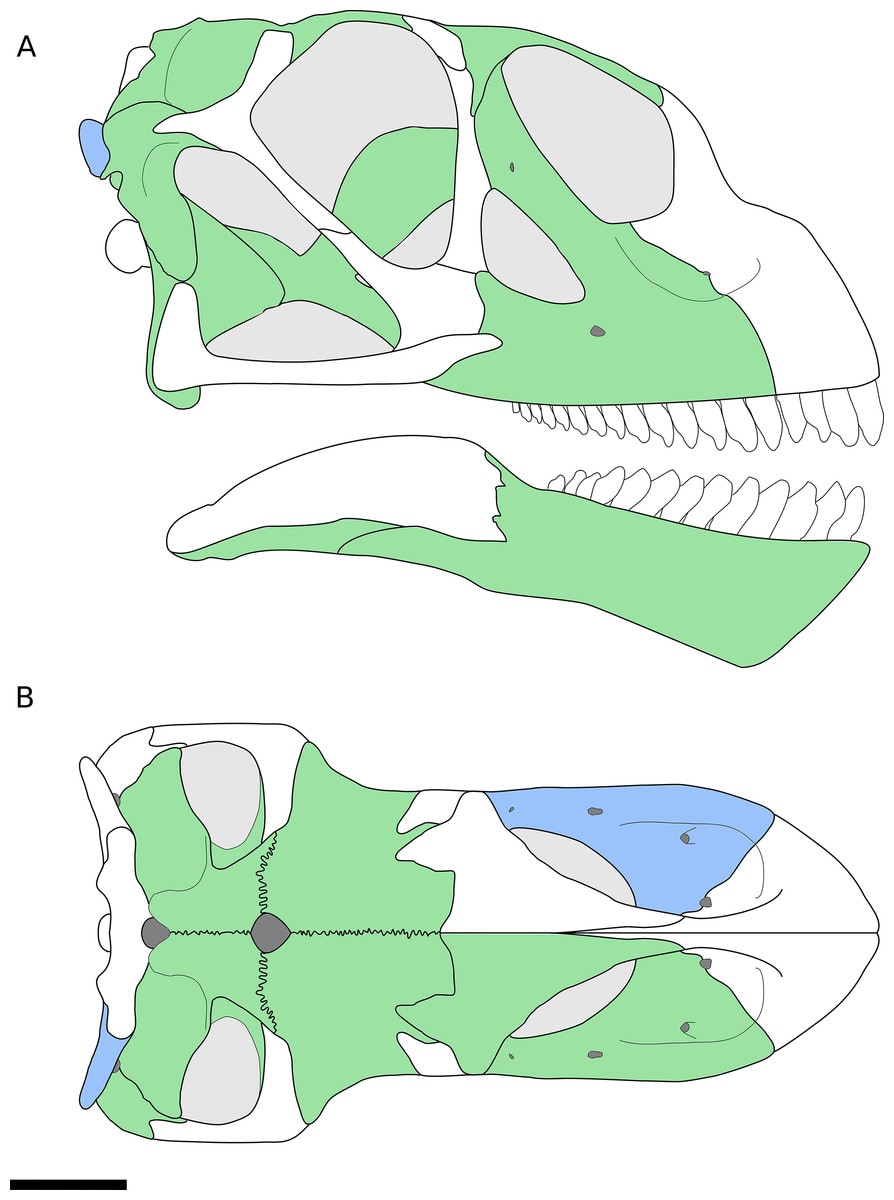
- Estimated length of 4.8 meters based on juveniles.
- Lightly built and small for a sauropod.
Camarasaurus, Cetiosaurus, Euhelopus, Pleurocoelus, Brachiosaurus
China
About Bellusaurus
Bellusaurus, meaning "Beautiful lizard," was a sauropod dinosaur that inhabited the Earth during the Late Jurassic period, specifically the Oxfordian stage. The known remains of this dinosaur primarily consist of juvenile specimens, leading to an estimated length of approximately 4.8 meters (16 feet). The discovery of numerous individuals together in a single quarry suggests that a herd may have been tragically overtaken by a flash flood.
Discovery and Naming
The type and sole known species, Bellusaurus sui, was formally described by Dong Zhiming in 1991. The fossils were unearthed in the Shishugou Formation within the northeastern Junggar Basin of China. The specific name, 'sui,' was chosen to honor Senior Preparator Youling Sui, who was instrumental in the restoration of dinosaur remains and for whom this was his final restoration project.
Description and Classification
Based on the juvenile fossils, Bellusaurus is estimated to have been around 4.8 meters long and was characterized as being small and lightly built. Initially, Dong Zhiming placed Bellusaurus within the Brachiosauridae family, following a broad classification scheme of the time. However, more recent phylogenetic analyses have positioned Bellusaurus outside of Neosauropoda or near the base of Macronaria. A 2023 study proposed that Bellusaurus is a mamenchisaurid, indicating ongoing refinement of its evolutionary relationships.
Source: Wikipedia ↗
Frequently Asked Questions
What does the name Bellusaurus mean?
The name Bellusaurus means "Beautiful lizard." It is derived from the Vulgar Latin word 'bellus,' meaning beautiful, and the Ancient Greek word 'sauros,' meaning lizard.
When did Bellusaurus live?
Bellusaurus lived during the Late Jurassic period, specifically the Oxfordian stage. This places it in geological time millions of years ago.
Where were Bellusaurus fossils found?
Fossils of Bellusaurus were discovered in the Shishugou Formation, located in the northeastern Junggar Basin of China.
How large was Bellusaurus?
Estimates for the length of Bellusaurus are around 4.8 meters (16 feet). However, these estimates are based on juvenile individuals, suggesting adults might have been larger.
What is unusual about the Bellusaurus fossil discovery?
A significant discovery was finding seventeen individuals of Bellusaurus in a single quarry. This suggests that a herd may have perished together, possibly due to a flash flood.
What group of dinosaurs does Bellusaurus belong to?
Bellusaurus is classified as a sauropod dinosaur. While initially placed in Brachiosauridae, more recent analyses suggest it may be a mamenchisaurid or near the base of Macronaria.
Related Dinosaur species

Alcovasaurus
Alcovasaurus is an extinct genus of herbivorous stegosaurian dinosaur that lived during the Late Jurassic period. Originally described as Stegosaurus longispinus, it was later reclassified into its own genus due to unique characteristics, particularly its exceptionally long tail spines. Its exact taxonomic placement has been debated, with some researchers considering it a distinct genus and others suggesting it might be a species of Miragaia.

Amphicoelias
Amphicoelias was a genus of herbivorous sauropod dinosaur that roamed the Earth approximately 150 million years ago during the Late Jurassic period. Known from fossils found in Colorado, United States, it was moderately sized, with estimated lengths of around 18 meters and a body mass of 15 metric tons. Its anatomy, particularly its vertebrae and limb bones, shares similarities with its close relative, Diplodocus.
Angustungui
"Angustungui" is an informal genus of stegosaur that lived during the Late Jurassic period in what is now China. The name and its intended type species, "A. qiketaiensis," were announced in a biorxiv pre-print article in October 2024. The fossils, discovered in 2016, include axial, pectoral girdle, pelvic girdle, limb, and armor elements.