
Bolong
Herbivore·Early Cretaceous·China·Facultative quadruped
Bolong is a genus of iguanodontian dinosaur that lived during the Early Cretaceous period, approximately 125 million years ago. Fossil remains have been discovered in China, with the type species being Bolong yixianensis. This relatively small dinosaur is characterized by its stocky head, powerful jaws, and distinctive teeth.
Key Facts
- ›Lived approximately 125 million years ago in the Early Cretaceous.
- ›Fossils were discovered in western Liaoning Province, China.
- ›Estimated to be about 4 meters long and weigh 200 kilograms.
- ›Possessed a convex, stocky head with powerful mandibles and large teeth.
- ›Its locomotion is debated, likely a facultative quadruped.
- ›Considered one of the most basal hadrosauroids found in Asia.

- Relatively Small Size
- Estimated Length of 4 Meters
- Estimated Weight of 200 Kilograms
- Convex and Fairly Stocky Head
- Powerful Mandibles
- Relatively Large Teeth
- Distinctive Skull Bone Cavities and Dental Features
China
About Bolong
Bolong: A Dragon-like Dinosaur from Early Cretaceous China
Bolong is a genus of iguanodontian dinosaur discovered in the Yixian Formation of western Liaoning Province, China. This dinosaur roamed the Earth approximately 125 million years ago, during the early Barremian stage of the Early Cretaceous period. The genus name, "Bolong," is a combination of the names of the Bo brothers, who were instrumental in the fossil's discovery, and the Mandarin word for "dragon" (lóng). The type species, Bolong yixianensis, honors the geological formation where its remains were found.
Physical Characteristics and Discovery
Fossils indicate that Bolong was a relatively small dinosaur, with an estimated length of around 4 meters (13 feet) and a weight of approximately 200 kilograms (440 lb). Its head was notable for being convex and fairly stocky, equipped with powerful mandibles and large teeth. Several autapomorphies, or unique distinguishing features, have been identified, including specific cavities within the skull bones and distinctive characteristics of its maxillary teeth. The holotype fossil consists of a nearly complete skeleton, and a second specimen of a very young individual has also been described, providing further insight into its development.
Locomotion and Classification
The exact way Bolong moved is a subject of ongoing scientific discussion. While its forelimbs were not heavily adapted for weight-bearing and its thigh and shin proportions suggest bipedalism, its short and robust hind feet are more akin to those of quadrupedal dinosaurs. This has led to the hypothesis that Bolong was a facultative quadruped, capable of walking on two legs for extended periods but also resorting to four-legged locomotion. Scientists have placed Bolong within the Hadrosauroidea, classifying it as one of the most basal hadrosauroids discovered in Asia.
Source: Wikipedia ↗
Frequently Asked Questions
What does the name Bolong mean?
The genus name Bolong is derived from the names of the Bo brothers, who helped uncover the fossils, and the Mandarin word for 'dragon'. The specific epithet, yixianensis, refers to the Yixian Formation where it was found.
When and where did Bolong live?
Bolong lived about 125 million years ago during the Early Cretaceous period. Its fossils have been found in western Liaoning Province and Inner Mongolia in China.
What was the estimated size of Bolong?
Bolong was a relatively small dinosaur, estimated to be around 4 meters (13 feet) in length and weighing approximately 200 kilograms (440 pounds).
How did Bolong move?
The locomotion of Bolong is debated. Evidence suggests it was a facultative quadruped, meaning it likely spent much of its time walking bipedally but could also move on all fours, especially when young.
What are some distinctive physical features of Bolong?
Bolong had a convex and stocky head with powerful jaws and relatively large teeth. Unique features include specific cavities in skull bones and modifications to the shape and structure of its maxillary teeth.
What group of dinosaurs does Bolong belong to?
Bolong has been placed within the Hadrosauroidea, making it one of the most basal hadrosauroids discovered in Asia.
Related Dinosaur species
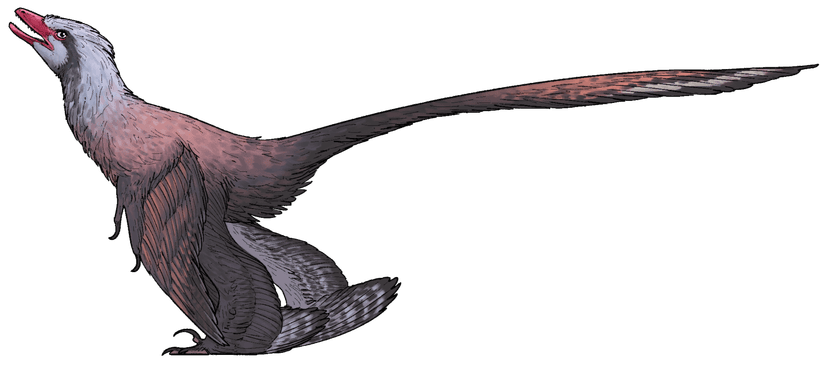
Changzhousaurus
Changzhousaurus is a small, extinct paravian theropod dinosaur from the Early Cretaceous period of China. It is known from a nearly complete skeleton that showcases extensive feathering, including wing-like structures on its forelimbs and hindlimbs, and a tail fan. Its exact evolutionary relationships remain unclear due to a mosaic of anatomical features found in its fossils.

Archaeocursor
Archaeocursor is an extinct genus of basal ornithischian dinosaurs discovered in China and dating to the Early Jurassic period. Known from a single, nearly complete femur, it is the oldest and most basal ornithischian described from Asia. The genus name translates to "old runner," reflecting its likely locomotion and ancient lineage.

Abrosaurus
Abrosaurus was a genus of macronarian sauropod dinosaur that lived during the Middle Jurassic Period in what is now Asia. It is known for its relatively small size for a sauropod and its distinctive boxy skull with a prominent nasal arch. The only named species, Abrosaurus dongpoi, was discovered in China.