
Archaeocursor
Unknown·Early Jurassic·China·Likely bipedal (inferred from 'runner' in name)
Archaeocursor is an extinct genus of basal ornithischian dinosaurs discovered in China and dating to the Early Jurassic period. Known from a single, nearly complete femur, it is the oldest and most basal ornithischian described from Asia. The genus name translates to "old runner," reflecting its likely locomotion and ancient lineage.
Key Facts
- ›Archaeocursor is known from a single specimen, a left femur.
- ›It is the oldest and most basal ornithischian dinosaur found in Asia.
- ›The genus name "Archaeocursor" means "old runner."
- ›Fossils were discovered in the Ziliujing Formation of China.
- ›The estimated body length of an individual was approximately 1 meter (3.3 ft).
- ›It is classified as a basal ornithischian, closely related to Eocursor.

- Estimated body length of 1 meter for an early adult.
- Known from a single, nearly complete left femur measuring 93 mm.
Eocursor, Heterodontosaurids
Asia
About Archaeocursor
Archaeocursor is an extinct genus of basal ornithischian dinosaur that lived during the Early Jurassic period. Its scientific name, Archaeocursor asiaticus, translates to "old runner from Asia," reflecting its ancient lineage and likely mode of locomotion. This genus is significant as it represents the oldest and most basal ornithischian dinosaur described to date from the Asian continent.
Discovery and Naming
The only known fossil specimen of Archaeocursor, designated L01-HY999, consists of a nearly complete left femur. It was discovered in 2022 within the Ziliujing Formation (Dongyuemiao Member) near Chongqing, China. The discovery was part of a paleontological salvage operation during construction in a residential area. The specimen was first formally described in 2025 by Yao et al., who established the new genus and species based on this single bone. The generic name, Archaeocursor, combines the Latin words "archaeo" (meaning "archaic" or "old") and "cursor" (meaning "runner"). The specific epithet, "asiaticus," denotes its origin from Asia.
Paleobiology and Classification
While only a femur has been recovered, histological analysis suggests the holotype belonged to an individual that had not yet reached full somatic maturity. Based on the 93-millimeter-long femur, researchers have estimated the body length of this early adult Archaeocursor to be approximately 1 meter (3.3 feet). Phylogenetic analyses place Archaeocursor as an early-diverging member of the Ornithischia, branching as the sister taxon to Eocursor, a similar-aged dinosaur known from South Africa. This suggests a potential common ancestor originating in Gondwana before dispersing to Laurasia and East Asia. However, this hypothesis is considered tentative due to the fragmentary nature of the Archaeocursor fossil record.
Paleoenvironment
The Archaeocursor femur was found within the Yuzhou Biota, which represents a lacustrine ecosystem from the Early Jurassic. This ecosystem harbored a diverse range of flora and fauna, including plants, invertebrates, fish, and pliosaurids. The presence of an ornithischian dinosaur in this context, particularly one preserved in lake deposits, suggests it may have been washed into the lake after its death. The Yuzhou Biota fauna indicates a faunal turnover that occurred shortly after the end-Triassic extinction event.
Source: Wikipedia ↗
Frequently Asked Questions
What does Archaeocursor mean?
The name Archaeocursor is derived from Latin words. 'Archaeo' means 'archaic' or 'old,' and 'cursor' means 'runner,' translating to 'old runner.'
Where were Archaeocursor fossils found?
Fossils of Archaeocursor were discovered in China, specifically in outcrops of the Ziliujing Formation near Chongqing. The discovery was made during paleontological salvage operations in a residential construction area.
What is known about the size of Archaeocursor?
Based on the holotype femur, which is 93 millimeters long, paleontologists have estimated the body length of an Archaeocursor individual to be approximately 1 meter (3.3 feet). The femur belonged to an early adult that had not yet reached full maturity.
What type of dinosaur was Archaeocursor?
Archaeocursor was a basal ornithischian dinosaur. This means it belonged to the early lineage of ornithischian dinosaurs, characterized by their bird-like pelvis.
How old is Archaeocursor?
Archaeocursor lived during the Early Jurassic period. It is considered the oldest and most basal ornithischian dinosaur described from Asia, providing insight into early dinosaur evolution on the continent.
What is Archaeocursor related to?
Phylogenetic analyses place Archaeocursor as an early-diverging ornithischian, branching as the sister taxon to Eocursor. Eocursor is another ornithischian dinosaur known from rocks of a similar age in South Africa.
Related Dinosaur species

Aristosaurus
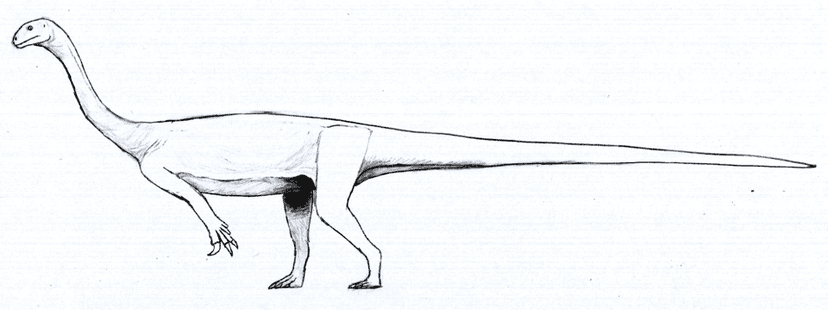
Aristosaurus is a dubious genus of sauropodomorph dinosaur from the Early Jurassic of southern Africa, known from a single, nearly complete skeleton. Initially described as Aristosaurus erectus, it was later considered a synonym of Gyposaurus or a juvenile Massospondylus, but recent reviews classify it as an indeterminate sauropodomorph.
Arcusaurus
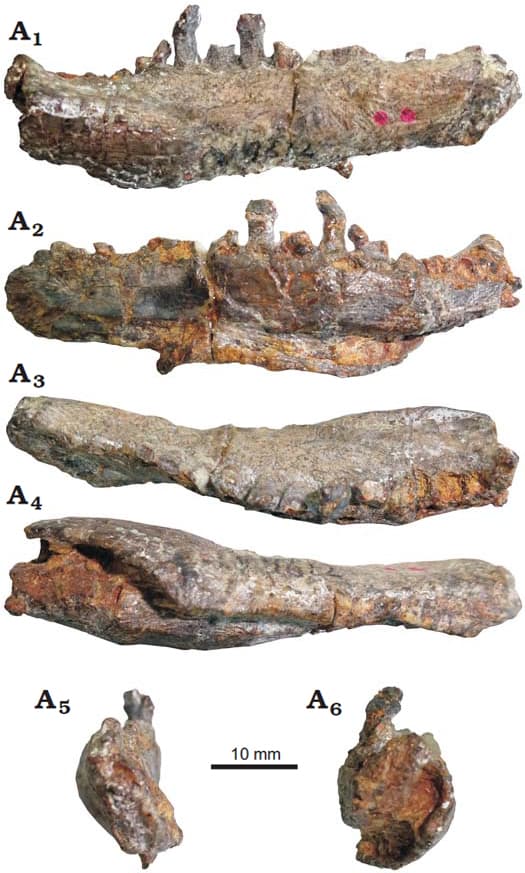
Arcusaurus is an extinct genus of sauropodomorph dinosaur that lived during the Early Jurassic period in what is now South Africa. Named for the "Rainbow Nation," Arcusaurus is known from fossil remains, including a partial skull and other skeletal elements, indicating it was a basal sauropodomorph.
Bienosaurus
Bienosaurus is a genus of thyreophoran dinosaur from the Early Jurassic period, discovered in the Lufeng Formation of Yunnan Province, China. It is considered a dubious genus due to the incomplete and fragmentary nature of its fossil remains, making it difficult to distinguish from other early thyreophorans and potentially identical to Tatisaurus.