
Changzhousaurus
Changzhousaurus is a small, extinct paravian theropod dinosaur from the Early Cretaceous period of China. It is known from a nearly complete skeleton that showcases extensive feathering, including wing-like structures on its forelimbs and hindlimbs, and a tail fan. Its exact evolutionary relationships remain unclear due to a mosaic of anatomical features found in its fossils.
Key Facts
- ›Body length of approximately 34 centimeters (13 inches).
- ›Possessed large, wing-like feather structures on its forelimbs and shorter ones on its hindlimbs.
- ›Featured a fan of long, plume-like feathers at the end of its tail.
- ›Fossils were discovered in the Jiufotang Formation of Liaoning Province, China.
- ›Its classification among paravian theropods is complex, sharing traits with troodontids, dromaeosaurids, anchiornithids, and avialans.
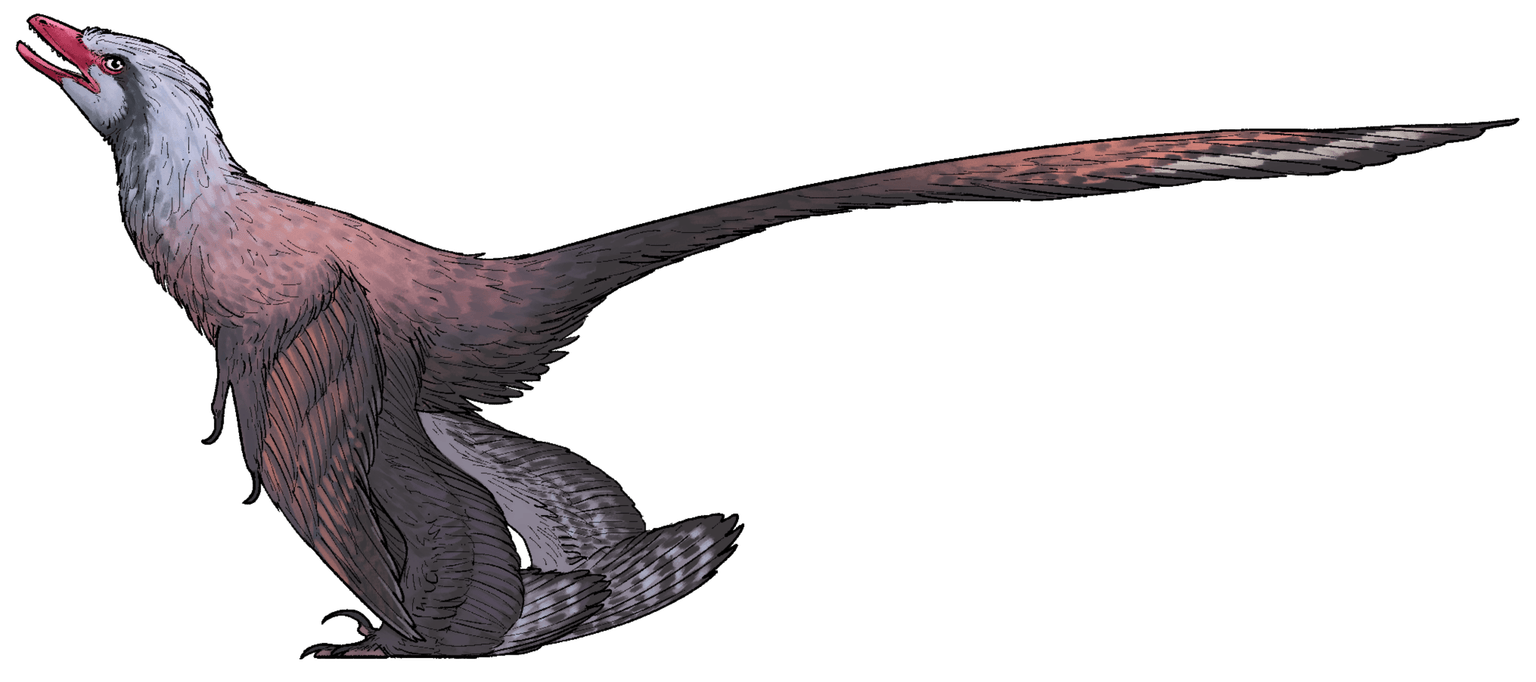
- Body length of 34 cm.
- Large, wing-like feathers on forelimbs.
- Shorter hindlimb wings.
- Fan of long, plume-like feathers on the tail.
- Proportionately small and deep skull with a short snout.
- Large external naris.
- Unserrated teeth in premaxillae and maxilla.
- More strongly curved, serrated rear teeth in the dentary.
- Enlarged, curved manual and pedal unguals.
Troodontids, Dromaeosaurids, Anchiornithids, Avialans, Scansoriopterygids, Oviraptorosaurs
China
About Changzhousaurus
Changzhousaurus is an extinct genus of paravian theropod dinosaur that lived during the Early Cretaceous period, specifically the Aptian age. The sole species, Changzhousaurus sinensis, is known from a remarkably well-preserved, nearly complete, and articulated skeleton discovered in the Jiufotang Formation of China. This specimen is notable for its extensive associated feather traces, revealing significant plumage.
Physical Characteristics and Plumage
Changzhousaurus was a very small dinosaur, with an estimated body length of approximately 34 centimeters (13 inches), placing it among the smallest known non-avialan theropods. Its anatomy includes large, wing-like feather structures on its forelimbs and shorter ones on its hindlimbs, alongside a distinctive fan of long, plume-like feathers at the tip of its tail. The skull was proportionately small and deep, featuring a short snout and unserrated teeth. The manual and pedal unguals (claws) were enlarged and strongly curved, with keratin sheaths further enhancing their curvature and length.
Classification and Discovery
The exact evolutionary relationships of Changzhousaurus within the Pennaraptora clade remain a subject of scientific discussion. Its fossilized remains exhibit a mosaic of anatomical features that overlap with various groups, including troodontids, dromaeosaurids, anchiornithids, and avialans, making precise phylogenetic placement challenging. The holotype specimen was discovered in Liaoning Province, China, and was formally described and named by Xu Xing in 2026. The generic name, Changzhousaurus, was chosen in gratitude to the Changzhou Municipal Government for its support of paleontology, while the specific name, sinensis, refers to its Chinese origin.
Source: Wikipedia ↗
Frequently Asked Questions
What does the name Changzhousaurus mean?
The name Changzhousaurus means 'Changzhou lizard'. It combines a reference to Changzhou city in China, in gratitude for its support of paleontology, with the Greek word 'sauros' meaning 'lizard'.
Where were Changzhousaurus fossils found?
The fossils of Changzhousaurus were discovered in outcrops of the Jiufotang Formation in Lamadong, Jianchang County, western Liaoning Province, China.
What period did Changzhousaurus live in?
Changzhousaurus lived during the Early Cretaceous period, specifically the Aptian age.
How large was Changzhousaurus?
Changzhousaurus was a very small dinosaur, with an estimated body length of about 34 centimeters (13 inches), making it one of the smallest known non-avialan theropods.
Did Changzhousaurus have feathers?
Yes, the holotype specimen of Changzhousaurus preserves extensive feather traces, including wing-like pennaceous feathers on its limbs and plume-like feathers on its tail.
What is the taxonomic classification of Changzhousaurus?
Changzhousaurus is classified as a paravian theropod dinosaur. Its precise relationships within this group are debated due to a mix of anatomical characteristics that align with different subgroups like troodontids, dromaeosaurids, and avialans.
Related Dinosaur species

Asiatyrannus
Asiatyrannus is an extinct genus of tyrannosaurine theropod dinosaur that lived during the Late Cretaceous period in what is now China. Known from a single specimen including a skull and partial skeleton, it is distinguished by its deep-snouted skull and relatively small body size compared to some contemporary tyrannosaurs. However, its validity as a distinct genus has been questioned, with some researchers suggesting it may represent a juvenile individual of the more well-known genus Tarbosaurus.
Banji
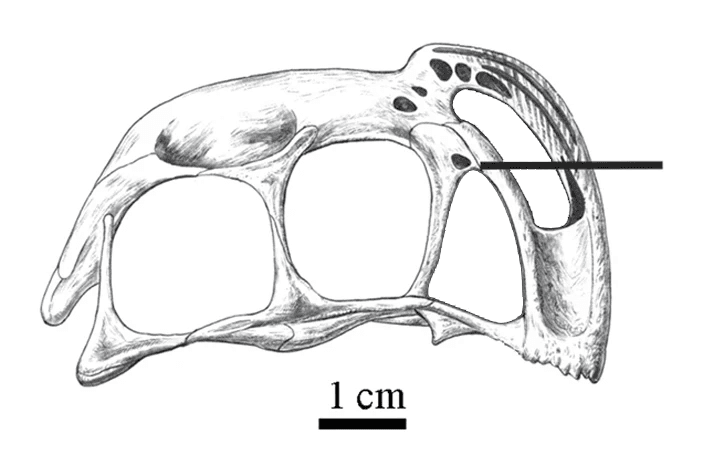
Banji is an extinct genus of oviraptorid dinosaur that lived approximately 66 million years ago in what is now China. This small, lightly built, ground-dwelling carnivore is known for its distinctive tall, crested skull with unique vertical striations.
Caihong
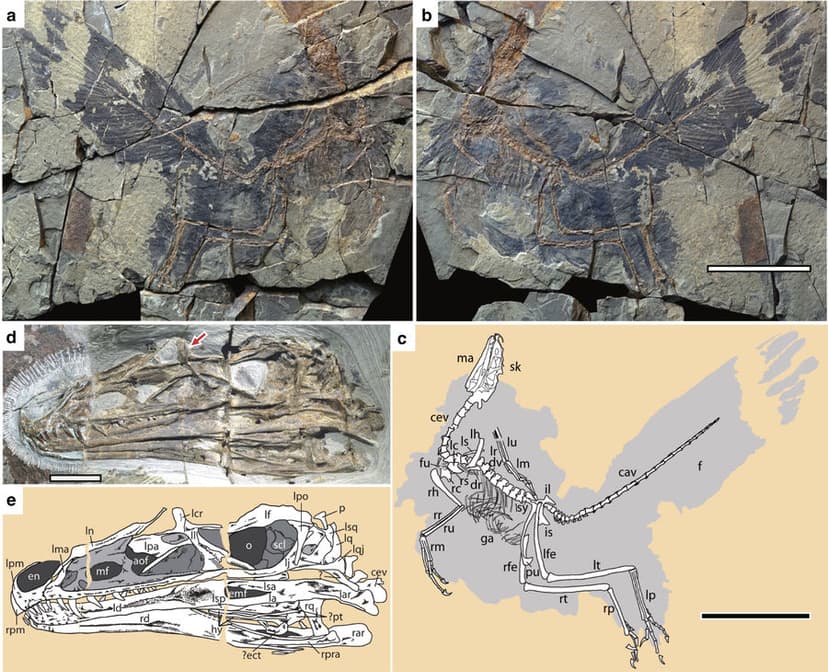
Caihong is a small paravian theropod dinosaur discovered in China, living during the Late Jurassic period. Its name, meaning 'rainbow' in Mandarin, reflects the spectacular preservation of its fossil, which includes soft tissues and extensive plumage. This well-preserved specimen offers significant insights into the evolution of feathered dinosaurs.