
Byronosaurus
Omnivore or Herbivore (debated)·Cretaceous·Mongolia·Bipedal
Byronosaurus is a genus of troodontid dinosaur that lived during the Late Cretaceous Period in what is now Mongolia. This small, agile dinosaur is notable for its pneumatized snout and, in some individuals, a lack of serrations on its teeth, which has led to debate about its diet. Fossil discoveries include adult specimens with partial skeletons and skulls, as well as juvenile remains.
Key Facts
- ›Lived during the Late Cretaceous Period.
- ›Discovered in the Gobi Desert, Mongolia.
- ›Estimated length of 1.5–2 meters (4.9–6.6 ft).
- ›Estimated weight of 4–20 kg (8.8–44.1 lb).
- ›Possessed a pneumatized snout with a sinus in each maxilla.
- ›Teeth in some individuals lacked serrations, suggesting potential herbivorous or omnivorous tendencies.
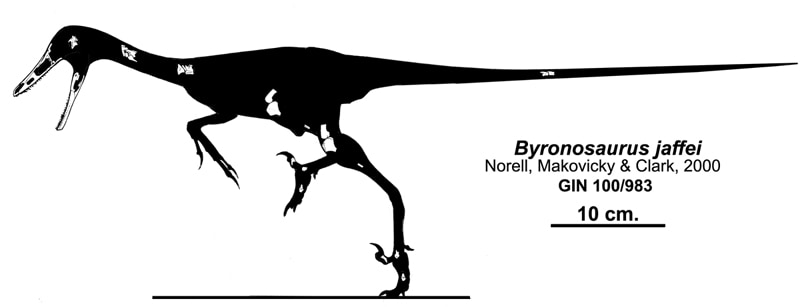
- Small theropod dinosaur
- Estimated length of 1.5–2 meters
- Estimated height of 50 cm
- Estimated weight of 4–20 kg
- Pneumatized snout with a sinus in each maxilla
- Teeth in some individuals lack serrations
Xixiasaurus
Mongolia
About Byronosaurus
Byronosaurus is a genus of troodontid dinosaur that roamed the Earth during the Late Cretaceous Period, with fossils primarily discovered in Mongolia. This small, agile dinosaur is known for its distinctive physical characteristics and has been the subject of scientific discussion regarding its diet.
Discovery and Naming
The first fossils of Byronosaurus were unearthed by an American Museum of Natural History expedition in the Gobi Desert in 1993, with further excavation occurring in subsequent years. A significant discovery was a skull found in 1996. In 2000, the genus and type species, Byronosaurus jaffei, were formally named and described by paleontologists Mark Norell, Peter Makovicky, and James Clark. The species name was chosen to honor Byron Jaffe in recognition of his family's support for the paleontological expeditions.
The holotype specimen, IGM 100/983, includes a partial skeleton with a skull, neck and back vertebrae, parts of a sacral vertebra, tail vertebrae, ribs, and limb bones. A paratype specimen, IGM 100/984, consists of a partial skull. Both specimens are of adult individuals. Later discoveries in 2009 included juvenile specimens, though their classification as Byronosaurus has been debated by some researchers.
Description and Physical Characteristics
Byronosaurus was a small dinosaur, with estimates suggesting a length of approximately 1.5 to 2 meters (4.9 to 6.6 ft) and a height of about 50 cm (20 in). Its weight is estimated to have been between 4 and 20 kg (8.8 to 44.1 lb). A notable feature of Byronosaurus is its pneumatized snout, which contained a sinus within each maxilla. Unlike most other troodontids, the teeth of Byronosaurus appear to have lacked serrations, a trait shared with its close relative Xixiasaurus. This characteristic has led to discussions about its dietary habits.
Diet and Palaeobiology
Troodontids, as a group, are generally thought to have been predatory due to features such as large brains, keen senses suggested by their eye sockets and middle ears, and grasping hands. However, the unique dental morphology of Byronosaurus, specifically the absence of serrations on its teeth, has prompted debate. Some scientists have suggested that this feature, similar to those found in herbivorous dinosaurs and lizards, indicates that Byronosaurus may have been herbivorous or omnivorous. Others argue that troodontid anatomy is consistent with a carnivorous diet, and that the loss of serrations might represent a dietary shift.
Reproduction
Fossil evidence includes two juvenile specimens of Byronosaurus, originally identified as Velociraptor. These were found near oviraptorid nests. While initially posing an enigma, further research suggests that these juvenile skulls were likely washed from their own nest site into the oviraptorid nest due to geological processes, rather than indicating a direct association or parasitic behavior.
Source: Wikipedia ↗
Frequently Asked Questions
When did Byronosaurus live?
Byronosaurus lived during the Late Cretaceous Period. This geological period is known for its diverse dinosaur fauna, and Byronosaurus was one of the smaller species present.
Where were Byronosaurus fossils found?
Fossils of Byronosaurus have been discovered in the Gobi Desert region of Mongolia. Key discovery sites include Ukhaa Tolgod and Bolor's Hill.
What did Byronosaurus eat?
The diet of Byronosaurus is a subject of scientific debate. While troodontids were generally thought to be predatory, the lack of serrations on Byronosaurus's teeth, similar to some herbivores, suggests it may have been herbivorous or omnivorous.
How large was Byronosaurus?
Byronosaurus was a relatively small dinosaur, estimated to be about 1.5 to 2 meters (4.9 to 6.6 ft) long and standing about 50 cm (20 in) tall. Its weight was estimated to be between 4 and 20 kg (8.8 to 44.1 lb).
What are some distinctive physical features of Byronosaurus?
Byronosaurus is notable for its pneumatized snout, which contained a sinus in each maxilla. Additionally, unlike many other troodontids, its teeth lacked serrations, a trait that has implications for understanding its diet.
What is known about Byronosaurus reproduction?
Fossil discoveries include juvenile specimens of Byronosaurus found near oviraptorid nests. The initial enigma of their presence in these nests was later explained by geological processes that washed them from their own nest to the oviraptorid site.
Related Dinosaur species
Abdarainurus
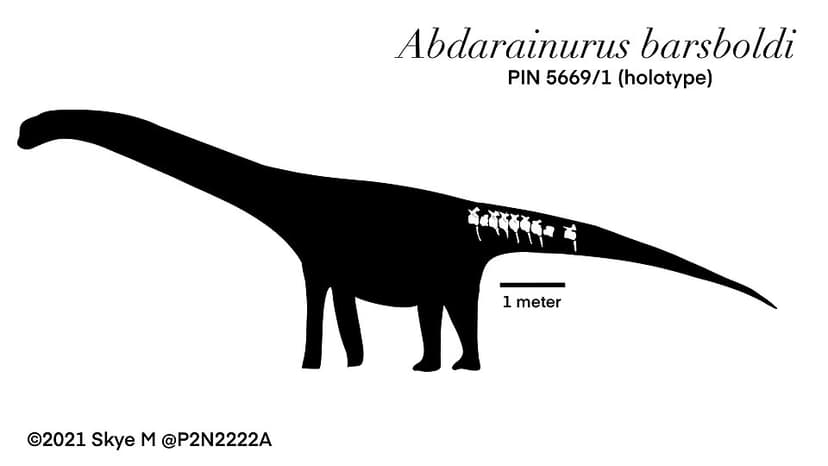
Abdarainurus is a genus of titanosaur dinosaur known from the Alagteeg Formation in Mongolia. The only known species, A. barsboldi, is currently considered an indeterminate titanosaur and might represent a previously undocumented lineage of Asian macronarians. Its existence is primarily evidenced by a limited number of tail vertebrae.

Beg
Beg tse is an extinct species of neoceratopsian dinosaur that lived in Mongolia during the Early Cretaceous period. Known from a partial skull and fragmentary postcrania, it represents the most basal neoceratopsian discovered to date. Its scientific name honors the Himalayan war deity Beg-tse, reflecting the rugose appearance of its preserved skull.

Achillobator
Achillobator was a large, heavily-built dromaeosaurid theropod dinosaur that inhabited Mongolia during the Late Cretaceous period. It is distinguished by its robust skeleton, deep maxilla, and primitive pelvis, contrasting with the generally lighter build of other dromaeosaurids. This predator likely hunted large prey using its enlarged sickle claw.