
Abdarainurus
Abdarainurus is a genus of titanosaur dinosaur known from the Alagteeg Formation in Mongolia. The only known species, A. barsboldi, is currently considered an indeterminate titanosaur and might represent a previously undocumented lineage of Asian macronarians. Its existence is primarily evidenced by a limited number of tail vertebrae.
Key Facts
- ›Abdarainurus is known only from eight front tail vertebrae and a middle tail vertebra, along with several chevrons.
- ›The holotype was discovered in 1970 in Abdrant Nuru, Mongolia.
- ›The species Abdarainurus barsboldi was formally named in February 2020.
- ›It coexisted with ankylosaurs, turtles, and other indeterminate dinosaurs.
- ›Phylogenetic analyses have placed it as a non-titanosaur member of Somphospondyli or a basal titanosaur.
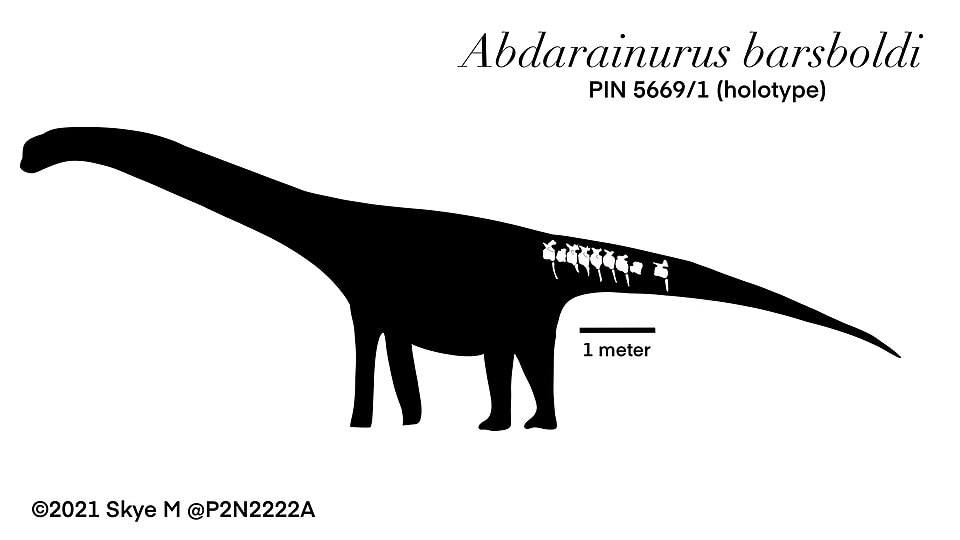
Titanosaurian Sauropod, Known From Tail Vertebrae and Chevrons
Andesaurus, Huabeisaurus, Baotianmansaurus, Dongyangosaurus
Asia
About Abdarainurus
Abdarainurus is a genus of titanosaur dinosaur that roamed the Earth during the Late Cretaceous period. Its name, meaning "Abdrant Nuru tail," directly references the locality in Mongolia where its fossils were unearthed and the type of remains discovered. The only known species, Abdarainurus barsboldi, is currently classified as an indeterminate titanosaur, suggesting it may represent a previously unrecognized lineage within the diverse group of Asian macronarian sauropods.
Discovery and Classification
The fossils that constitute Abdarainurus were first discovered in 1970 in Abdrant Nuru, Mongolia, during a collaborative paleontological expedition. These remains, consisting of eight front tail vertebrae, a middle tail vertebra, and several chevrons, remained unprepared for many years. It wasn't until around 2000 that paleontologists began to recognize their potential significance as belonging to a new sauropod genus. The formal description and naming of Abdarainurus barsboldi occurred in February 2020. Phylogenetic analyses have yielded varying results, placing Abdarainurus at times as a non-titanosaur member of Somphospondyli, or more consistently as a basal titanosaur, sometimes grouped with other genera like Andesaurus and Huabeisaurus.
Paleoecology
Abdarainurus inhabited the terrestrial environments of what is now Mongolia. It shared its ecosystem with other dinosaurs, including the ankylosaur Pinacosaurus, as well as various species of turtles. The Alagteeg Formation, where its fossils were found, provides a glimpse into the fauna present during the Late Cretaceous in this region of Asia.
Source: Wikipedia ↗
Frequently Asked Questions
What does the name Abdarainurus mean?
The name Abdarainurus combines 'Abdrant Nuru', the locality where its fossils were found, with the Greek word 'oura', meaning 'tail'. This reflects its discovery site and the tail vertebrae that form its known fossil material.
When was Abdarainurus discovered and named?
The fossils of Abdarainurus were discovered in 1970 during a joint expedition in Mongolia. However, the species Abdarainurus barsboldi was not formally named until February 2020.
What kind of dinosaur was Abdarainurus?
Abdarainurus was a titanosaur, a group of long-necked herbivorous dinosaurs. Currently, it is classified as an indeterminate titanosaur, suggesting it may belong to a unique evolutionary branch within Asian macronarians.
What fossils have been found for Abdarainurus?
The fossil record for Abdarainurus is quite limited. It consists of only eight front tail vertebrae, one middle tail vertebra, and several associated chevrons.
What other dinosaurs lived alongside Abdarainurus?
Abdarainurus lived in an environment that included the ankylosaur Pinacosaurus sp., as well as indeterminate turtles and other dinosaurs. This indicates a diverse Late Cretaceous ecosystem in Mongolia.
Where did Abdarainurus live?
Fossils of Abdarainurus have been found in the Alagteeg Formation in Mongolia. This region was part of Asia during the Late Cretaceous period.
Related Dinosaur species

Beg
Beg tse is an extinct species of neoceratopsian dinosaur that lived in Mongolia during the Early Cretaceous period. Known from a partial skull and fragmentary postcrania, it represents the most basal neoceratopsian discovered to date. Its scientific name honors the Himalayan war deity Beg-tse, reflecting the rugose appearance of its preserved skull.
Byronosaurus
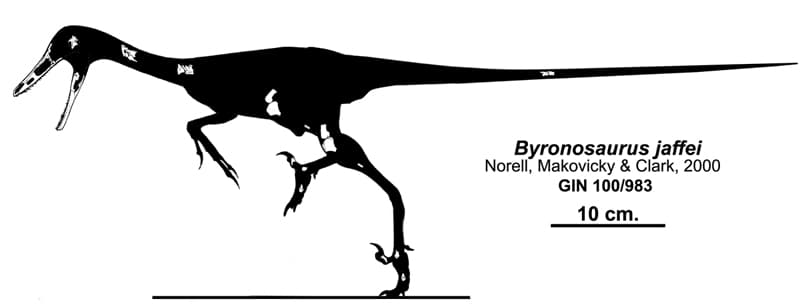
Byronosaurus is a genus of troodontid dinosaur that lived during the Late Cretaceous Period in what is now Mongolia. This small, agile dinosaur is notable for its pneumatized snout and, in some individuals, a lack of serrations on its teeth, which has led to debate about its diet. Fossil discoveries include adult specimens with partial skeletons and skulls, as well as juvenile remains.

Altirhinus
Altirhinus was a herbivorous ornithopod dinosaur that lived in what is now Mongolia during the Early Cretaceous period. Known for its distinctive tall, arched snout, this dinosaur was primarily bipedal but may have also moved on four legs, especially when feeding.