
Camarasaurus
Camarasaurus was a herbivorous sauropod dinosaur that lived in North America during the Late Jurassic period. It is one of the most common and well-understood sauropods found in the Morrison Formation, known for its bulky build, proportionally large skull, and powerful jaws. With over 530 specimens discovered, including several nearly complete skeletons, Camarasaurus provides significant insight into the anatomy and life of Jurassic herbivores.
Key Facts
- ›Lived during the Late Jurassic period, approximately 155 to 143 million years ago.
- ›Fossils are most abundant in the Morrison Formation of the western United States.
- ›Characterized by a proportionally large and strongly built skull with powerful jaws.
- ›Possessed spoon-shaped teeth that were rapidly replaced.
- ›Estimated to have fed at heights of 2 to 5 meters.
- ›Skin impressions and evidence of injuries/diseases have been found, suggesting potential seasonal migrations and health issues.

- Bulky build with a proportionally wide rib cage.
- Proportionally large and strongly built skull with powerful jaws.
- Spoon-shaped teeth, tilted forward and rapidly replaced.
- Neck and tail were comparatively short.
- Relatively long forelimbs, making it slightly taller at the shoulders than hips.
- Estimated length of 15-23 meters, depending on species.
Morosaurus, Tehuelchesaurus, Lourinhasaurus, Cathetosaurus
North America
About Camarasaurus
Camarasaurus is a genus of sauropod dinosaur that roamed North America during the Late Jurassic period, specifically between approximately 155 and 143 million years ago. It is renowned for being the most common dinosaur unearthed from the Morrison Formation, a geological layer in the western United States that has yielded an exceptional number of fossils, including several nearly complete skeletons. This abundance of remains makes Camarasaurus one of the most thoroughly understood sauropods from the Jurassic.
Anatomy and Appearance
This dinosaur possessed a characteristically bulky build, distinguished by a proportionally wide rib cage. Its skull was notably larger and more robust than those of many other sauropods, equipped with powerful jaws capable of generating high bite forces. The teeth were spoon-shaped, tilted forward, and were rapidly replaced throughout the animal's life. Camarasaurus had a relatively short neck and tail compared to some of its sauropod relatives, and its forelimbs were longer than its hindlimbs, resulting in a posture that was slightly taller at the shoulders than at the hips. Its vertebrae contained distinctive internal chambers, which are the source of its name, meaning 'chambered lizard'.
Diet and Behavior
As a herbivore, Camarasaurus likely consumed a variety of plant material. Evidence suggests it was a selective feeder, potentially browsing at heights ranging from 2 to 5 meters (7 to 16 feet) off the ground. The discovery of skin impressions and signs of injury, such as bite marks and arthritis, on various specimens provides glimpses into the lives of these animals, hinting at potential seasonal migrations to cope with environmental conditions and the challenges of daily existence. Some individuals appear to have lived to advanced ages, with one specimen estimated to have reached 40 years old, a remarkable lifespan for a dinosaur.
Discovery and Classification
The genus was first named in 1877 by Edward Drinker Cope, based on fossils found in Garden Park, Colorado. The name "Camarasaurus" derives from Greek words meaning 'chamber' and 'lizard,' a direct reference to the hollow spaces within its vertebrae. Over time, discoveries by rival paleontologists, notably Othniel Charles Marsh, led to the identification of other sauropod genera like Morosaurus, which were later synonymized with Camarasaurus. Major fossil sites, such as Carnegie Quarry at Dinosaur National Monument, have yielded numerous well-preserved specimens, significantly contributing to our understanding of this dinosaur. Multiple species have been identified, with C. supremus being one of the largest and C. lentus being the most common and well-studied.
Source: Wikipedia ↗
Frequently Asked Questions
What does the name Camarasaurus mean?
The name Camarasaurus means 'chambered lizard'. This refers to the internal chambers, or pleurocoels, within the vertebrae of its neck and back, which were filled with air sacs.
When and where did Camarasaurus live?
Camarasaurus lived during the Late Jurassic epoch, specifically from the Kimmeridgian to Tithonian ages, about 155 to 143 million years ago. Its fossils are primarily found in North America, within the Morrison Formation of the western United States.
What did Camarasaurus eat?
Camarasaurus was a herbivore. It is believed to have been a selective feeder, using its powerful jaws and spoon-shaped teeth to process plant material. It likely fed at heights of 2 to 5 meters off the ground.
How large was Camarasaurus?
Camarasaurus was a medium to large-sized sauropod. The most common species, C. lentus, reached about 15 meters (49 ft) in length. Larger species like C. supremus might have approached 23 meters (75 ft) in length and weighed over 40 tonnes.
What makes Camarasaurus unique among sauropods?
Camarasaurus is notable for its proportionally large and robust skull compared to other sauropods, indicating stronger bite forces. Its vertebrae contained internal air sacs, giving it its 'chambered lizard' name. It also had relatively short necks and tails compared to some other long-necked dinosaurs.
What is the significance of the Morrison Formation for Camarasaurus?
The Morrison Formation is crucial because it has yielded over 530 specimens of Camarasaurus, making it the most common dinosaur found there and one of the best-understood sauropods. This extensive fossil record allows for detailed study of its anatomy and life.
Related Dinosaur species
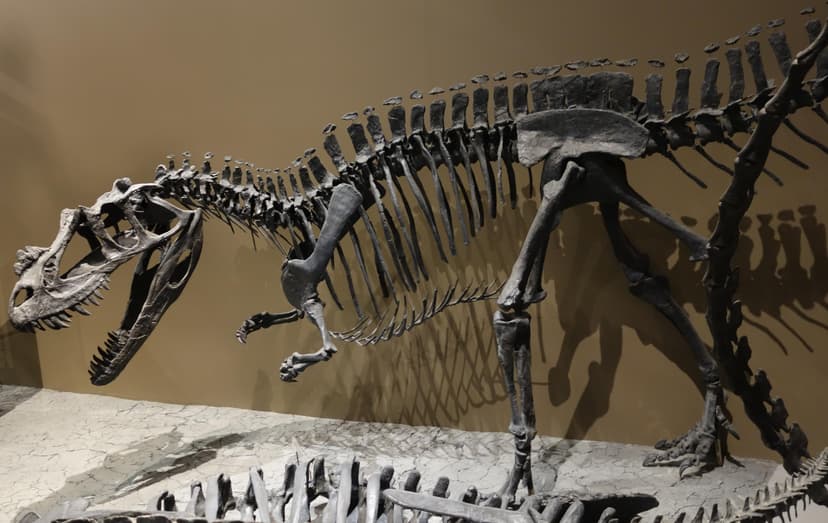
Ceratosaurus
Ceratosaurus was a carnivorous theropod dinosaur that lived during the Late Jurassic period in North America and Europe. Named for the distinctive horn on its snout, it was a medium-sized predator with deep jaws, proportionally large teeth, and a pair of smaller horns above its eyes. While the exact function of its nasal horn is debated, it likely served a display purpose rather than for combat.

Alcovasaurus
Alcovasaurus is an extinct genus of herbivorous stegosaurian dinosaur that lived during the Late Jurassic period. Originally described as Stegosaurus longispinus, it was later reclassified into its own genus due to unique characteristics, particularly its exceptionally long tail spines. Its exact taxonomic placement has been debated, with some researchers considering it a distinct genus and others suggesting it might be a species of Miragaia.

Amphicoelias
Amphicoelias was a genus of herbivorous sauropod dinosaur that roamed the Earth approximately 150 million years ago during the Late Jurassic period. Known from fossils found in Colorado, United States, it was moderately sized, with estimated lengths of around 18 meters and a body mass of 15 metric tons. Its anatomy, particularly its vertebrae and limb bones, shares similarities with its close relative, Diplodocus.