
Ceratosaurus
Ceratosaurus was a carnivorous theropod dinosaur that lived during the Late Jurassic period in North America and Europe. Named for the distinctive horn on its snout, it was a medium-sized predator with deep jaws, proportionally large teeth, and a pair of smaller horns above its eyes. While the exact function of its nasal horn is debated, it likely served a display purpose rather than for combat.
Key Facts
- ›Lived during the Late Jurassic period, approximately 155 million years ago.
- ›Characterized by a prominent horn on its snout and smaller horns over its eyes.
- ›Possessed deep jaws with very long, blade-like teeth.
- ›Forelimbs were short but fully functional, with claws on the first three fingers.
- ›A row of small osteoderms ran down the middle of its neck, back, and tail.
- ›Gives its name to the Ceratosauria clade of theropod dinosaurs.
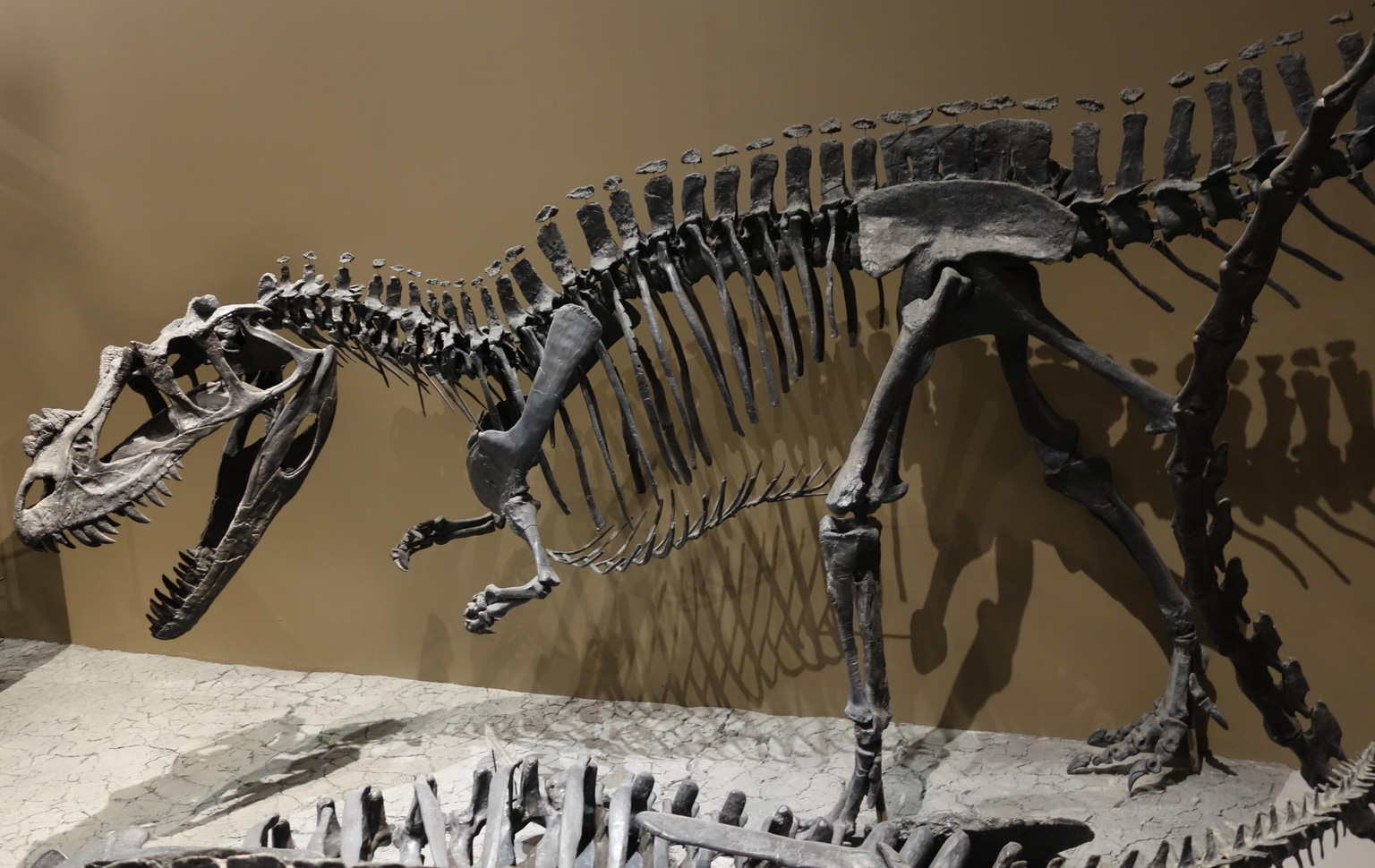
- Medium-sized theropod
- Prominent horn on the midline of the snout
- Pair of smaller horns over the eyes
- Deep jaws with proportionally very long, blade-like teeth
- Short, fully functional forelimbs with four fingers
- Deep tail
- Row of small osteoderms along the neck, back, and tail
Genyodectes, Proceratosaurus
North America, Europe, Africa, South America
About Ceratosaurus
Ceratosaurus is a genus of carnivorous theropod dinosaurs that roamed the Earth during the Late Jurassic period, approximately 155 million years ago. Its name, derived from Greek words meaning 'horn lizard,' refers to the most striking feature of its anatomy: a prominent horn located on the midline of its snout. This distinctive dinosaur also possessed a pair of smaller horns above its eyes, deep jaws filled with proportionally very long, blade-like teeth, and short but fully functional forelimbs. A row of small bony plates, known as osteoderms, ran down its neck, back, and tail, adding to its unique appearance.
Discovery and Classification
The first nearly complete skeleton of Ceratosaurus was discovered in Garden Park, Colorado, in the United States, and was formally described by American paleontologist Othniel Charles Marsh in 1884. This holotype specimen, Ceratosaurus nasicornis, remains the most complete known from the genus. While other species like C. dentisulcatus and C. magnicornis were later described based on fragmentary remains, many paleontologists now consider them to represent different growth stages of the same species. Fossils have been found not only in North America but also in Europe (Portugal), Africa (Tanzania), and South America (Uruguay), though the assignment of some of these international finds to Ceratosaurus is still debated.
Physical Characteristics and Behavior
Ceratosaurus was a medium-sized theropod, with the holotype estimated at around 5.3 to 5.69 meters (17 to 18.7 feet) in length, though some larger specimens suggest lengths up to 7 meters (23 feet). Its weight estimates vary, but generally fall within the range of 400 to over 1,000 kilograms (900 to 2,200 pounds). The deep jaws and sharp teeth indicate a carnivorous diet, likely preying on herbivores of its time. The function of the nasal horn is a subject of scientific discussion; while initially thought to be a weapon, current consensus suggests it was more likely used for display.
Ceratosaurus belongs to the group Ceratosauria, which diverged early in the evolutionary lineage leading to modern birds. It shared its habitat with other large theropods like Allosaurus and Torvosaurus, leading to speculation that these predators occupied different ecological niches to minimize competition for resources.
Source: Wikipedia ↗
Frequently Asked Questions
What does the name Ceratosaurus mean?
The name Ceratosaurus comes from the Greek words 'keras' (horn) and 'sauros' (lizard), meaning 'horn lizard'. The species name, nasicornis, is derived from Latin words for 'nose' and 'horn', referring to its distinctive nasal horn.
How large was Ceratosaurus?
Ceratosaurus was a medium-sized theropod. The holotype specimen is estimated to have been between 5.3 and 5.69 meters (17 to 18.7 feet) long. Some larger specimens suggest lengths up to around 7 meters (23 feet).
What did Ceratosaurus eat?
Ceratosaurus was a carnivore. It is believed to have preyed upon plant-eating dinosaurs. While some earlier suggestions proposed it hunted aquatic prey like fish, more recent studies have rejected this idea.
Where were Ceratosaurus fossils found?
The first nearly complete skeleton was discovered in Garden Park, Colorado, in North America. Other fossils have been found in the Morrison Formation of North America, as well as in Portugal, Tanzania, Uruguay, and Switzerland, though the assignment of some of these remains to Ceratosaurus is debated.
What was the purpose of the horn on Ceratosaurus's snout?
While originally suggested to be a weapon, the nasal horn of Ceratosaurus was likely used for display. Its structure, with a wrinkled and grooved surface that would have contained blood vessels, supports this interpretation.
What other dinosaurs lived alongside Ceratosaurus?
Ceratosaurus shared its habitat with other large theropod dinosaurs such as Torvosaurus and Allosaurus. It is suggested that these theropods may have occupied different ecological niches to avoid direct competition.
Related Dinosaur species

Camarasaurus
Camarasaurus was a herbivorous sauropod dinosaur that lived in North America during the Late Jurassic period. It is one of the most common and well-understood sauropods found in the Morrison Formation, known for its bulky build, proportionally large skull, and powerful jaws. With over 530 specimens discovered, including several nearly complete skeletons, Camarasaurus provides significant insight into the anatomy and life of Jurassic herbivores.

Allosaurus
Allosaurus was a large theropod dinosaur that lived during the Late Jurassic period, approximately 155 to 143 million years ago. Known for its powerful build and sharp, serrated teeth, it was a prominent apex predator in its ecosystem. The genus has a complex taxonomic history, with several species recognized, the most well-known being *Allosaurus fragilis*.
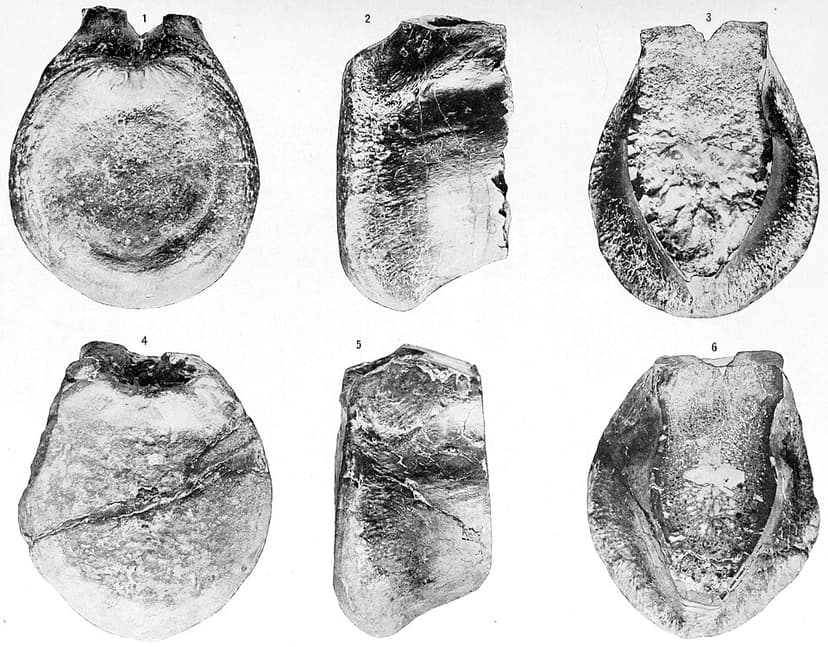
Antrodemus
Antrodemus is a dubious genus of theropod dinosaur from the Late Jurassic, likely from the Morrison Formation in Colorado. The species, Antrodemus valens, was originally described by Joseph Leidy in 1870, but is now considered a nomen dubium. For many years, casts of its fossils were used to represent Allosaurus, leading to widespread confusion.