
Cardiodon
Herbivore·Jurassic·Wiltshire, England·Quadrupedal
Cardiodon was a herbivorous sauropod dinosaur known from a single tooth discovered in Wiltshire, England, dating to the Middle Jurassic period. Its name, meaning "heart tooth," refers to the shape of its teeth. While historically often considered a synonym of Cetiosaurus, recent analyses suggest Cardiodon is a distinct genus and may be related to Turiasaurus, making it the first sauropod genus to be formally named.
Key Facts
- ›Cardiodon was a herbivorous sauropod dinosaur.
- ›Its name refers to the heart-shaped profile of its teeth.
- ›Fossils were discovered in England and date to the Middle Jurassic period.
- ›It was the first sauropod genus to be formally named.
- ›Recent studies suggest it is a distinct genus, possibly related to Turiasaurus.
- ›The only known fossil is a tooth, making its physical characteristics difficult to fully ascertain.
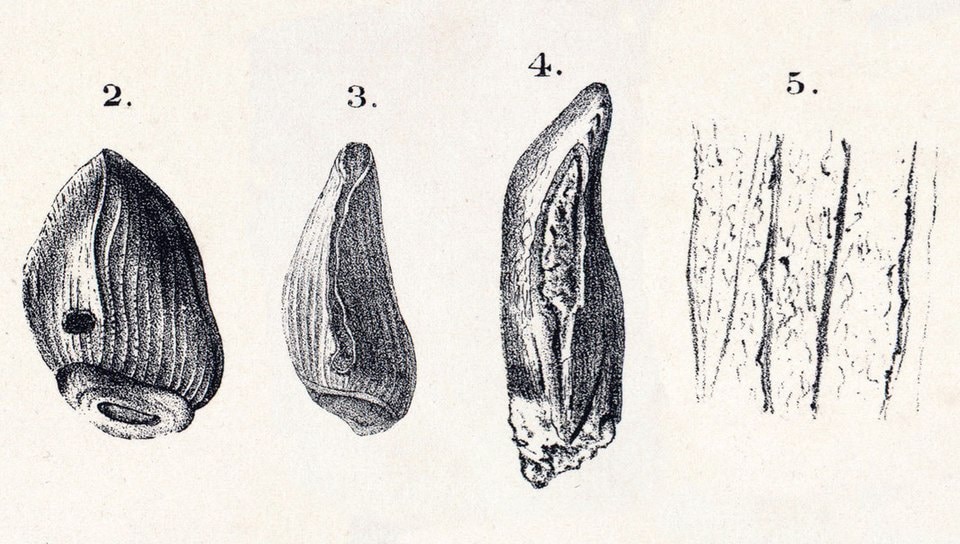
- Spatulate teeth with a convex inner side.
- Teeth are short and wide, slightly curving inwards.
- Outer side of the tooth is strongly convexly curved.
- Enamel shows fine wrinkles.
- Teeth lack denticles.
Cetiosaurus, Turiasaurus
England
About Cardiodon
Cardiodon is a genus of herbivorous sauropod dinosaur from the Middle Jurassic period. Its existence is known primarily from a single tooth discovered in Wiltshire, England, which dates to the late Bathonian stage. The genus was named by Richard Owen, and its name, derived from Greek words for "heart" and "tooth," refers to the distinctive heart-shaped profile of its dental remains. Cardiodon holds the distinction of being the first sauropod genus to be formally named.
History and Taxonomy
Richard Owen initially named the genus in 1841 based on a tooth from Joseph Chaning Pearce's collection, found near Bradford-on-Avon. At the time of its naming, Owen was unaware of its sauropod nature. He later added the specific name rugulosus in 1844, meaning "wrinkled" in Latin, a reference to the texture of the enamel on the tooth. For many years, Cardiodon was often considered a synonym for Owen's more well-known sauropod, Cetiosaurus. This view was reinforced when Richard Lydekker assigned teeth from Oxfordshire, associated with a skeleton of Cetiosaurus oxoniensis, to the genus Cardiodon in 1890. However, more recent analyses have challenged this synonymy. In 2003, Paul Upchurch and John Martin reviewed Cetiosaurus and found insufficient evidence to link the C. oxoniensis teeth to its skeleton, noting that the teeth differed from those of Cardiodon. They supported retaining Cardiodon as a distinct genus. Further research by Upchurch et al. in 2004 classified its teeth as belonging to a eusauropod. More recently, in 2006, Royo-Torres et al. suggested that Cardiodon might be related to the giant sauropod Turiasaurus, placing it within the group Turiasauria.
Description and Paleobiology
As only a tooth is known, the description of Cardiodon is limited. Surviving illustrations of the original tooth reveal a unique combination of characteristics: it is spatulate, meaning it has a broad, flattened crown. The inner side of the tooth is convex, though only slightly, while the outer side is strongly convexly curved from front to rear. A shallow groove runs parallel to the rear edge on the outer side. The crown tapers to a point, and the edges are smooth, lacking denticles. The enamel exhibits the fine wrinkles that inspired the specific name rugulosus. As a sauropod, Cardiodon would have been a large, quadrupedal herbivore, but the scanty remains provide little further detail about its paleobiology.
Source: Wikipedia ↗
Frequently Asked Questions
What does the name Cardiodon mean?
The name Cardiodon means "heart tooth." This refers to the heart-shaped profile of its teeth, which were the basis for its classification.
When and where did Cardiodon live?
Cardiodon lived during the Middle Jurassic period, specifically the late Bathonian stage. Its fossils were found in Wiltshire, England.
What kind of dinosaur was Cardiodon?
Cardiodon was a herbivorous sauropod dinosaur. Sauropods were large, long-necked, plant-eating dinosaurs.
What fossils of Cardiodon have been found?
The primary fossil evidence for Cardiodon is a single tooth. This tooth is now lost, but its characteristics were recorded and illustrated.
Is Cardiodon related to other dinosaurs?
Historically, Cardiodon was often considered a synonym of Cetiosaurus. More recent analyses suggest it is a distinct genus and may be related to Turiasaurus.
What are the physical characteristics of Cardiodon?
Due to the limited fossil record, detailed physical characteristics are hard to determine. However, its teeth were spatulate with a convex inner side and lacked denticles, with wrinkled enamel.
Related Dinosaur species

Adeopapposaurus
Adeopapposaurus is a genus of plateosaurian dinosaur that lived during the Early Jurassic period in what is now Argentina. Its name, meaning "far eating lizard," refers to its long neck. It is known from several partial skeletons, including skulls, and is classified as a massospondylid dinosaur.
Amygdalodon
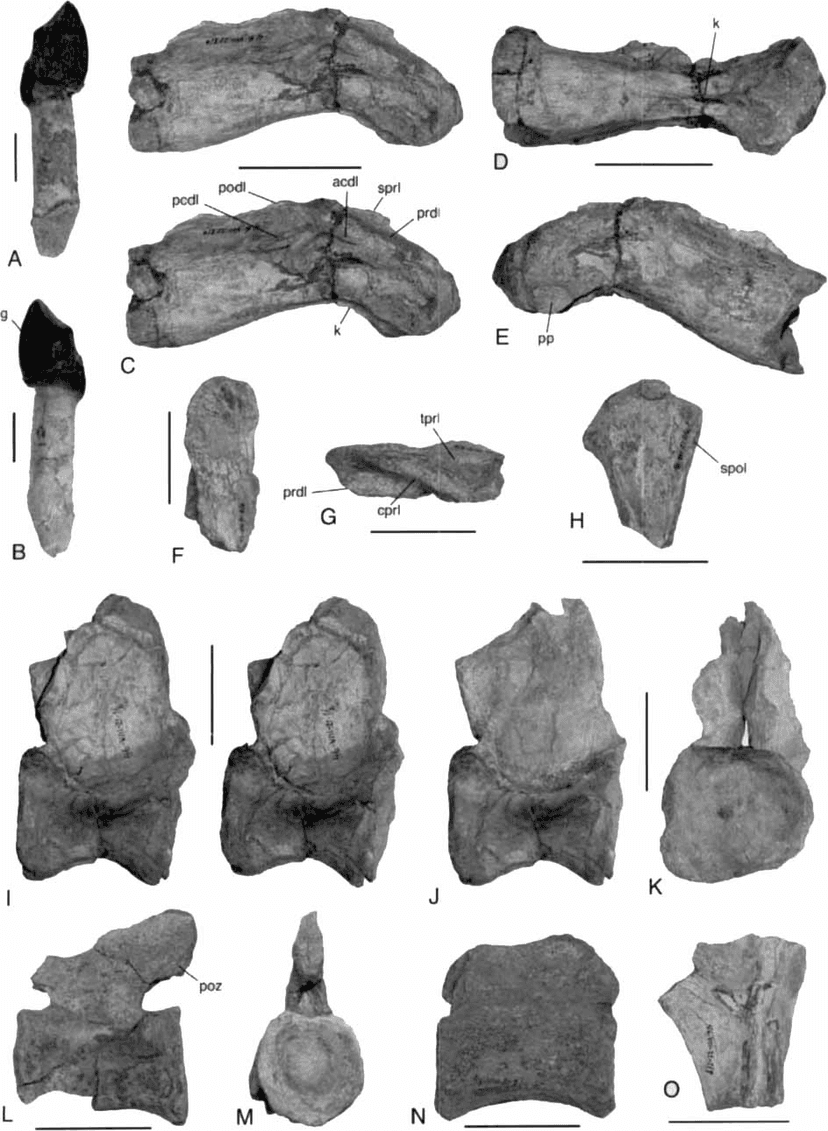
Amygdalodon was a basal sauropod dinosaur that lived in Argentina during the Early Jurassic period. It is known from fragmentary remains, including teeth, vertebrae, ribs, and parts of the pelvis and shoulder blade. Despite its limited fossil record, Amygdalodon provides insights into early sauropod evolution in South America.
Atlantosaurus
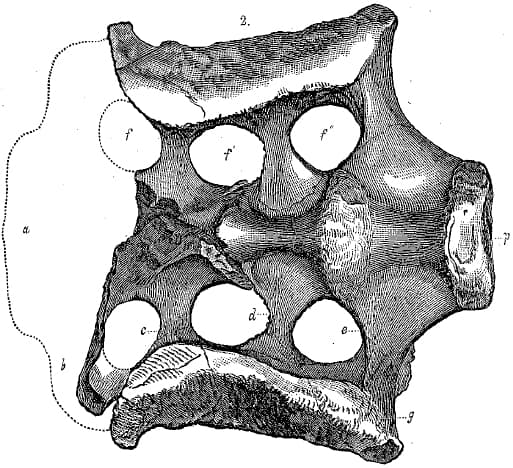
Atlantosaurus is a dubious genus of sauropod dinosaur from the Late Jurassic Morrison Formation of Colorado, United States. It was the first sauropod described during the "Bone Wars" and is known from limited fossil material, making its distinctiveness as a species uncertain.