
Ceratocaudia
Herbivore·Jurassic·Gujarat, India·Quadrupedal
Ceratocaudia is a genus of macronarian sauropod dinosaur discovered in the Jurassic Kaladongar Formation of Gujarat, India. The single known species, Ceratocaudia antiqua, is notable for its relatively small size among macronarians and a distinctive horn-like crest on its tail vertebrae.
Key Facts
- ›Ceratocaudia lived during the Jurassic period.
- ›Fossils were found in the Kaladongar Formation of Gujarat, India.
- ›It was a macronarian sauropod dinosaur.
- ›The estimated length of the holotype specimen is about 7 meters.
- ›Its tail may have been used as a MILD predator deterrent.
- ›Ceratocaudia is considered one of the smallest known macronarians.

- Estimated length of approximately 7 meters.
- Possessed a horn-like crest on the anterior caudal neural spine.
- One of the smallest known macronarians.
India
About Ceratocaudia
Ceratocaudia is a genus of macronarian sauropod dinosaur that lived during the Jurassic period. Its fossils were discovered in the Kaladongar Formation in Gujarat, India, offering insights into the diversity of sauropods in Asia during this era.
Discovery and Naming
The holotype specimen of Ceratocaudia was unearthed from estuarine sediments within the Kaladongar Formation in the Kutch district of Gujarat. The fossil remains include a partial skeleton, comprising several cervical and caudal vertebrae, an isolated chevron, and parts of the appendicular skeleton such as an interclavicle, ulna, metacarpals, femora, tibiae, fibulae, and a metatarsal. These specimens are now housed at the Indian Institute of Technology Bombay. In 2026, Abhishek Natarajan and his colleagues formally described these remains, establishing Ceratocaudia as a new genus and species. The genus name, Ceratocaudia, is derived from the Greek 'keras' (horn) and Latin 'cauda' (tail), referencing a distinctive horn-like crest on the anterior caudal neural spine. The species name, antiqua, is Latin for 'ancient'.
Description and Paleobiology
Ceratocaudia is recognized as one of the smallest known macronarians, with the holotype specimen estimated to be around 7 meters (23 feet) in length. There is speculation that it might represent a dwarf taxon. Histological analysis of the holotype suggests it belonged to a senescent, or old, individual. A reconstructed muscle model of the tail indicates it may have functioned as a mild predator deterrent.
Paleoecology and Classification
The sediments where Ceratocaudia was found also contain petrified woods and bivalves indicative of brackish waters. The presence of a much larger, fragmentary sauropod from a similar time horizon suggests niche partitioning between different sauropod species in the ecosystem. Phylogenetic analyses place Ceratocaudia within Macronaria, but outside Titanosauriformes, positioning it as one of the older sauropods of its kind and supporting the global distribution of macronarians before the Bajocian stage.
Source: Wikipedia ↗
Frequently Asked Questions
What does the name Ceratocaudia mean?
The scientific name Ceratocaudia comes from Ancient Greek 'keras' (horn) and Latin 'cauda' (tail). This refers to the horn-like crest found on the anterior caudal neural spine of the dinosaur.
Where were Ceratocaudia fossils discovered?
Fossils of Ceratocaudia were discovered in the Kaladongar Formation in the Kutch district of Gujarat, India. Specifically, they were found in low energy estuarine sediments.
How large was Ceratocaudia?
The holotype specimen of Ceratocaudia is estimated to have been approximately 7 meters (23 feet) in length. This makes it one of the smallest known macronarian sauropods.
What did Ceratocaudia eat?
While the exact diet of Ceratocaudia is not detailed, it was a sauropod dinosaur. Sauropods were generally herbivores, known for their long necks and plant-based diets.
What is known about Ceratocaudia's tail?
The tail of Ceratocaudia featured a horn-like crest on its anterior neural spine. Reconstructions suggest this tail may have served as a mild deterrent against predators.
Related Dinosaur species

Adeopapposaurus
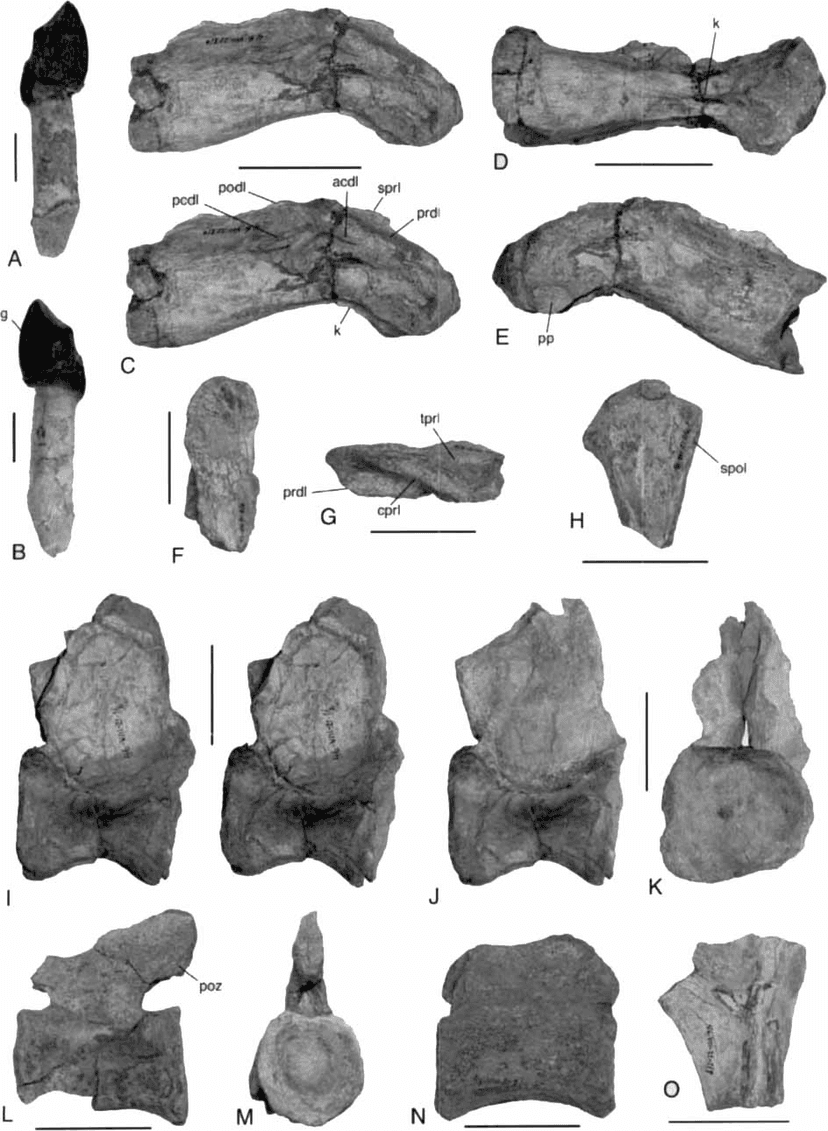
Adeopapposaurus is a genus of plateosaurian dinosaur that lived during the Early Jurassic period in what is now Argentina. Its name, meaning "far eating lizard," refers to its long neck. It is known from several partial skeletons, including skulls, and is classified as a massospondylid dinosaur.
Amygdalodon
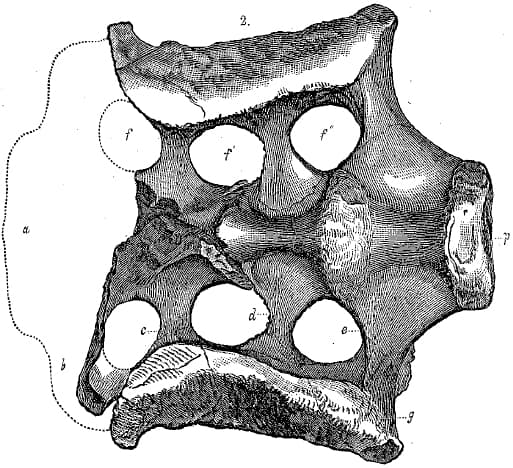
Amygdalodon was a basal sauropod dinosaur that lived in Argentina during the Early Jurassic period. It is known from fragmentary remains, including teeth, vertebrae, ribs, and parts of the pelvis and shoulder blade. Despite its limited fossil record, Amygdalodon provides insights into early sauropod evolution in South America.
Atlantosaurus
Atlantosaurus is a dubious genus of sauropod dinosaur from the Late Jurassic Morrison Formation of Colorado, United States. It was the first sauropod described during the "Bone Wars" and is known from limited fossil material, making its distinctiveness as a species uncertain.