
Chuanjiesaurus
Chuanjiesaurus is a genus of sauropod dinosaurs that lived during the Middle Jurassic Period in what is now China. The type species, Chuanjiesaurus anaensis, was named in 2000 based on fossils discovered in the Chuanjie Formation of Yunnan Province. This large herbivore is estimated to have reached lengths of up to 25 meters.
Key Facts

Large Herbivorous Dinosaur, Estimated Length of 25 Meters
China
About Chuanjiesaurus
Chuanjiesaurus is a genus of sauropod dinosaurs that roamed the Earth during the Middle Jurassic Period. These magnificent herbivores lived in what is now China, contributing to the rich diversity of dinosaur life during that era. The genus was first formally described in the year 2000 by a team of paleontologists, including Fang, Pang, Lü, Zhang, Pan, Wang, Li, and Cheng.
Discovery and Naming
The type species, Chuanjiesaurus anaensis, owes its name to the location of its discovery. Fossils were unearthed in the village of Chuanjie, situated in Lufeng County, within Yunnan Province. These remains were found embedded in deposits belonging to the Chuanjie Formation, a geological stratum significant for preserving Jurassic fauna. The scientific name directly reflects this connection to its place of origin.
Physical Characteristics and Lifestyle
As a sauropod, Chuanjiesaurus was characterized by its immense size. While detailed fossil remains are limited, estimates suggest that individuals of this genus could reach impressive lengths of up to 25 meters (approximately 82 feet). Like other sauropods, Chuanjiesaurus was a quadrupedal herbivore, likely spending its days browsing on vegetation to sustain its massive body. Its exact ecological role and the full extent of its physical adaptations remain subjects of ongoing paleontological research.
Source: Wikipedia ↗
Frequently Asked Questions
When did Chuanjiesaurus live?
Chuanjiesaurus lived during the Middle Jurassic Period. This geological period spans from approximately 201.3 to 163.5 million years ago.
Where were Chuanjiesaurus fossils found?
Fossils of Chuanjiesaurus were discovered in the village of Chuanjie, Lufeng County, Yunnan Province, China. These remains were found within the Chuanjie Formation deposits.
What does the name Chuanjiesaurus mean?
The scientific name Chuanjiesaurus is derived from the location where its fossils were discovered. The genus name 'Chuanjiesaurus' refers to the village of Chuanjie, and 'saurus' means lizard.
How big was Chuanjiesaurus?
Chuanjiesaurus was a large dinosaur. Estimates suggest it could reach a length of up to 25 meters (82 feet).
Related Dinosaur species
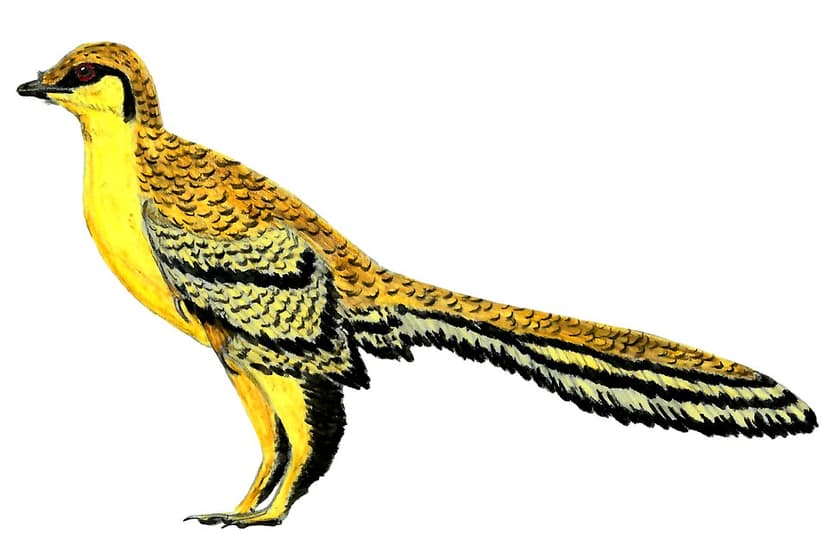
Aurornis
Aurornis is an extinct genus of theropod dinosaur from the Jurassic Period of China, notable for its potential classification as a very early avialan or bird. With an estimated length of 50 cm and resembling a pheasant, it possessed clawed wings and a long bony tail, with fossil evidence suggesting it lived approximately 160 million years ago, predating Archaeopteryx.
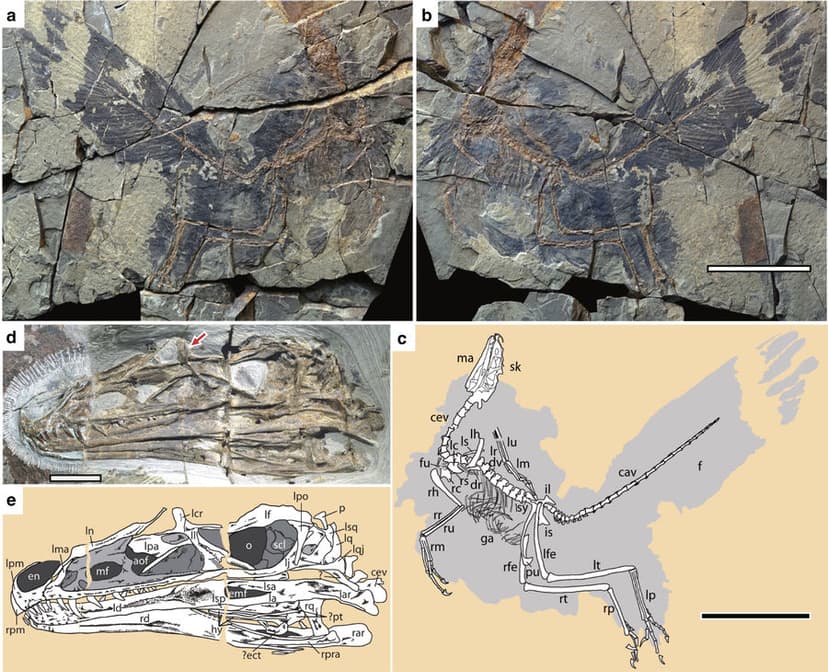
Caihong
Caihong is a small paravian theropod dinosaur discovered in China, living during the Late Jurassic period. Its name, meaning 'rainbow' in Mandarin, reflects the spectacular preservation of its fossil, which includes soft tissues and extensive plumage. This well-preserved specimen offers significant insights into the evolution of feathered dinosaurs.

Abrosaurus
Abrosaurus was a genus of macronarian sauropod dinosaur that lived during the Middle Jurassic Period in what is now Asia. It is known for its relatively small size for a sauropod and its distinctive boxy skull with a prominent nasal arch. The only named species, Abrosaurus dongpoi, was discovered in China.