
Caihong
Caihong is a small paravian theropod dinosaur discovered in China, living during the Late Jurassic period. Its name, meaning 'rainbow' in Mandarin, reflects the spectacular preservation of its fossil, which includes soft tissues and extensive plumage. This well-preserved specimen offers significant insights into the evolution of feathered dinosaurs.
Key Facts
- ›Caihong lived during the Late Jurassic period, approximately 161 million years ago.
- ›It was a small dinosaur, estimated to be around 40 cm (16 inches) in length and weighing 475 grams (16.8 oz).
- ›The fossil exhibits exceptionally well-preserved plumage, including feathers with melanosomes that suggest iridescent coloration.
- ›A notable feature is a large, horn-like crest on the lacrimal bone of its skull.
- ›Caihong is the oldest known dinosaur with evidence of platelet-like melanosomes, indicative of colorful feathers.
- Estimated length of 40 cm
- Estimated weight of 475 grams
- Estimated wingspan of approximately 44 cm
- Large, horn-like crest on the lacrimal bone
- Accessory fenestra in the maxilla
- Longer pennaceous feathers on forelimbs and hindlimbs
- Feathers with melanosomes suggesting iridescent coloration
Eosinopteryx, Anchiornis, Archaeopteryx
China
About Caihong
What is Caihong?
Caihong (meaning 'rainbow' in Mandarin) is a genus of small paravian theropod dinosaur that inhabited China during the Late Jurassic period, approximately 161 million years ago. The scientific name, Caihong juji, highlights its striking appearance and a distinctive anatomical feature: 'juji' translates to 'big crest' in reference to a prominent crest on its lacrimal bone.
Discovery and Preservation
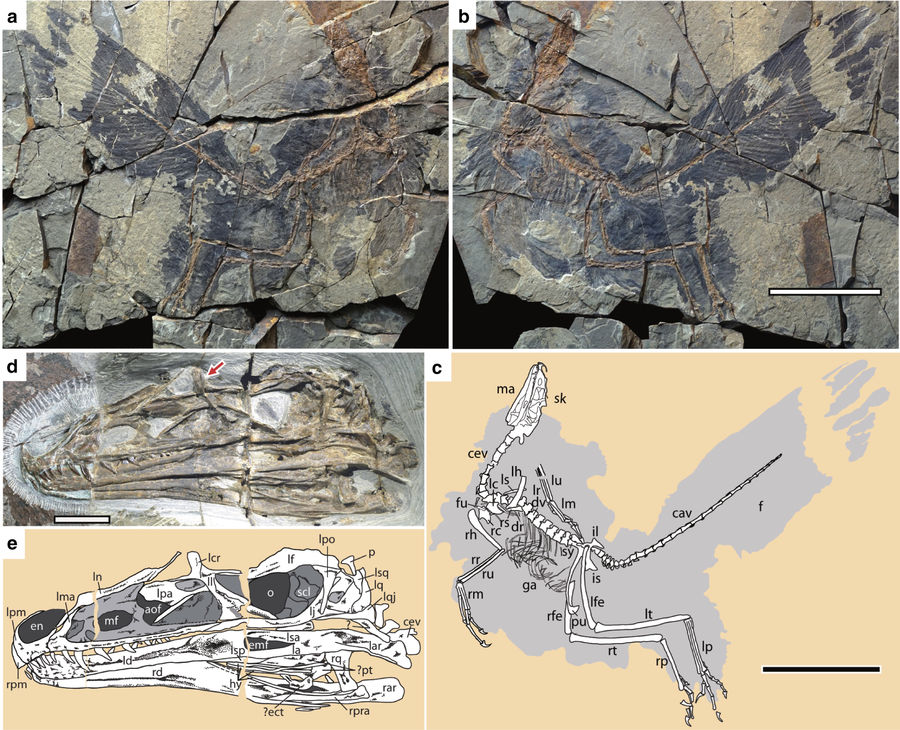
The remarkably well-preserved fossil of Caihong was discovered in a quarry near the village of Nanshimenzi in Hebei province, China, by peasant Yang Jun. Acquired by the Paleontological Museum of Liaoning in 2014, the specimen, PMoL-B00175, is a complete, articulated skeleton found within the Tiaojishan Formation. The fossil preserves not only the bony structure but also extensive soft tissues and plumage, offering exceptional detail about the dinosaur's appearance and biology.
Physical Characteristics and Feathering
Caihong was a diminutive dinosaur, estimated to be about 40 cm (16 inches) in length and weighing around 475 grams (16.8 oz), with an estimated wingspan of 44 cm (17 inches). Its skull is low and elongated, featuring unique skull openings and a striking, horn-like crest on the lacrimal bone. The dinosaur's plumage is particularly noteworthy; analysis of preserved melanosomes within the feathers indicates that Caihong possessed iridescent coloration, potentially displaying shimmering hues similar to modern hummingbirds. This makes Caihong the oldest known dinosaur to show evidence of such colorful feather structures, represented by platelet-like melanosomes.
Scientific Significance
The Caihong fossil is significant for its completeness and the extraordinary preservation of its feathers. It provides crucial insights into the evolution of feathers and coloration in non-avian dinosaurs, bridging gaps in our understanding of avian ancestry. The unique anatomical features of Caihong also help to clarify the diversity and evolutionary relationships within the paravian theropod group.
Source: Wikipedia ↗
Frequently Asked Questions
What does the name Caihong mean?
The name Caihong is derived from Mandarin Chinese, where 'cǎihóng' translates to 'rainbow'. This name was chosen to honor the spectacular preservation of the fossil and the spectrum of new scientific understanding it provides.
When and where did Caihong live?
Caihong lived during the Late Jurassic period, approximately 161 million years ago. Its fossils were discovered in the Yanliao Biota region of China, specifically in Hebei province.
How large was Caihong?
Caihong was a small dinosaur, with an estimated length of about 40 centimeters (16 inches) and an estimated weight of 475 grams (16.8 oz). It also had an estimated wingspan of around 44 centimeters (17 inches).
What is unique about Caihong's feathers?
The fossil of Caihong preserves soft tissues and extensive remains of its plumage. Analysis of the melanosomes within these feathers suggests iridescent coloration, similar to that found in modern birds. It represents the oldest evidence of such structures in dinosaurs.
What are the distinctive physical features of Caihong?
Caihong possessed a large, horn-like crest on its lacrimal bone and an accessory fenestra in its maxilla, which are unique derived traits. It also had longer pennaceous feathers on its forelimbs and hindlimbs compared to closely related genera.
What does the Caihong fossil tell us about dinosaur coloration?
The melanosomes found in Caihong's feathers indicate that it likely possessed iridescent colors. The presence of platelet-like melanosomes on its head and chest suggests the potential for bright, shimmering hues, making it the earliest known dinosaur with such colorful feather structures.
Related Dinosaur species
Aurornis
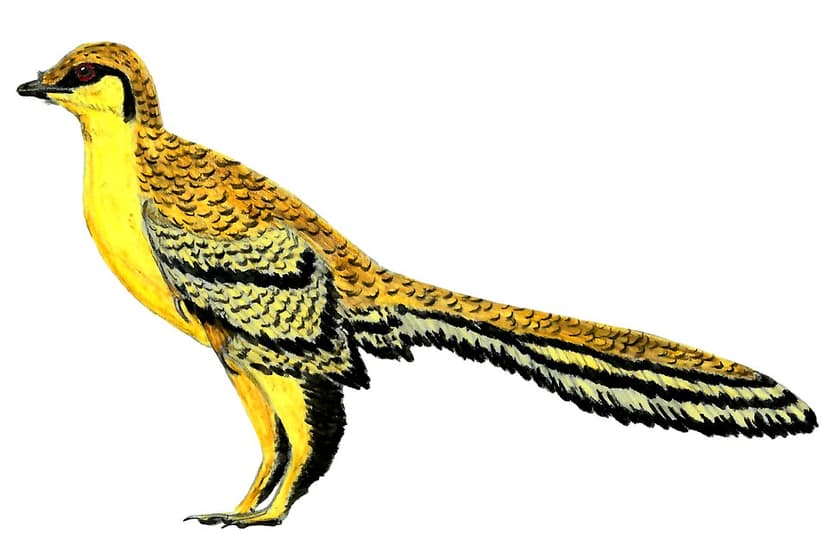
Aurornis is an extinct genus of theropod dinosaur from the Jurassic Period of China, notable for its potential classification as a very early avialan or bird. With an estimated length of 50 cm and resembling a pheasant, it possessed clawed wings and a long bony tail, with fossil evidence suggesting it lived approximately 160 million years ago, predating Archaeopteryx.

Chuanjiesaurus
Chuanjiesaurus is a genus of sauropod dinosaurs that lived during the Middle Jurassic Period in what is now China. The type species, Chuanjiesaurus anaensis, was named in 2000 based on fossils discovered in the Chuanjie Formation of Yunnan Province. This large herbivore is estimated to have reached lengths of up to 25 meters.

Asiatyrannus
Asiatyrannus is an extinct genus of tyrannosaurine theropod dinosaur that lived during the Late Cretaceous period in what is now China. Known from a single specimen including a skull and partial skeleton, it is distinguished by its deep-snouted skull and relatively small body size compared to some contemporary tyrannosaurs. However, its validity as a distinct genus has been questioned, with some researchers suggesting it may represent a juvenile individual of the more well-known genus Tarbosaurus.