
Aurornis
Aurornis is an extinct genus of theropod dinosaur from the Jurassic Period of China, notable for its potential classification as a very early avialan or bird. With an estimated length of 50 cm and resembling a pheasant, it possessed clawed wings and a long bony tail, with fossil evidence suggesting it lived approximately 160 million years ago, predating Archaeopteryx.
Key Facts
- ›Aurornis is an extinct genus of anchiornithid theropod dinosaur.
- ›It lived during the Late Jurassic period (Oxfordian stage) approximately 160 million years ago.
- ›The genus contains a single species, Aurornis xui.
- ›Aurornis xui may be one of the most basal and earliest avialan dinosaurs discovered.
- ›Its fossil evidence predates that of Archaeopteryx by about 10 million years.
- ›It was roughly the size of a modern pheasant, with a length of 50 cm.
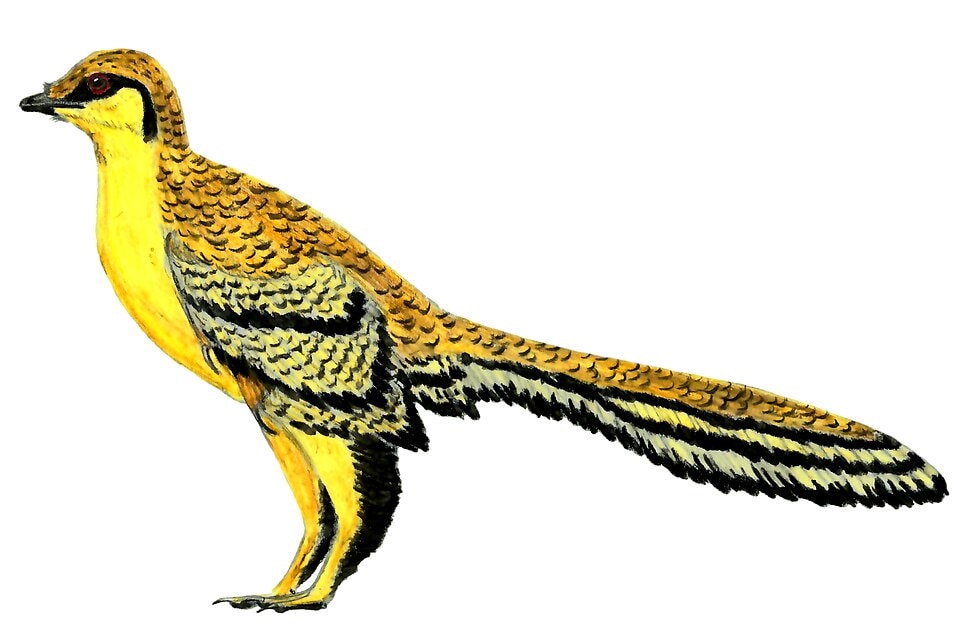
- Roughly the size of a modern pheasant
- Length of 50 cm
- Clawed wings
- Long bony tail
- Possessed downy feathers on tail, chest, and neck
- Leg bones similar to Archaeopteryx but overall more primitive anatomy
Archaeopteryx Lithographica, Anchiornis, Xiaotingia, Eosinopteryx
China
About Aurornis
What is Aurornis?
Aurornis is an extinct genus of theropod dinosaur that lived during the Late Jurassic period in what is now China. It is known from a single species, Aurornis xui. This dinosaur is of particular scientific interest because it may represent one of the most basal, or primitive, avialan dinosaurs discovered to date, potentially predating the famous Archaeopteryx by approximately 10 million years.
Discovery and Age
The fossil of Aurornis was described in 2013. It was purchased from a local dealer who stated it was unearthed in western Liaoning, China. Subsequent analysis indicated it originated from the Tiaojishan Formation, which is dated to the Late Jurassic period, around 160 million years ago. However, the precise provenance and age of the specimen have faced some scientific scrutiny due to the informal nature of its acquisition.
Physical Characteristics and Classification
Aurornis was relatively small, measuring about 50 cm (20 inches) in length, comparable to a modern pheasant. It possessed clawed wings and a long, bony tail. Fossil evidence also reveals traces of downy feathers along its tail, chest, and neck. Its anatomy was considered more primitive than Archaeopteryx, though its leg bones showed similarities. The classification of Aurornis as a bird or a non-avian dinosaur remains a subject of debate among paleontologists, highlighting the complex evolutionary transition between dinosaurs and birds.
Source: Wikipedia ↗
Frequently Asked Questions
What is Aurornis?
Aurornis is an extinct genus of theropod dinosaur from the Jurassic Period of China. It is significant for being potentially one of the most primitive avialan dinosaurs known, with fossil evidence suggesting it lived around 160 million years ago.
How old is Aurornis?
Fossils of Aurornis were found in the Tiaojishan Formation, which dates to the Late Jurassic period, approximately 160 million years ago. This age predates that of Archaeopteryx by about 10 million years.
What did Aurornis look like?
Aurornis was roughly the size of a pheasant, measuring about 50 cm in length. It had distinctive features such as clawed wings and a long, bony tail. Traces of downy feathers have been found on its tail, chest, and neck.
Is Aurornis considered a bird?
The classification of Aurornis xui as a bird is debated due to differing definitions of what constitutes a bird. While some analyses place it within the bird lineage, others suggest it is a non-avian dinosaur closely related to birds. Its primitive anatomy makes it difficult to distinguish from birdlike dinosaurs.
Where was Aurornis discovered?
The fossil of Aurornis was discovered in China. While initially reported as coming from Yaoluguo in western Liaoning province, its exact provenance and age have been subject to some uncertainty due to information provided by the fossil dealer.
What is the scientific name of Aurornis?
The scientific name for the sole known species of Aurornis is Aurornis xui. The genus name 'Aurornis' combines the Latin 'aurora' (daybreak/dawn) and Greek 'ornis' (bird), while the specific name 'xui' honors Xu Xing.
Related Dinosaur species
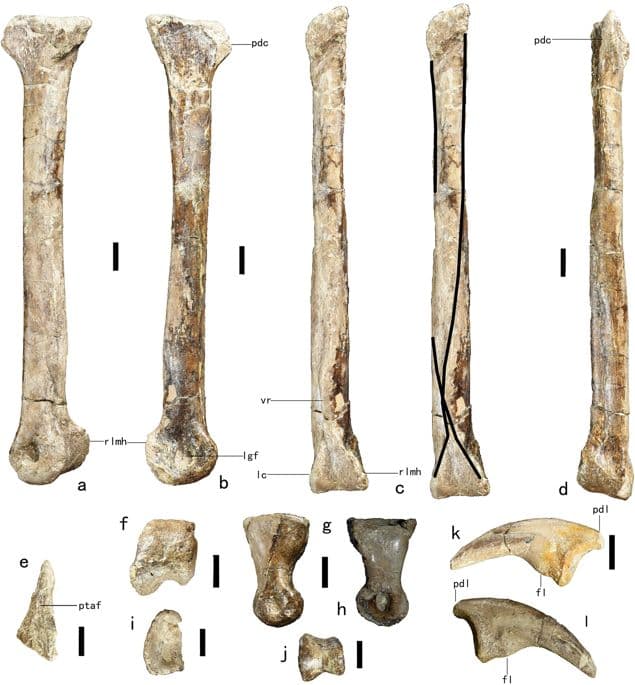
Anomalipes
Anomalipes is an extinct genus of oviraptorosaurian dinosaurs from the Late Cretaceous period of China. Known from a partial hindlimb, its name, meaning "unusual foot," reflects the peculiar shape of its foot bones. The only known species, Anomalipes zhaoi, was named in honor of Zhao Xijin.
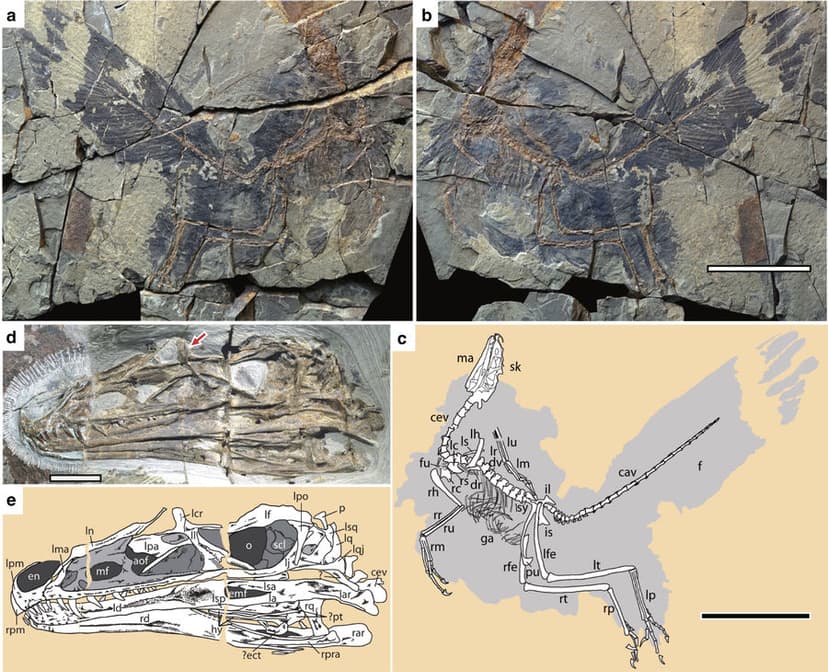
Caihong
Caihong is a small paravian theropod dinosaur discovered in China, living during the Late Jurassic period. Its name, meaning 'rainbow' in Mandarin, reflects the spectacular preservation of its fossil, which includes soft tissues and extensive plumage. This well-preserved specimen offers significant insights into the evolution of feathered dinosaurs.

Chuanjiesaurus
Chuanjiesaurus is a genus of sauropod dinosaurs that lived during the Middle Jurassic Period in what is now China. The type species, Chuanjiesaurus anaensis, was named in 2000 based on fossils discovered in the Chuanjie Formation of Yunnan Province. This large herbivore is estimated to have reached lengths of up to 25 meters.