
Chubutisaurus
Chubutisaurus is a genus of somphospondylan sauropod dinosaur that lived during the Late Cretaceous period in what is now Argentina. Described in 1975, its name means "Chubut lizard," referencing the province where its fossils were discovered. Chubutisaurus is known for having a more robust radius compared to other sauropods like Venenosaurus.
Key Facts
- ›Lived during the Cenomanian age of the early Late Cretaceous period.
- ›Fossils were discovered in the Cerro Barcino Formation of Chubut Province, Argentina.
- ›The generic name translates to 'Chubut lizard,' and the specific name means 'remarkable.'
- ›Estimated to be between 18 and 23 meters long.
- ›Its weight was estimated to be around 12 tonnes.
- ›Had a more robust radius bone than the genus Venenosaurus.

Robust Radius Bone, Estimated Length of 18-23 Meters, Estimated Weight of 12 Tonnes
Venenosaurus
Argentina
About Chubutisaurus
Chubutisaurus is a genus of somphospondylan sauropod dinosaur that roamed the Earth during the Late Cretaceous period. Its fossils were discovered in the Cerro Barcino Formation of Argentina, and the genus name itself, "Chubut lizard," reflects its place of origin and its reptilian nature. The species name, insignis, is Latin for "remarkable," suggesting that the discoverers found the remains to be noteworthy.
Discovery and Naming
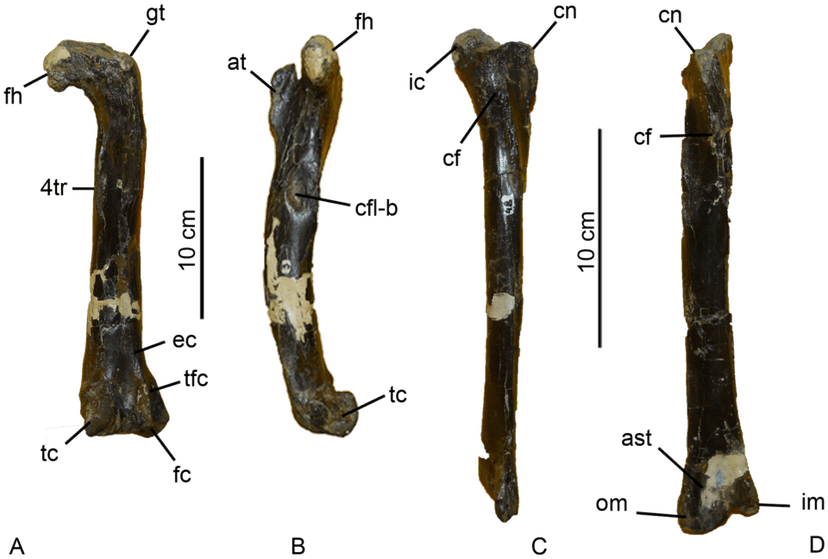
The initial fossils of Chubutisaurus were unearthed in 1961 by a local farmer near El Escorial village in Chubut Province. These specimens were later collected by paleontologist Guillermo del Corro in 1965 and cataloged. Del Corro officially described the dinosaur in 1975, assigning it to a new genus and species, Chubutisaurus insignis. The holotype specimen consists of disarticulated remains, including fragments of vertebrae, limb bones, and metacarpals. Subsequent expeditions in 1991 and 2007 uncovered additional fossils, which, along with previously undescribed elements, were detailed by paleontologists Jose Carballido and colleagues in 2011, confirming they belonged to the holotype individual. The holotype fossils are now distributed across three different institutions.
Physical Characteristics and Paleoecology
Chubutisaurus is estimated to have been a large dinosaur, with lengths ranging from 18 to 23 meters (approximately 59 to 75 feet) and a weight of around 12 tonnes (13 short tons). It is noted for possessing a more robust radius bone when compared to other sauropods like Venenosaurus. As a sauropod, Chubutisaurus was a herbivore, likely feeding on vegetation. It shared its habitat in the Cerro Barcino Formation with other contemporary fauna, including the notosuchian Barcinosuchus, the titanosaur Patagotitan, the ceratosaurid Genyodectes, and the carcharodontosaurid Tyrannotitan.
Source: Wikipedia ↗
Frequently Asked Questions
When did Chubutisaurus live?
Chubutisaurus lived during the Cenomanian age of the early Late Cretaceous period. This geological time frame is estimated to be between 100 and 98 million years ago.
Where were the fossils of Chubutisaurus found?
The fossils of Chubutisaurus were first discovered in Chubut Province, Patagonia, in central Argentina. The specific geological formation where they were found is the Cerro Barcino Formation.
What does the name Chubutisaurus mean?
The name Chubutisaurus is derived from Chubut, the province in Argentina where its fossils were found, and the Latinized Greek word 'sauros,' meaning 'lizard.' Thus, it translates to 'Chubut lizard.'
How large was Chubutisaurus?
Estimates for the length of Chubutisaurus vary, with Gregory S. Paul suggesting 18 meters (59 ft) and Thomas Holtz estimating it at 23 meters (75 ft). Its weight was estimated to be around 12 tonnes (13 short tons).
What kind of dinosaur was Chubutisaurus?
Chubutisaurus was a sauropod dinosaur, belonging to the somphospondylan group. Sauropods were large, long-necked, herbivorous dinosaurs.
Related Dinosaur species

Bicharracosaurus
Bicharracosaurus was a large macronarian sauropod dinosaur that lived during the Late Jurassic period in what is now Argentina. Its name, meaning "big animal lizard," reflects its immense size. The genus is known from a partial skeleton, including vertebrae and ribs, discovered in Chubut Province.

Carnotaurus
Carnotaurus was a large, lightly built theropod dinosaur that roamed South America during the Late Cretaceous period. It is distinguished by a pair of prominent horns above its eyes and a very deep skull. Known from a single, well-preserved skeleton, Carnotaurus is one of the most thoroughly understood theropods from the Southern Hemisphere.
Aniksosaurus
Aniksosaurus was a bipedal theropod dinosaur that lived in what is now Chubut Province, Argentina, during the Late Cretaceous period. Its name, meaning 'spring lizard,' refers to the time of its discovery. Fossil evidence suggests Aniksosaurus may have been gregarious, particularly during its sub-adult stages.