
Coelurosauravus
Insectivore·Permian·Madagascar·Gliding
Coelurosauravus was a genus of extinct gliding reptile that lived during the Late Permian period in Madagascar. Members of this genus are distinguished by unique, long, rod-like ossifications projecting from their bodies, which are believed to have formed folding wings for gliding flight, similar to modern Draco lizards. Its scientific name, "hollow-tailed lizard grandfather," reflects its unique anatomical features and its place in evolutionary history.
Key Facts
- ›Coelurosauravus is known from fossils found in Madagascar.
- ›It possessed unique bony rods along its body that likely formed folding wings for gliding.
- ›These gliding structures may have allowed it to travel between trees.
- ›Its skull was relatively small compared to other members of its family.
- ›Coelurosauravus is interpreted as an arboreal insectivore, with teeth suited for piercing arthropod exoskeletons.
- ›The gliding efficiency of Coelurosauravus has been debated, with some studies suggesting it was less efficient than modern gliding lizards due to body size, while later studies suggest it may have been more efficient than previously thought.

- Possessed long, rod-like ossifications projecting from the sides of the body, forming folding wings for gliding.
- Skull length of a mature individual was approximately 3.5 cm.
- Total combined head and torso length reached about 18 cm.
- Estimated total length at least 32 cm including tail.
- Skull bones covered in cranial ornamentation, including low tubercles and spikes.
- Teeth were simple, conical, and arranged in a dense row, decreasing in size posteriorly.
- Had a shorter neck and a longer, flattened thorax compared to some relatives.
- Elongated penultimate phalanges in hands and feet, indicative of claws for clinging to tree bark.
- Wingspan estimated at 35 cm when fully opened.
Weigeltisaurus Jaekeli, Glaurung
Madagascar
About Coelurosauravus
Coelurosauravus is an extinct genus of gliding reptile that inhabited the earth during the Late Permian period. Its fossils have been discovered in Madagascar, providing insights into the diversity of reptilian life during this ancient era. The most striking characteristic of Coelurosauravus is its unique anatomical adaptation for gliding, which sets it apart from many other reptiles of its time.
Anatomy and Gliding Capabilities
Members of the genus Coelurosauravus possessed distinctive, long, rod-like ossifications that projected outwards from the sides of their bodies. These structures, referred to as "patagials," are believed to have formed folding wings. When extended, these patagials would have supported a membrane, allowing Coelurosauravus to glide through the air, much like modern-day flying lizards of the genus Draco. The skull of Coelurosauravus was relatively small, measuring about 3.5 centimeters (1.4 inches) in mature individuals. The overall body length, including the tail, could reach at least 32 centimeters (13 inches), with an estimated wingspan of approximately 35 centimeters (14 inches). The teeth were simple and conical, suggesting a diet suited for piercing prey.
Paleobiology and Paleoenvironment
While direct evidence of diet is absent, paleontologists interpret Coelurosauravus as an arboreal insectivore. Its specialized teeth are considered an adaptation for consuming arthropods. The cranial ornamentation, consisting of tubercles and spikes, may have served a display purpose. The environment in which Coelurosauravus lived, the Lower Sakamena Formation, was a wetland situated within a rift valley. The climate was temperate, warm, and humid, characterized by seasonal rainfall. This ecosystem supported a diverse range of flora and fauna, including various fish, other reptiles, and therapsids.
Discovery and Classification
The genus Coelurosauravus was named by Jean Piveteau in 1926, based on fossils found in Madagascar. The type species is Coelurosauravus elivensis. Early classifications sometimes included European species within Coelurosauravus, such as Weigeltisaurus jaekeli. However, subsequent research has led to the reinstatement of Weigeltisaurus as a separate genus, clarifying the distinct evolutionary paths of these gliding reptiles. The fossil record, while providing crucial information, is noted for its preservation quality.
Source: Wikipedia ↗
Frequently Asked Questions
What does the name Coelurosauravus mean?
The name Coelurosauravus translates to "hollow-tailed lizard grandfather." This name highlights its unique anatomical features and its significance in the evolutionary study of gliding reptiles.
Where were Coelurosauravus fossils discovered?
Fossils of Coelurosauravus were discovered in Madagascar, likely from the region of Mount Eliva near the Sakamena River.
How did Coelurosauravus glide?
Coelurosauravus is believed to have glided using folding wings formed by long, bony rods that projected from the sides of its body. These structures, known as patagials, likely unfurled to create a membrane for gliding.
What did Coelurosauravus eat?
Although no stomach contents have been found, Coelurosauravus is interpreted as an arboreal insectivore. Its simple, conical teeth were well-suited for piercing the exoskeletons of insects and other arthropods.
How large was Coelurosauravus?
The skull of Coelurosauravus was small, measuring about 3.5 centimeters (1.4 inches) in length. The combined head and torso length reached approximately 18 centimeters (7.1 inches), with a preserved tail length extending it to at least 32 centimeters (13 inches). Its wingspan when fully opened was around 35 centimeters (14 inches).
Was Coelurosauravus a good glider?
Studies on Coelurosauravus's gliding ability have yielded mixed results. Earlier comparisons suggested it was less efficient than modern Draco lizards due to its larger body size, leading to a steeper descent angle. However, more recent research has suggested that its body mass may have been overestimated, potentially making it a relatively efficient glider.
Related Dinosaur species

Albertonykus
Albertonykus is a small, extinct genus of alvarezsaurid dinosaur discovered in Alberta, Canada. Known from forelimb and hindlimb remains, it is interpreted as having fed on wood-nesting termites, using its specialized forelimbs for digging. Albertonykus represents the earliest known North American alvarezsaurid.
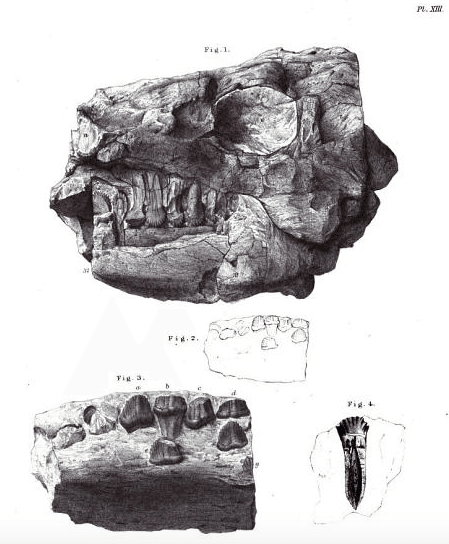
Anthodon
Anthodon was an extinct genus of parareptile that lived during the Permian period in what is now South Africa and Tanzania. Named for its distinctive flower-like teeth, which had numerous cusps, Anthodon was a relatively small herbivore, measuring about 1.2 to 1.5 meters in length.

Archaeodontosaurus
Archaeodontosaurus is a genus of sauropod dinosaur that lived during the Middle Jurassic period. Its fossils were discovered in the Isalo III Formation of Madagascar. The species Archaeodontosaurus descouensi is known for its prosauropod-like teeth, suggesting it may have been a basal member of the Gravisauria group.