
Dandakosaurus
Dandakosaurus is a dubious genus of theropod dinosaur from the Kota Formation in India, living during the Early Jurassic period. Due to limited fossil evidence, some paleontologists consider it a nomen dubium. Remains suggest it was a carnivore, but its exact classification and features remain uncertain.
Key Facts
- ›Lived during the Early Jurassic, between 183 and 175 million years ago.
- ›Fossils were discovered in the Kota Formation of Andhra Pradesh, India.
- ›The genus is considered dubious, with some paleontologists classifying it as a nomen dubium.
- ›Its classification is uncertain, with suggestions placing it as a basal ceratosaur or basal tetanuran.
- ›Estimated to be around 10 meters long and weigh 2.3 tonnes.
- ›Possessed a unique mesopubic condition where the pubis pointed ventrally.
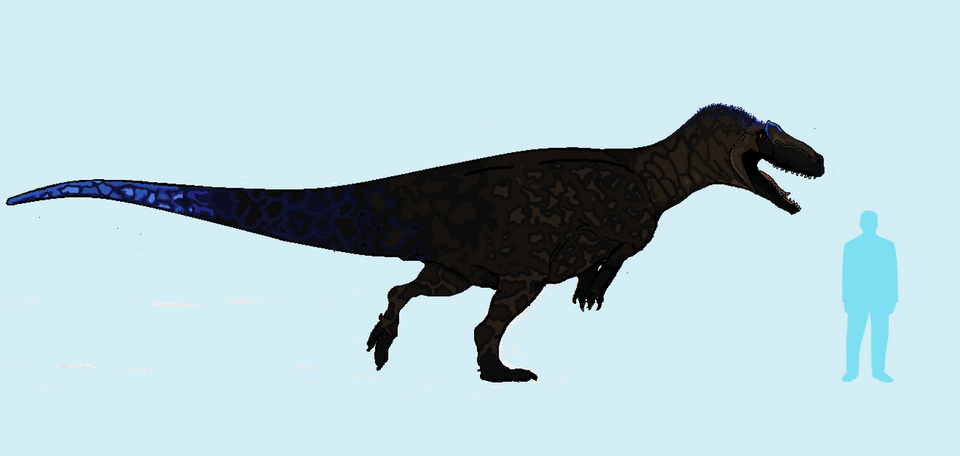
- Recurved and heavily compressed tooth with small denticles on the distal carina.
- Dorsal vertebrae lack pleurocoels and are opisthocoelous.
- Caudal vertebrae have lateral depressions and are amphicoelous with a ventral keel.
- Pubis has an obturator notch instead of a fenestra.
- Unique mesopubic condition with the pubis pointing ventrally.
- Estimated length of 10 meters.
- Estimated weight of 2.3 tonnes.
India
About Dandakosaurus
Dandakosaurus is a genus of theropod dinosaur that lived during the Early Jurassic period, approximately 183 to 175 million years ago. The fossils were unearthed in the Kota Formation of Andhra Pradesh, India. Due to the limited nature of the fossil material, Dandakosaurus is considered a dubious genus, with some paleontologists classifying it as a nomen dubium, meaning "dubious name."
Discovery and Naming
The holotype specimen, consisting of a partial proximal pubis, was discovered between 1958 and 1961 and initially described as an indeterminate carnosaur in 1962. Additional referred material includes dorsal and caudal vertebrae, a tooth, and a partial ischium. The type species, Dandakosaurus indicus, was formally named by Ponnala Yadagiri in 1982.
Description and Classification
The teeth of Dandakosaurus are described as recurved and heavily compressed, with small denticles on the distal carina. Its dorsal vertebrae lack pleurocoels and are opisthocoelous, while the caudal vertebrae exhibit lateral depressions and are amphicoelous with a ventral keel. Notably, the pubis lacks an obturator fenestra, possessing an obturator notch instead, and uniquely points ventrally, resulting in a mesopubic condition. In terms of size, recent estimates place Dandakosaurus at around 10 meters (33 feet) in length and approximately 2.3 tonnes (2.5 short tons) in weight.
Currently, Dandakosaurus is classified as Averostra incertae sedis, indicating its uncertain placement within the theropod dinosaur family tree. Paleontological hypotheses suggest it may have been a basal ceratosaur or a basal tetanuran.
Source: Wikipedia ↗
Frequently Asked Questions
When did Dandakosaurus live?
Dandakosaurus lived during the Early Jurassic period, specifically from the latest Pliensbachian to the late Toarcian stages, approximately 183 to 175 million years ago.
Where were Dandakosaurus fossils found?
The fossils of Dandakosaurus were discovered in the Kota Formation, located in Andhra Pradesh, India.
What does the name Dandakosaurus mean?
The name Dandakosaurus translates to "Dandakaranya lizard," referencing the region where its fossils were found.
What is the scientific classification of Dandakosaurus?
Dandakosaurus is currently classified as Averostra incertae sedis, meaning its exact placement within the theropod family tree is uncertain. It has been suggested to be either a basal ceratosaur or a basal tetanuran.
What are the physical characteristics of Dandakosaurus?
Based on limited fossil material, Dandakosaurus is estimated to have been about 10 meters (33 ft) long and weighed around 2.3 tonnes (2.5 short tons). A notable feature is its mesopubic condition, where the pubis bone pointed ventrally rather than forward.
Is Dandakosaurus a well-known dinosaur?
Dandakosaurus is considered a dubious genus, and little is known about it. Some paleontologists even classify it as a nomen dubium, indicating that the fossil evidence is insufficient to definitively establish it as a distinct genus.
Related Dinosaur species

Coeluroides
Coeluroides is an extinct genus of theropod dinosaur that inhabited India during the Late Cretaceous Period. Its existence is known solely through fossilized caudal vertebrae found in the Lameta Formation. While initially considered a dubious name due to limited remains, later analyses suggest it is likely a valid genus, potentially a synonym for Ornithomimoides.

Compsosuchus
Compsosuchus is a dubious genus of theropod dinosaur from the Late Cretaceous of India. Its classification has been debated, with some studies suggesting it was an abelisaurid, while others have placed it as a noasaurid or an indeterminate abelisaurid. The genus is often considered a nomen dubium due to the limited fossil material.
Alwalkeria
Alwalkeria is a genus of extinct avemetatarsalian from the Late Triassic of India. Originally described as a theropod dinosaur, subsequent research has revealed its fossil material to be chimaeric, belonging to multiple unrelated taxa. Its precise classification remains uncertain, with current interpretations placing it within Avemetatarsalia of indeterminate placement.