
Didanodon
Herbivore·Late Cretaceous·Alberta, Canada·Bipedal/Quadrupedal (typical for hadrosaurids)
Didanodon is a dubious genus of hadrosaurid dinosaur that lived during the Campanian stage of the Late Cretaceous period. Its fossils were discovered in Alberta, Canada. The genus is considered undiagnostic, meaning its defining characteristics are not sufficiently unique to distinguish it from other hadrosaurids.
Key Facts
- ›Didanodon is a dubious genus of hadrosaurid dinosaur.
- ›Fossils were found in the Dinosaur Park Formation of Alberta, Canada.
- ›It was named in 1902 by Lawrence M. Lambe as a species of Trachodon.
- ›The genus name Didanodon was proposed by Henry Fairfield Osborn in the same publication.
- ›Didanodon altidens is now recognized as an undiagnostic taxon of hadrosaurid.
- ›It has been listed as a synonym of Lambeosaurus or an invalid name.
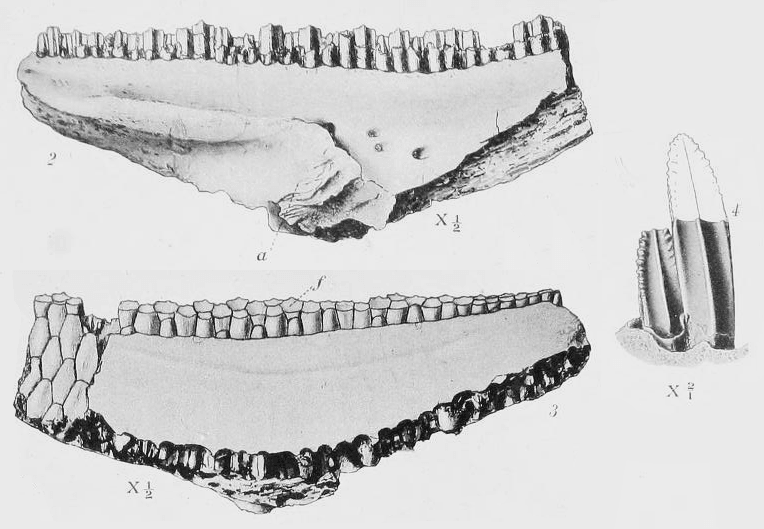
- Possessed narrow tooth crowns.
- Estimated to be a hadrosaurid, a group of duck-billed dinosaurs.
Trachodon, Pteropelyx, Procheneosaurus, Tetragonosaurus Cranibrevis, Lambeosaurus
North America
About Didanodon
Didanodon is a genus of hadrosaurid dinosaur that is considered dubious by paleontologists. Its fossils, primarily a left maxilla with teeth, were discovered in the Dinosaur Park Formation of Alberta, Canada, dating to the Campanian stage of the Late Cretaceous period. The genus name Didanodon translates to 'beautiful-sided tooth,' a descriptor derived from the distinctive narrowness of the teeth found.
History and Naming
The specimen that would become Didanodon was first described in 1902 by Canadian paleontologist Lawrence M. Lambe. He named it as a new species, Trachodon altidens, within the existing genus Trachodon and subgenus Pteropelyx. Lambe highlighted the narrowness of the tooth crowns, noting their height relative to their breadth and the distance they projected above the bone's margin. In the same publication, American paleontologist Henry Fairfield Osborn proposed the possible new genus name Didanodon for this species, referring to it as T. (Didanodon) altidens.
Later researchers, including Loris S. Russell in 1930 and Richard Swann Lull and Nelda E. Wright in 1942, explored its taxonomic placement. Russell suggested it might be synonymous with the taxon "Procheneosaurus," also from the Dinosaur Park Formation. Lull and Wright followed this line of thought, treating "Procheneosaurus" as the valid genus and reclassifying T. altidens as Procheneosaurus altidens, citing similarities to the teeth of Tetragonosaurus cranibrevis (which they considered synonymous with Procheneosaurus cranibrevis).
Taxonomic Status
Currently, Trachodon altidens, along with other species within the genera Trachodon and Pteropelyx, is recognized as an undiagnostic taxon of hadrosaurid. This means the fossil material is not sufficiently unique or complete to definitively establish it as a separate genus. Consequently, Didanodon has been listed as either a synonym of Lambeosaurus or as an invalid name, reflecting the ongoing scientific debate and uncertainty surrounding its classification.
Source: Wikipedia ↗
Frequently Asked Questions
What does the name Didanodon mean?
The name Didanodon means 'beautiful-sided tooth'. This name refers to the distinctly narrow tooth crowns of the species it was originally assigned to.
When did Didanodon live?
Didanodon lived during the Campanian stage of the Late Cretaceous period. This period is characterized by a diverse array of dinosaur species.
Where were Didanodon fossils found?
Fossils attributed to Didanodon were discovered in the Dinosaur Park Formation, located in Alberta, Canada. This formation is known for yielding a rich fossil record of Late Cretaceous dinosaurs.
Is Didanodon a valid dinosaur genus?
No, Didanodon is considered a dubious genus. It is currently recognized as an undiagnostic taxon of hadrosaurid, meaning its defining features are not unique enough to establish it as a distinct genus.
What other genera has Didanodon been associated with?
Didanodon altidens was initially named within the genus Trachodon. Later researchers suggested it might be the same genus as 'Procheneosaurus' or referred it to that genus. It has also been listed as a synonym of Lambeosaurus.
Related Dinosaur species
Acrotholus
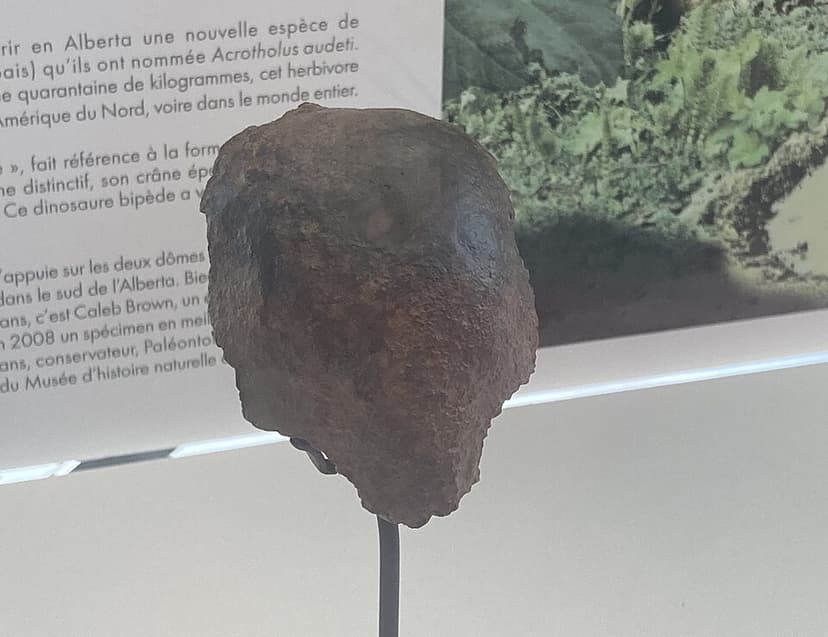
Acrotholus is an extinct genus of pachycephalosaurian dinosaur that lived during the Santonian stage of the Late Cretaceous period in what is now Canada. It is notable for being one of the earliest known members of the pachycephalosaur family with a well-developed, dome-shaped skull. Acrotholus was a bipedal herbivore whose cranial dome has been theorized to have been used for intraspecies combat or display.

Brachylophosaurus
Brachylophosaurus is a genus of hadrosaurid dinosaur that lived during the Late Cretaceous period in western North America. Known for its distinctive flat, paddle-like crest on its skull, this herbivore is recognized for its well-preserved fossil "mummies" that offer insights into its soft tissues and diet.

Anchiceratops
Anchiceratops is an extinct genus of chasmosaurine ceratopsid dinosaur that roamed what is now Alberta, Canada, during the Late Cretaceous Period, approximately 73 to 68 million years ago. This heavily built, quadrupedal herbivore was characterized by a distinctive skull featuring two long brow horns, a short nasal horn, and an elongated, rectangular frill with ornate, triangular projections along its edges. The genus name "Anchiceratops" translates to "near horned face," reflecting its perceived evolutionary relationship to other ceratopsids.