
Doratodon
Carnivore·Late Cretaceous·Austria·Terrestrial (suggested)
Doratodon is an extinct genus of small, predatory crocodylomorph from the Late Cretaceous period. This genus is distinguished by its ziphodont teeth, which were flattened and serrated, resembling those of sharks. Two species are recognized: Doratodon carcharidens and Doratodon ibericus, with fossils found across Europe.
Key Facts
- ›Doratodon possessed ziphodont teeth, characterized by flattened sides and serrated edges.
- ›Two species, D. carcharidens and D. ibericus, have been identified.
- ›Fossils of Doratodon have been discovered in Austria, Italy, Hungary, and Spain.
- ›It is considered a cosmopolitan genus, widespread across the European islands of the Cretaceous.
- ›Doratodon is thought to have been a terrestrial predator, an unusual trait among European crocodylomorphs of its time.
- ›Its classification has shifted over time, with recent studies suggesting it was a paralligatorid.
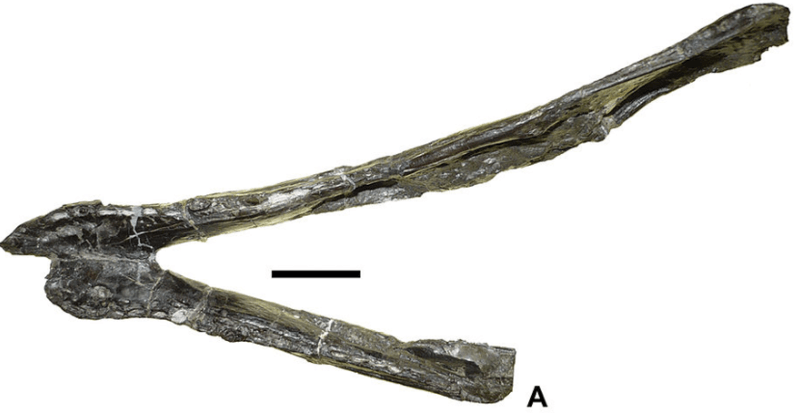
- Small-bodied crocodylomorph
- Narrow but deep skull
- Ziphodont teeth
- Presence of an antorbital fenestra
- Tall snout with dorsolaterally opening nares
- Variable tooth count and spacing between species
- Wave-like or straight toothrow in the lower jaw
Sebecosuchia, Paralligatoridae, Notosuchus, Goniopholid, Hsisosuchus, Ogresuchus, Bergisuchus, Iberosuchus
Europe
About Doratodon
Doratodon is an extinct genus of crocodylomorph that inhabited Europe during the Late Cretaceous period. This relatively small animal is most famously recognized for its distinctive "ziphodont" teeth. These teeth were flattened laterally and featured serrated edges, bearing a resemblance to those of sharks. This unique dental morphology is a key characteristic used to identify Doratodon fossils.
History and Discovery
The first remains of Doratodon were unearthed in 1859 by geologist Eduard Suess in a coal mine near Wiener Neustadt, Austria. The initial fossil material, including a mandible and cranial fragments, was described by Emanuel Bunzel in 1871 as Crocodilus carcharidens. However, Harry Govier Seeley later proposed in 1881 that the material belonged to a new genus, which he named Doratodon. Despite this, subsequent researchers debated its classification, with some returning to a crocodyliform designation. Over time, Doratodon has been classified as a dinosaur, a goniopholid neosuchian, a hsisosuchid, and most recently, a sebecosuchian, with a 2026 study suggesting it was actually a paralligatorid.
Species and Distribution
Two species are currently recognized within the Doratodon genus. The type species, Doratodon carcharidens, is known from Austria, Italy, and Hungary. A second species, Doratodon ibericus, was named in 2005 based on fossil material discovered in Spain. Teeth similar to those of Doratodon have also been found in Italy, Slovenia, and Romania, though their definitive assignment to the genus remains uncertain due to their fragmentary nature.
Description and Paleobiology
Doratodon possessed a narrow yet deep skull, with its maxillae contributing significantly to its depth. A defining feature is the presence of an antorbital fenestra located between the nostrils and the eye sockets. The snout was notably tall, with nostrils positioned towards the tip, opening dorsolaterally. The genus had a limited number of teeth, with variations in tooth size and spacing distinguishing the two species. While the absence of postcranial remains makes precise size estimation difficult, Doratodon is considered to have been a small animal. The Spanish species, D. ibericus, appears to have been larger and proportionally more robust than its Austrian counterpart, D. carcharidens. Its ziphodont teeth suggest a predatory diet. Unlike many contemporary European crocodylomorphs that favored aquatic lifestyles, Doratodon is hypothesized to have been a terrestrial predator. However, analysis of its jaw neurovasculature suggests it may have possessed developed somatosensory capabilities, hinting at potential semi-aquatic adaptations or foraging plasticity.
Paleobiogeography
The classification of Doratodon as a crocodyliform with Gondwanan affinities is significant for understanding faunal interchange between Europe and Africa during the Cretaceous. As a genus widespread across the European archipelago of its time, Doratodon serves as an indicator of these connections. The presence of Doratodon in Hungary from the Santonian epoch supports models suggesting faunal exchange between Europe and Africa began as early as this period, pushing back previous estimates for the onset of such interchange.
Source: Wikipedia ↗
Frequently Asked Questions
What does the name Doratodon mean?
The genus name Doratodon was coined by Harry Govier Seeley. While the exact etymology isn't detailed, the specific name 'carcharias' for D. carcharidens is derived from Ancient Greek for shark, referencing its teeth.
What kind of teeth did Doratodon have?
Doratodon had ziphodont teeth. These teeth were flattened along their sides and featured a serrated ridge created by small denticles, making them distinct from the smooth, conical teeth of modern crocodiles.
Where have Doratodon fossils been found?
Fossils attributed to Doratodon have been discovered in Austria (Grünbach Formation), Italy (Villaggio del Pescatore), Hungary (Csehbánya Formation), and Spain (Sierra Perenchiza Formation). Teeth similar to Doratodon are also known from Slovenia and Romania.
What was Doratodon's diet and lifestyle?
Doratodon was a predatory animal that actively hunted other animals. While its ziphodont teeth suggest a predatory nature, reconstructed neurovasculature hints at somatosensory capabilities, possibly indicating a semi-aquatic lifestyle or high foraging plasticity.
How large was Doratodon?
Doratodon is believed to have been a relatively small animal. The dentary bone of D. ibericus is estimated to have reached up to 105 mm, while that of D. carcharidens measured 72 mm, suggesting D. ibericus was proportionally larger and more robust.
What is the scientific classification of Doratodon?
Doratodon's classification has evolved. It was once considered a sebecosuchian, but a 2026 study suggests it was actually a paralligatorid. Earlier classifications also included it as a dinosaur or a goniopholid neosuchian.
Related Dinosaur species
Bicentenaria
Bicentenaria argentina was a small, bipedal carnivorous dinosaur that lived during the early Late Cretaceous period in what is now Argentina. Its scientific name commemorates the 200th anniversary of Argentina's May Revolution. Discovered in the Candeleros Formation, its fossils include skull fragments, vertebrae, limb bones, and claws.

Achillobator
Achillobator was a large, heavily-built dromaeosaurid theropod dinosaur that inhabited Mongolia during the Late Cretaceous period. It is distinguished by its robust skeleton, deep maxilla, and primitive pelvis, contrasting with the generally lighter build of other dromaeosaurids. This predator likely hunted large prey using its enlarged sickle claw.

Acheroraptor
Acheroraptor is an extinct genus of dromaeosaurid theropod dinosaur that lived in North America during the Late Cretaceous period. It is known from fossil remains discovered in the Hell Creek Formation of Montana, United States. Acheroraptor is notable for being one of the geologically youngest dromaeosaurids, existing just before the Cretaceous-Paleogene extinction event.