
Dravidosaurus
Herbivore·Late Cretaceous·Southern India·Quadrupedal
Dravidosaurus is a dubious genus of Late Cretaceous reptiles from southern India, primarily known from poorly preserved fossils. Its classification is debated, with interpretations ranging from a late-surviving stegosaurian dinosaur to a plesiosaur. If it was a stegosaur, Dravidosaurus would represent one of the smallest and last-known members of that group.
Key Facts
- ›Dravidosaurus is known from fossils found in the Coniacian stage of the Late Cretaceous in southern India.
- ›Its classification is highly debated, with suggestions it could be a stegosaurian dinosaur or a plesiosaur.
- ›If classified as a stegosaur, it would be one of the smallest known members of the group, estimated at around three meters long.
- ›Fossils attributed to Dravidosaurus include parts of a skull, teeth, armor plates, and a tail spike.
- ›The genus name "Dravidosaurus" means "Dravidanadu lizard" or "lizard from south India."
- ›If Dravidosaurus was a stegosaur, it would represent one of the last surviving members of the group.
- Estimated length of approximately 3 meters
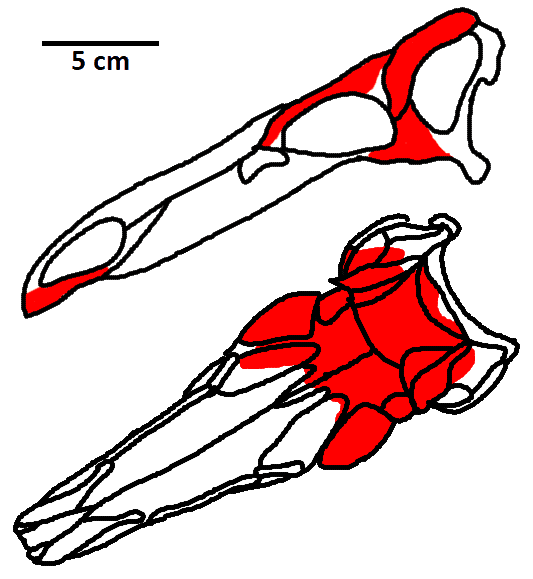
- Narrow skull, reconstructed to be about 20 cm long and 7 cm wide
- Possessed a stout, curved beak
- Had armor plates, described as largely triangular with stout bases
- Tail spike with an expanded middle region
Stegosaurus, Kentrosaurus
India
About Dravidosaurus
Dravidosaurus: A Contested Late Cretaceous Reptile from India
Dravidosaurus is a genus of reptiles from the Late Cretaceous period of southern India, known from fossils that are predominantly poorly preserved. The exact taxonomic placement of Dravidosaurus has been a subject of significant debate among paleontologists since its initial description. It is variously interpreted as either a dinosaur belonging to the ornithischian group, possibly a stegosaurian, or as a marine reptile, a plesiosaur.
Discovery and Classification,
The genus and its single species, Dravidosaurus blanfordi, were described in 1979 by Ponnala Yadagiri and Krishnan Ayyasami. The fossils were recovered from the Coniacian-age Anaipadi Formation in the Trichinopoly Group of southern India. The initial description classified Dravidosaurus as a stegosaur, based on features of a partial skull, an isolated tooth, armor plates, and a tail spike. If recognized as a stegosaur, it would have been one of the smallest known members of the group, with an estimated length of just three meters, and notably, it would represent one of the last surviving stegosaurs, existing tens of millions of years after most others are believed to have gone extinct.
However, this classification has been challenged. In 1991, paleontologist Sankar Chatterjee suggested that the fossils might actually belong to a plesiosaur, a marine reptile. While Chatterjee did not formally reclassify the specimens, his assessment led to a division of opinion within the scientific community. Subsequent research has seen Dravidosaurus maintained as a stegosaur, considered an indeterminate ornithischian dinosaur, or viewed as a dubious genus due to the fragmentary nature of the remains and the ongoing classification debate. Researchers favoring the stegosaurian identity point to morphological features and the presence of plates and spikes, while skepticism arises from the poor preservation and alternative interpretations of the fossil material.
Paleoenvironment and Significance,
The Anaipadi Formation where the Dravidosaurus fossils were found suggests a marine environment, specifically a neritic zone. However, the presence of terrestrial matter, such as petrified wood, indicates that land was relatively close to the burial site, meaning a terrestrial animal could potentially have been washed out to sea. If Dravidosaurus proves to be a stegosaur, its survival into the Late Cretaceous would have significant implications for understanding the persistence of this dinosaur group, suggesting either a poorly sampled global fossil record for stegosaurs or their prolonged survival in specific regions like India.
Naming,
The genus name, Dravidosaurus, derives from "Dravidanadu," a term for southern India, translating to "Dravidanadu lizard" or "lizard from south India." The species name, blanfordi, honors H.F. Blanford, who was instrumental in early research on the Cretaceous period in southern India.
Source: Wikipedia ↗
Frequently Asked Questions
What is Dravidosaurus?
Dravidosaurus is a genus of Late Cretaceous reptiles from India whose exact classification is uncertain. It is debated whether it was a dinosaur, specifically a stegosaur, or a marine reptile like a plesiosaur.
Where were Dravidosaurus fossils found?
The fossils attributed to Dravidosaurus were discovered in the Anaipadi Formation of the Trichinopoly Group in southern India. This formation dates to the Coniacian stage of the Late Cretaceous period.
What evidence supports Dravidosaurus being a stegosaur?
Researchers who support a stegosaurian classification point to the presence of fossilized plates and spikes among the remains, as well as certain features of the skull and teeth that bear resemblance to those of known stegosaurs.
Why is the classification of Dravidosaurus debated?
The fossils are poorly preserved, leading to different interpretations. Some researchers have suggested the remains might belong to a plesiosaur rather than a dinosaur, while others consider the genus to be a "nomen dubium" (dubious name) due to the lack of definitive evidence.
What was the estimated size of Dravidosaurus?
If Dravidosaurus is confirmed as a stegosaur, it would have been a relatively small member of the group, with an estimated length of about three meters (10 feet). Its skull was also proportionally small.
What does the name Dravidosaurus mean?
The genus name Dravidosaurus means "Dravidanadu lizard," referring to Dravidanadu, a term for southern India where the fossils were found. It can also be interpreted as "lizard from south India."
What is the significance of Dravidosaurus if it was a stegosaur?
If Dravidosaurus was indeed a stegosaur, it would be significant because it would represent one of the last known members of this dinosaur group, surviving tens of millions of years later than most other known stegosaurs.
Related Dinosaur species

Antarctosaurus
Antarctosaurus was a genus of titanosaurian sauropod dinosaurs that lived during the Late Cretaceous Period in South America. The genus is known from several species, though many are considered dubious due to fragmentary remains and taxonomic confusion. The type species, Antarctosaurus wichmannianus, is estimated to have reached about 17 meters in length, while Antarctosaurus giganteus, though poorly known, represents one of the largest dinosaurs ever discovered.

Achelousaurus
Achelousaurus was a large centrosaurine ceratopsid dinosaur that roamed North America during the Late Cretaceous period, approximately 77 to 74.8 million years ago. Characterized by its large head, bony neck frill with long spikes, and distinctive bosses above its eyes and on its snout instead of horns, Achelousaurus is believed to have been a herbivore. Its fossils have been found in Montana, and it is considered a transitional form between earlier and later ceratopsid species.

Aeolosaurus
Aeolosaurus was a genus of titanosaurian sauropod dinosaur that lived in South America during the Late Cretaceous Period. Characterized by a long neck and tail, it was a quadrupedal herbivore. The genus is well-represented, with remains from several individuals belonging to at least two species, though no skull material has been recovered.