
Aeolosaurus
Aeolosaurus was a genus of titanosaurian sauropod dinosaur that lived in South America during the Late Cretaceous Period. Characterized by a long neck and tail, it was a quadrupedal herbivore. The genus is well-represented, with remains from several individuals belonging to at least two species, though no skull material has been recovered.
Key Facts
- ›Aeolosaurus was a herbivorous sauropod dinosaur.
- ›It lived in South America during the Late Cretaceous Period.
- ›The genus is known from tail vertebrae and limb bones.
- ›No skull remains have been found for Aeolosaurus.
- ›Aeolosaurus is the namesake of the titanosaurian clade Aeolosaurini.

- Long Neck and Tail
- Quadrupedal Posture
- Heavily Built For A Titanosaur
- Distinctive Caudal Vertebrae With Down-Curved Prezygapophyses
- Possessed Osteoderms
Gondwanatitan, Panamericansaurus, Saltasaurus
South America, Argentina, Brazil
About Aeolosaurus
Aeolosaurus: A Patagonian Titanosaur
Aeolosaurus is a genus of titanosaurian sauropod dinosaur that roamed South America during the Late Cretaceous Period. Its name, meaning "Aeolus' lizard," honors the Greek mythological keeper of the winds, reflecting the windy plains of Patagonia where its fossils were unearthed. Like other sauropods, Aeolosaurus was a large, quadrupedal herbivore characterized by a long neck and an equally long tail.
Fossil Discoveries and Species
The genus is relatively well-known for a titanosaur, with fossil remains belonging to multiple individuals and at least two distinct species discovered. The type species, Aeolosaurus rionegrinus, is known from tail vertebrae and parts of its limbs, found in the Angostura Colorada Formation of Argentina. This formation dates to the Campanian stage of the Late Cretaceous, roughly 83 to 74 million years ago. Another species, Aeolosaurus colhuehuapensis, has been identified from numerous tail vertebrae found in the Lago Colhué Huapí Formation. While no skull remains have ever been found for Aeolosaurus, its postcranial skeleton provides significant insights into its anatomy.
Anatomy and Classification
Aeolosaurus possessed a robust build, with limb bones comparable in sturdiness to those of Saltasaurus. Its tail vertebrae are particularly distinctive, featuring down-curved prezygapophyses on the anterior caudal vertebrae and uniquely shaped chevrons. The genus also bore osteoderms, or bony armor plates, a feature common among lithostrotian titanosaurs, though the exact pattern and arrangement of these plates on Aeolosaurus are still being studied. Aeolosaurus is closely related to genera like Gondwanatitan and Panamericansaurus, and together they define the clade Aeolosaurini, a group distinguished by features of their tail vertebrae.
Paleoecology
During the Campanian and Maastrichtian ages, Aeolosaurus shared its environment with other dinosaur groups, including hadrosaurs. In some localities, such as the Allen Formation, Aeolosaurus coexisted with at least five other titanosaur species, alongside ankylosaurs. These ancient ecosystems highlight the diverse megafauna that populated South America in the final stages of the Cretaceous.
Source: Wikipedia ↗
Frequently Asked Questions
What does the name Aeolosaurus mean?
The name Aeolosaurus is derived from Aeolus, the Greek mythological keeper of the winds, referencing the windy conditions of Patagonia where its fossils were found. The suffix 'sauros' is Greek for 'lizard', a common ending for dinosaur names.
When did Aeolosaurus live?
Aeolosaurus lived during the Campanian and Maastrichtian ages of the Late Cretaceous Period. This timeframe is approximately between 83 and 66 million years ago.
Where were Aeolosaurus fossils discovered?
Fossils of Aeolosaurus have been found in South America, primarily in Argentina across various formations like the Angostura Colorada, Allen, Lago Colhué Huapí, and Los Alamitos Formations. Remains have also been identified in Brazil.
What did Aeolosaurus eat?
As a sauropod, Aeolosaurus was a herbivore. Its diet consisted of plants, which it would have consumed using its long neck to reach vegetation.
How large was Aeolosaurus?
Estimates for Aeolosaurus rionegrinus vary, with some suggesting lengths around 14 meters (46 ft) and weights of 6 tonnes (6.6 short tons). Other estimations place it larger, at 18.1 meters (60 ft) and 14.7 tonnes (16.2 short tons).
What are the distinctive features of Aeolosaurus?
Aeolosaurus is recognized by distinctive caudal vertebrae, including down-curved prezygapophyses on its anterior tail vertebrae and specific features of its chevrons. It also possessed osteoderms, or bony armor plates, which were unusual in their resemblance to those of Mendozasaurus.
Related Dinosaur species

Antarctosaurus
Antarctosaurus was a genus of titanosaurian sauropod dinosaurs that lived during the Late Cretaceous Period in South America. The genus is known from several species, though many are considered dubious due to fragmentary remains and taxonomic confusion. The type species, Antarctosaurus wichmannianus, is estimated to have reached about 17 meters in length, while Antarctosaurus giganteus, though poorly known, represents one of the largest dinosaurs ever discovered.

Argyrosaurus
Argyrosaurus is a genus of titanosaurian sauropod dinosaur that lived approximately 70 million years ago during the Late Cretaceous Period. Fossils of this large herbivore were discovered in Argentina, which inspired its name meaning 'silver lizard'.
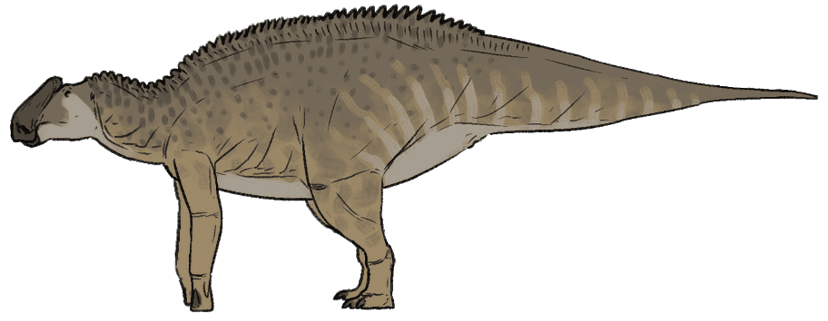
Bonapartesaurus
Bonapartesaurus is an extinct genus of herbivorous ornithopod dinosaur belonging to the Hadrosauridae family. It lived in what is now Argentina during the Late Cretaceous period. The genus was established in 2017 to house remains previously attributed to other hadrosaurids.