
Dromicosaurus
Dromicosaurus was a dubious genus of sauropodomorph dinosaur from South Africa, living during the Late Triassic or Early Jurassic periods. Its name, meaning 'quick-walking lizard,' reflects its slender legs. While once considered a distinct species, recent reviews classify it as an indeterminate sauropodomorph, with some researchers suggesting it may be a synonym of Massospondylus.
Key Facts
- ›Dromicosaurus is considered a dubious genus of dinosaur.
- ›Fossils were discovered in the Elliot Formation of South Africa.
- ›It lived during the Late Triassic or Early Jurassic.
- ›The genus name Dromicosaurus means 'quick-walking lizard'.
- ›It is currently classified as an indeterminate sauropodomorph.
- ›The only known specimen is housed at the Ditsong National Museum of Natural History.

- Slender Legs Compared To Related Genera
- Femur Length of 49.5 cm
- Fragmentary Skeleton Including Neck and Tail Vertebrae, Limb Bones, Pelvis, and Foot Bones
Massospondylus
South Africa
About Dromicosaurus
Dromicosaurus is a genus of sauropodomorph dinosaur that is considered dubious by paleontologists. Fossils attributed to this genus were discovered in the Elliot Formation of South Africa, and it is understood to have lived during the Late Triassic or Early Jurassic periods. The scientific name, Dromicosaurus, translates to 'quick-walking lizard,' a moniker inspired by the dinosaur's slender legs, which suggested a greater agility compared to its relatives.
Discovery and Specimen
The sole known specimen of Dromicosaurus was unearthed by palaeontologist Egbert Cornelis Nicolaas van Hoepen at Noupoortsnek in South Africa's Free State province. During excavation, the tibia was found to have scattered into pieces but was successfully reassembled by van Hoepen. This specimen, cataloged as TM 123, is now housed in the Ditsong National Museum of Natural History in Pretoria.
The fossil material includes a partial neck vertebra, several tail vertebrae, portions of the humerus and radius, well-preserved pubes, poorly preserved ischia, a weathered femur measuring 49.5 cm, a well-preserved right tibia and fibula, and several foot bones. The precise stratigraphic position within the Elliot Formation, whether from the Upper Triassic or Lower Jurassic, remains uncertain.
Taxonomy and Status
Egbert van Hoepen initially classified Dromicosaurus within the Anchisauridae family. At the time, this group, along with Plateosauridae, was thought to represent theropod dinosaurs, though they are now understood as basal sauropodomorphs. Van Hoepen distinguished Dromicosaurus from contemporary genera such as Massospondylus and Thecodontosaurus, citing differences in the femur and tibia.
Over time, much of the sauropodomorph material from southern Africa's Lower Jurassic became consolidated under the species Massospondylus carinatus. Dromicosaurus has also faced synonymization attempts with Massospondylus species, including Massospondylus harriesi and Massospondylus carinatus. However, in the most recent comprehensive reviews of sauropodomorph taxonomy, Dromicosaurus gracilis has been retained as an indeterminate, or dubious, sauropodomorph, indicating insufficient diagnostic features for definitive classification.
Source: Wikipedia ↗
Frequently Asked Questions
What does the name Dromicosaurus mean?
The name Dromicosaurus comes from the Ancient Greek words 'δρομικός' (dromikos) meaning 'quickly walking' and 'sauros' meaning 'lizard'. This name was chosen by its describer due to the dinosaur's slender legs, which suggested it could move faster than related genera.
Where were the fossils of Dromicosaurus found?
The only known specimen of Dromicosaurus was discovered at Noupoortsnek in the Free State province of South Africa. This location is near the road from Bethlehem to Clarens.
What geological period did Dromicosaurus live in?
Dromicosaurus lived during the Late Triassic or Early Jurassic period. The exact placement within the Elliot Formation, from which its fossils originate, is not definitively known, with possibilities existing in both the upper (Late Triassic) and lower (Early Jurassic) sections.
What is the taxonomic status of Dromicosaurus?
Dromicosaurus is considered a dubious genus. While initially described as a new genus and species, later studies have proposed it as a synonym of Massospondylus. However, the two most recent comprehensive revisions classify Dromicosaurus gracilis as an indeterminate sauropodomorph.
What physical characteristics are known about Dromicosaurus?
Based on the fragmentary skeleton, Dromicosaurus possessed slender legs. The femur measured 49.5 cm in length. The fossil material includes parts of the neck, tail vertebrae, humerus, radius, pubes, ischia, femur, tibia, fibula, and foot bones.
Related Dinosaur species

Adelolophus
Adelolophus is a genus of lambeosaurine dinosaur, a type of "duck-bill" known for its cranial crests, that lived during the Late Cretaceous period in what is now Utah, USA. The only known species, *Adelolophus hutchisoni*, is represented by a partial maxilla (upper jaw bone). It is significant as the oldest known lambeosaur remains from North America and a member of the Parasaurolophini tribe, indicating a close relationship with dinosaurs like Parasaurolophus.
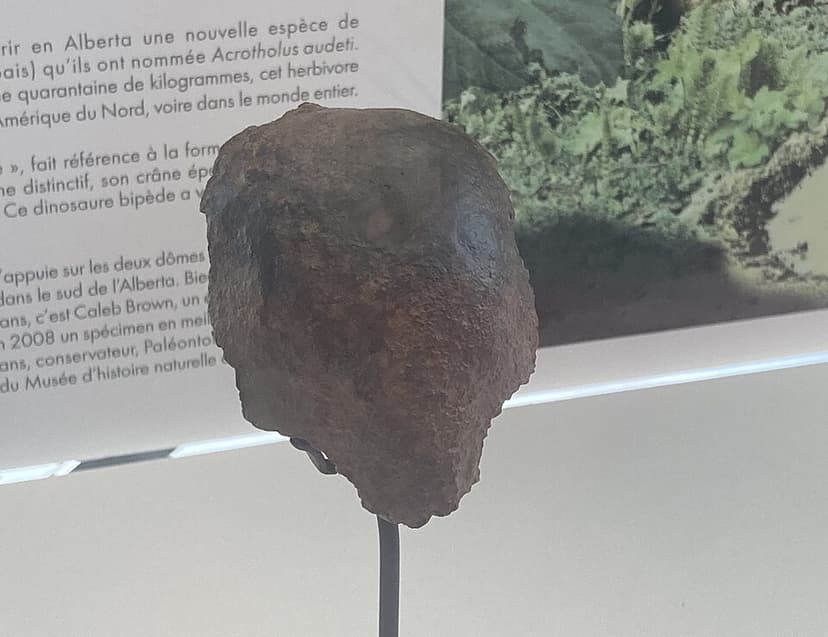
Acrotholus
Acrotholus is an extinct genus of pachycephalosaurian dinosaur that lived during the Santonian stage of the Late Cretaceous period in what is now Canada. It is notable for being one of the earliest known members of the pachycephalosaur family with a well-developed, dome-shaped skull. Acrotholus was a bipedal herbivore whose cranial dome has been theorized to have been used for intraspecies combat or display.

Ajnabia
Ajnabia is a genus of small hadrosaurid dinosaur that lived in Morocco during the Late Cretaceous period. Its discovery was significant as it represented the first definitive hadrosaur from Africa, a continent previously thought to be isolated from hadrosaur populations by oceans. Ajnabia is believed to have reached Africa through oceanic dispersal, likely related to European hadrosaurs.