
Afrixalus
Afrixalus is a genus of frogs belonging to the family Hyperoliidae, found throughout Sub-Saharan Africa. They are commonly known as banana frogs, spiny reed frogs, cat's eye reed frogs, or leaf-folding frogs. A distinctive characteristic is their habit of laying eggs in vegetation above water, often folding leaves around them for protection.
Key Facts
- ›The genus Afrixalus is part of the family Hyperoliidae.
- ›These frogs are native to Sub-Saharan Africa.
- ›They are known by several common names, including banana frogs and leaf-folding frogs.
- ›A notable behavior is folding leaves around their eggs for protection.
- ›Amphibiaweb currently lists 31 recognized species within the genus.
- ›Some taxonomic classifications differ, with certain species not always recognized.
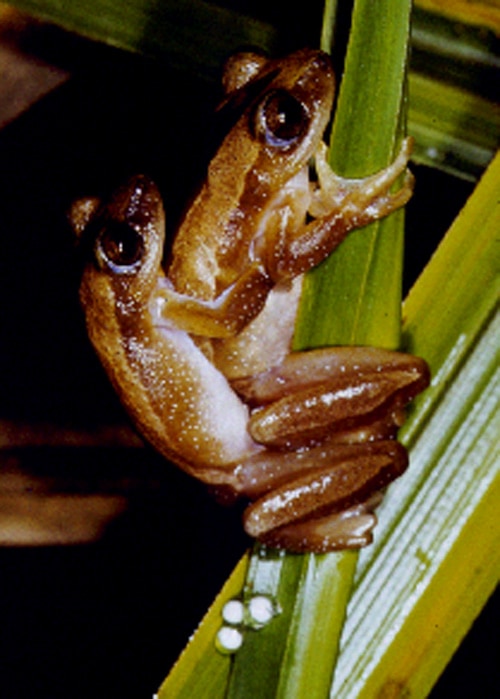
Banana Frogs, Spiny Reed Frogs, Cat's Eye Reed Frogs, Leaf-Folding Frogs
Vegetated Areas Near Water
Folds Leaves Around Eggs For Protection
About Afrixalus
Afrixalus is a genus of frogs belonging to the family Hyperoliidae, commonly found throughout Sub-Saharan Africa. These amphibians are widely recognized by several descriptive common names, including banana frogs, spiny reed frogs, cat's eye reed frogs, and most notably, leaf-folding frogs. This latter name directly refers to their distinctive method of reproduction.
Reproductive Behavior
The most remarkable characteristic of the Afrixalus genus is their specialized egg-laying strategy. Unlike many frog species that deposit eggs directly in water, Afrixalus frogs lay their eggs in vegetation situated above the water's surface. They further enhance the protection of these clutches by meticulously folding leaves around them. This behavior is believed to safeguard the eggs from predators and adverse environmental conditions, playing a crucial role in their reproductive success.
Taxonomy and Distribution
The genus Afrixalus is classified within the family Hyperoliidae. While taxonomic classifications can be subject to revision, AmphibiaWeb currently lists 31 recognized species within this genus. Their geographic distribution is extensive, covering various regions across Sub-Saharan Africa, indicating a degree of adaptability to different environmental niches within this broad area.
Source: Wikipedia ↗
Frequently Asked Questions
What are the common names for frogs in the genus Afrixalus?
Frogs in the genus Afrixalus are commonly known by several names. These include banana frogs, spiny reed frogs, cat's eye reed frogs, and leaf-folding frogs.
Where are Afrixalus frogs found?
The genus Afrixalus is distributed across Sub-Saharan Africa. They inhabit various regions within this broad geographical area.
What is distinctive about how Afrixalus frogs lay their eggs?
A unique characteristic of Afrixalus frogs is their egg-laying strategy. They deposit their eggs in vegetation situated above the water's surface, frequently folding leaves around the eggs to provide protection.
How many species are recognized in the genus Afrixalus?
According to AmphibiaWeb, there are 31 recognized species within the genus Afrixalus. However, taxonomic classifications can vary, with some sources not recognizing certain species or including others.
Related Frogs

Afrixalus dorsalis
The brown banana frog (Afrixalus dorsalis), also known as the striped spiny reed frog, is a frog species found across several West and Central African countries. It is distinguished by its light to dark brown coloration with distinctive silverish-white patterns, which can vary in form and placement.

Afrixalus fulvovittatus
The Banded Banana Frog (Afrixalus fulvovittatus) is a species of frog native to West Africa, specifically found in Ivory Coast, Ghana, Guinea, Liberia, and Sierra Leone. Its natural habitats include moist savannas and various wetland environments, often in areas that have been degraded from their original forest state. This species is currently threatened by habitat loss.

Afrixalus laevis
Afrixalus laevis is a species of frog belonging to the Hyperoliidae family, found across several countries in Central and East Africa. This species is distinguished by its translucent posterior dorsum, yellowish coloration with brown patterning, and its unusual breeding behavior which occurs near flowing water rather than in standing water.