
Alcalinae
Alcalus is a small genus of frogs belonging to the subfamily Alcalinae, found in Palawan, Borneo, and the Malay Peninsula. These frogs are distinguished by their intermediate body size compared to related genera, broad heads, and textured skin. They prefer semi-aquatic microhabitats and are named in honor of Filipino biologist Angel Alcala.
Key Facts
- ›Alcalus frogs are found in Palawan, Borneo, and the Malay Peninsula.
- ›They belong to the subfamily Alcalinae, which contains only this genus.
- ›Males typically range from 20–37 MM and females from 26–43 MM in snout-to-vent length.
- ›Their skin is coarsely textured, shagreened, or wrinkled.
- ›Alcalus frogs have widely expanded toe discs with extensive inter-digital webbing.
- ›Males possess nuptial pads but lack vocal sacs.

Alcala's Dwarf Mountain Frogs
Semi-Aquatic
- Intermediate Body Size
- Broad Head
- Coarsely Textured, Shagreened, Or Wrinkled Skin
- Widely Expanded Toe Discs
- Extensive Inter-Digital Webbing
- Nuptial Pads In Males
About Alcalinae
Alcalus
The genus Alcalus represents a distinct group of frogs within the family Ceratobatrachidae, forming its sole member of the subfamily Alcalinae. This genus is recognized for its unique characteristics and its geographic distribution across several Southeast Asian regions.
Taxonomy and Naming
Alcalus is the only genus in the subfamily Alcalinae, with its sister taxon being the subfamily Ceratobatrachinae. The genus name, Alcalus, honors Angel Alcala, a distinguished Filipino biologist renowned for his extensive work with Southeast Asian amphibians. A proposed common name for the genus is Alcala's dwarf mountain frogs.
Distribution and Habitat
Frogs of the genus Alcalus are found in Palawan Island of the Philippines, the island of Borneo, and the Malay Peninsula. Their preferred habitat consists of semi-aquatic microhabitats, suggesting an ecological niche that requires proximity to water sources.
Physical Characteristics
Compared to related genera such as Cornufer and Platymantis, Alcalus frogs exhibit an intermediate body size. Based on species like Alcalus baluensis and A. mariae, males typically range from 20–37 mm, while females are slightly larger, measuring between 26–43 mm in snout-to-vent length. Their heads are broad, and their skin is notably textured, appearing shagreened or wrinkled. A significant characteristic is the presence of widely expanded toe discs and extensive inter-digital webbing. Male Alcalus frogs possess nuptial pads, which are often used for gripping during mating, but they notably lack vocal sacs, differentiating them from many other frog species.
Species
The genus Alcalus currently comprises five recognized species:
- Alcalus baluensis (Boulenger, 1896)
- Alcalus mariae (Inger, 1954)
- Alcalus rajae (Iskandar, Bickford, and Arifin, 2011)
- Alcalus sariba (Shelford, 1905)
- Alcalus tasanae (Smith, 1921)
Further research into the specific behaviors, diets, and conservation statuses of these species is ongoing.
Source: Wikipedia ↗
Frequently Asked Questions
What is the genus Alcalus?
Alcalus is a small genus of frogs that forms its own subfamily, Alcalinae. It is closely related to the Ceratobatrachinae subfamily.
Where are Alcalus frogs found?
These frogs are distributed across Palawan Island in the Philippines, the island of Borneo, and the Malay Peninsula.
What are the physical characteristics of Alcalus frogs?
Alcalus frogs have an intermediate body size, broad heads, and distinctly textured skin that appears shagreened or wrinkled. They also feature widely expanded toe discs and significant webbing between their toes.
What kind of habitat do Alcalus frogs prefer?
Alcalus frogs are known to favor semi-aquatic microhabitats, suggesting they live in areas with both water and land nearby.
How do male Alcalus frogs differ from females?
Male Alcalus frogs are characterized by the presence of nuptial pads, which are typically used for gripping during mating. However, they do not possess vocal sacs.
Related Frogs

Alcalus baluensis
Alcalus baluensis is a small, stocky frog species native to the rainforests of northern and western Borneo. Previously classified in the family Dicroglossidae, it was transferred to Ceratobatrachidae in 2015. This species is characterized by its small size, visible tympanic ring, and preference for the forest floor and stream banks.
Alcalus rajae
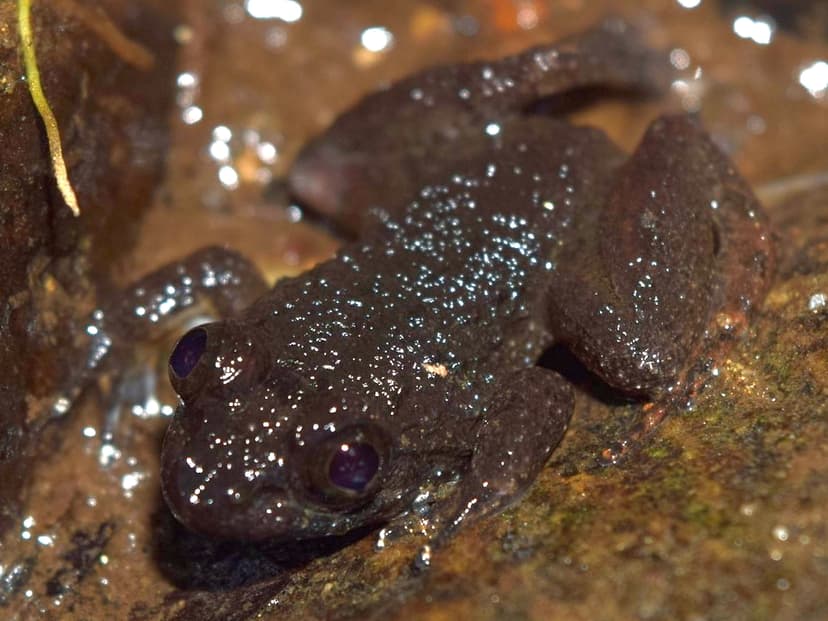
Alcalus rajae, also known as the king dwarf mountain frog, is a species of frog endemic to the island of Borneo in Indonesia. This stocky amphibian is distinguished by its uniformly colored brown to blackish dorsal side, short limbs, and discs on its fingers and toes. It inhabits undisturbed and secondary forests near water sources within a specific altitudinal range.

Alcalus tasanae
Smith's wrinkled frog, scientifically known as Alcalus tasanae, is a frog species native to western and southern Thailand, with its range potentially extending into Myanmar. This species is distinguished by its habitat preference for primary rainforests adjacent to streams and is currently facing threats from habitat loss.