
Alcalus baluensis
Alcalus baluensis is a small, stocky frog species native to the rainforests of northern and western Borneo. Previously classified in the family Dicroglossidae, it was transferred to Ceratobatrachidae in 2015. This species is characterized by its small size, visible tympanic ring, and preference for the forest floor and stream banks.
Key Facts
- ›Endemic to northern and western Borneo.
- ›Small and stocky build, measuring 21–25 MM in snout-to-vent length.
- ›Inhabits lowland and MID-elevation primary rainforests.
- ›Found on the forest floor within leaf litter and along stream banks.
- ›Threatened by habitat loss.

Balu Eastern Frog, Dwarf Mountain Frog
Rainforest, Forest Floor, Stream Banks
Northern Borneo, Western Borneo
Small and Stocky Build, Visible Tympanic Ring
About Alcalus baluensis
Alcalus baluensis: The Dwarf Mountain Frog of Borneo
Alcalus baluensis, commonly known as the Balu eastern frog or dwarf mountain frog, is a species of frog endemic to the island of Borneo. Its natural range encompasses northern and western regions of the island. This species was formerly classified within the family Dicroglossidae but was transferred to the family Ceratobatrachidae in 2015, reflecting updated taxonomic understanding.
Description and Habitat
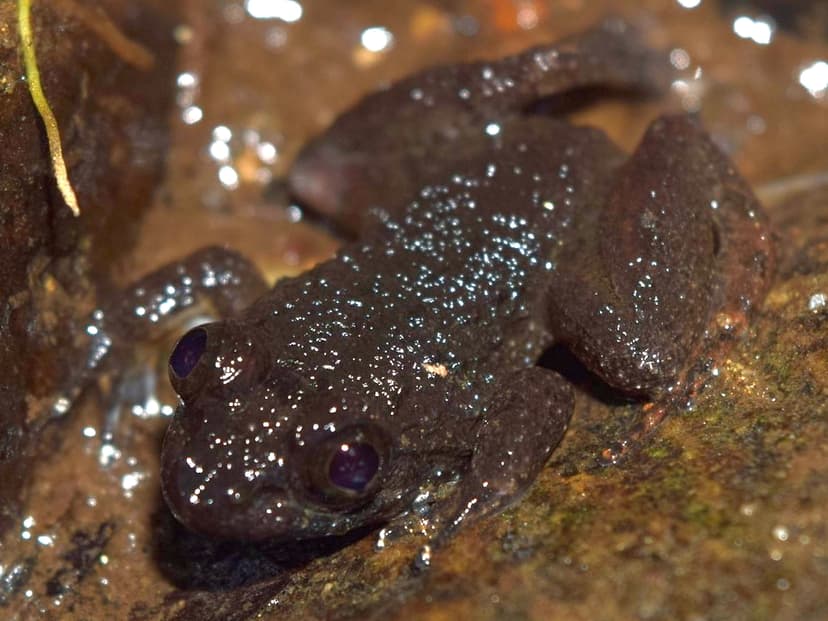
Physically, Alcalus baluensis is characterized by its small yet stocky build. Adult individuals typically measure between 21 and 25 millimeters in snout-to-vent length. A distinctive feature noted in its description is the presence of a visible tympanic ring. The preferred natural habitats for this species are primary rainforests, found at both lowland and mid-elevations. Within these environments, Alcalus baluensis is most commonly found on the forest floor, often nestled within leaf litter, and also frequents areas along stream banks.
Conservation Concerns
Alcalus baluensis faces significant threats, primarily due to habitat loss. The degradation and destruction of its specific rainforest habitat place this species at risk. Further details regarding its diet, breeding behavior, vocalizations, lifespan, or predators are not extensively documented in available records.
Source: Wikipedia ↗
Frequently Asked Questions
What is Alcalus baluensis?
Alcalus baluensis is a species of frog belonging to the family Ceratobatrachidae. It is native to northern and western Borneo and is also known by the common names Balu eastern frog or dwarf mountain frog.
Where does Alcalus baluensis live?
This frog species is endemic to the island of Borneo, specifically found in the northern and western regions. Its natural habitats are lowland and mid-elevation primary rainforests.
What are the physical characteristics of Alcalus baluensis?
Alcalus baluensis are small but stocky frogs. They typically measure between 21 and 25 millimeters in snout-to-vent length, and possess a visible tympanic ring.
What is the habitat of the Balu eastern frog?
The Balu eastern frog, or dwarf mountain frog, prefers to live on the forest floor within leaf litter and along the banks of streams in lowland and mid-elevation primary rainforests.
What are the threats facing Alcalus baluensis?
The primary threat to Alcalus baluensis is habitat loss. This species relies on specific rainforest environments which are being impacted.
Related Frogs

Alcalinae
Alcalus is a small genus of frogs belonging to the subfamily Alcalinae, found in Palawan, Borneo, and the Malay Peninsula. These frogs are distinguished by their intermediate body size compared to related genera, broad heads, and textured skin. They prefer semi-aquatic microhabitats and are named in honor of Filipino biologist Angel Alcala.
Alcalus rajae
Alcalus rajae, also known as the king dwarf mountain frog, is a species of frog endemic to the island of Borneo in Indonesia. This stocky amphibian is distinguished by its uniformly colored brown to blackish dorsal side, short limbs, and discs on its fingers and toes. It inhabits undisturbed and secondary forests near water sources within a specific altitudinal range.
Alcalus tasanae
Smith's wrinkled frog, scientifically known as Alcalus tasanae, is a frog species native to western and southern Thailand, with its range potentially extending into Myanmar. This species is distinguished by its habitat preference for primary rainforests adjacent to streams and is currently facing threats from habitat loss.