
Amietophrynus regularis
The African common toad, also known as Sclerophrys regularis, is a widespread amphibian found across much of Sub-Saharan Africa, extending to oases in Algeria and Libya, and northern Egypt. This large, warty toad is distinguished by its dark olive-brown coloration with symmetrical dark patches and a paler spinal band in younger individuals. It is an adaptable species, thriving in diverse habitats from savannas to agricultural areas, and is notable for its bouncing escape behavior and a distinct rattling vocalization.
Key Facts
- ›Found widely across Sub-Saharan Africa, including desert oases and northern Egypt.
- ›Possesses warty skin and large, kidney-shaped paratoid glands.
- ›Males reach up to 91 MM and females up to 130 MM in snout-to-vent length.
- ›Dorsal surface is dark olive-brown with symmetrical dark patches and a pale spinal band in juveniles.
- ›Breeds near rivers and is adaptable to various habitats, including agricultural lands and degraded forests.
- ›Conservation status is 'Least Concern' due to a stable population.
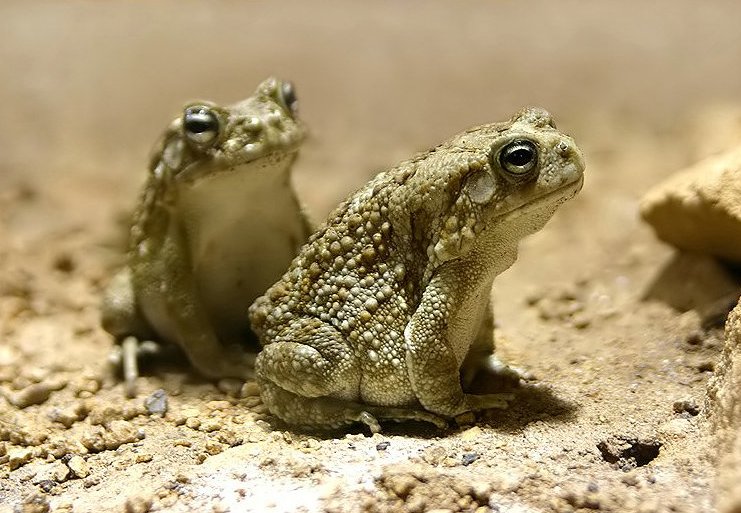
African Common Toad, Square-Marked Toad, African Toad, Egyptian Toad, African Bouncing Toad, Reuss's Toad
Savanna, Grassland, Forest Margins, Agricultural Habitats, Wetlands
Angola, Benin, Burkina Faso, Cameroon, Cape Verde, Central African Republic, Chad, Republic of the Congo, Democratic Republic of the Congo, Ivory Coast, Egypt, Ethiopia, Gabon, Ghana, Guinea, Guinea-Bissau, Kenya, Liberia, Mali, Niger, Nigeria, Rwanda, Senegal, Sierra Leone, Sudan, Uganda, Algeria, Libya
- Large, Sturdy Build With Warty Skin.
- Large, Parallel Or Kidney-Shaped Paratoid Glands.
- Symmetrical Dark Patches On A Dark Olive-Brown Dorsal Surface.
- Pale Spinal Band In Younger Individuals.
- Males Have Black Throats.
About Amietophrynus regularis
African Common Toad (Sclerophrys regularis)
The African common toad, scientifically known as Sclerophrys regularis, is a widespread amphibian species native to much of Sub-Saharan Africa. Its common names include the square-marked toad, African toad, Egyptian toad, African bouncing toad, and Reuss's toad, reflecting its diverse distribution and distinctive behaviors. This species is notable for its adaptability, inhabiting a broad spectrum of environments, from moist and dry savannas to montane grasslands, forest margins, and agricultural areas, often found near rivers where it also reproduces.
Description and Characteristics
Sclerophrys regularis is a large and robust toad, easily identifiable by its distinctly warty skin. Adult males typically measure between 62 and 91 mm in snout-to-vent length, while females are considerably larger, reaching sizes of 70 to 130 mm. A prominent feature is its large paratoid glands, which can be either parallel or kidney-shaped. Males possess a single vocal sac located under their chin. The dorsal coloration is generally a dark olive-brown, often adorned with dark patches that tend to be arranged symmetrically. Younger toads may exhibit a paler band running along their spine. Further markings include smaller dark blotches on the upper lip and eyelids, and the warts on the flanks are frequently separated by dark lines. The throat of the male is black, contrasting with the white to beige underparts shared by both sexes. Its vocalization is a characteristic rattling sound, consisting of two pulses and lasting for approximately 0.9 seconds.
Habitat and Distribution
The African common toad is an abundant species across its extensive range. It thrives in both humid and arid savanna environments, montane grasslands, and at the edges of forests. It is also frequently encountered in agricultural landscapes. Its presence near rivers is common, as these water bodies are important for its breeding. While not a true forest dweller, it can adapt to degraded habitats and urban settings, including gardens, within the forest zone. In drier regions, it faces competition from other toad species such as Amietophrynus garmani and Amietophrynus xeros.
Behavior and Defense
When faced with potential threats, the African common toad exhibits a unique bouncing motion as a means of confusing or evading predators. It also possesses webbed hind feet, which are adept at propelling it through water. This suggests a capacity for aquatic locomotion when necessary.
Conservation Status
The International Union for Conservation of Nature (IUCN) has classified the African common toad as 'Least Concern'. This designation is based on its widespread distribution, its adaptable nature, and a stable population trend. Despite its commonality and conservation status, the species has occasionally been exploited for the pet trade.
Source: Wikipedia ↗
Frequently Asked Questions
What are the different names for Sclerophrys regularis?
Sclerophrys regularis is commonly known by several names, including the African common toad, square-marked toad, African toad, Egyptian toad, African bouncing toad, and Reuss's toad.
What is the typical size of an African common toad?
Adult males typically range from 62 to 91 mm in snout-to-vent length, while females are larger, reaching between 70 and 130 mm.
What does the African common toad look like?
It is a large, sturdy toad with warty skin, typically dark olive-brown on its dorsal surface with symmetrical dark patches. Younger animals often have a pale band along the spine, and males have black throats.
Where does the African common toad live?
This species has a very wide distribution across Sub-Saharan Africa, found in moist and dry savannas, montane grasslands, forest margins, agricultural areas, and near rivers. Its range also extends to oases in Algeria and Libya, and northern Egypt.
What is the conservation status of the African common toad?
The African common toad is listed as 'Least Concern' by the IUCN. This is due to its abundance across a wide range and a stable population, though it has been exploited for the pet trade.
How does the African common toad defend itself?
When threatened, this toad exhibits a bouncing motion to confuse or escape predators. It also uses its webbed hind feet to propel itself through water.
Related Frogs
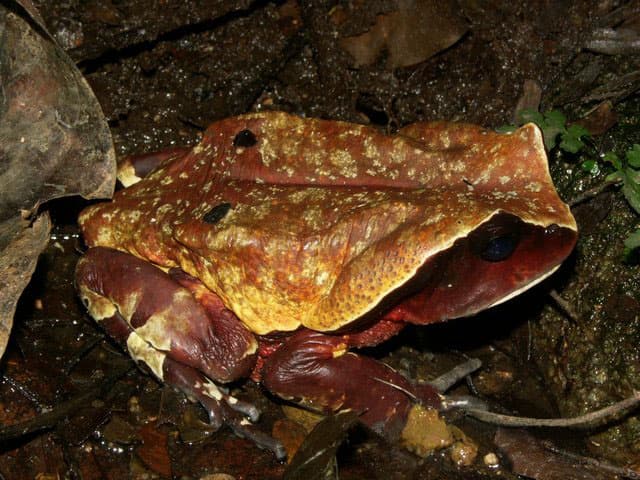
Amietophrynus superciliaris
The African giant toad, also known as the Cameroon toad, is a large amphibian species found across tropical Central and West Africa. It is characterized by its robust, ovoid body, short snout, and distinctive pointed eyelid projections. This species is primarily found in lowland forests and marshes, where its coloration provides excellent camouflage among leaf litter.
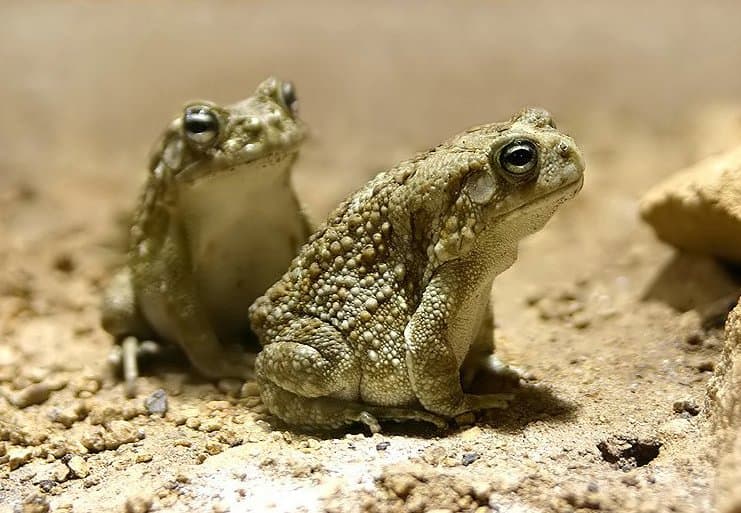
Amietophrynus
Sclerophrys is a genus of "true toads" found in Africa and the southern Arabian Peninsula. These toads were originally classified under the genus Bufo, but were later separated into Amietophrynus due to significant taxonomic differences. The genus name Amietophrynus is now considered a junior synonym of Sclerophrys.
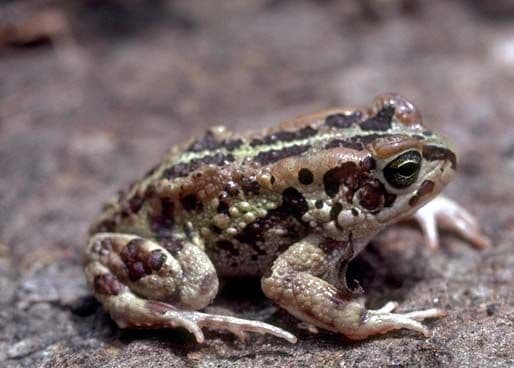
Amietophrynus buchneri
Sclerophrys buchneri, commonly known as Buchner's toad, is a species of toad belonging to the Bufonidae family. Its known distribution is limited to the Cabinda Province of Angola and the western Republic of the Congo, with presumed presence in the Democratic Republic of the Congo. The biology of this species remains largely unstudied, and there is speculation that it might be a synonym for Sclerophrys funereus.