
Amietophrynus buchneri
Sclerophrys buchneri, commonly known as Buchner's toad, is a species of toad belonging to the Bufonidae family. Its known distribution is limited to the Cabinda Province of Angola and the western Republic of the Congo, with presumed presence in the Democratic Republic of the Congo. The biology of this species remains largely unstudied, and there is speculation that it might be a synonym for Sclerophrys funereus.
Key Facts
- ›Native to Angola and the Republic of the Congo.
- ›Belongs to the Bufonidae family of toads.
- ›Its scientific name is Sclerophrys buchneri.
- ›Commonly referred to as Buchner's toad.
- ›Little is known about its biology and life cycle.
- ›May be a synonym for Sclerophrys funereus.
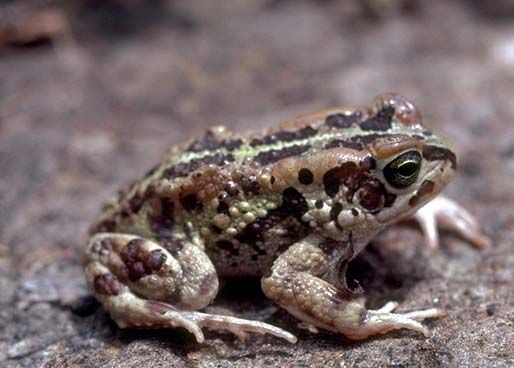
Buchner's Toad
Forest, Woodland
Angola, Republic of the Congo, Democratic Republic of the Congo
About Amietophrynus buchneri
Sclerophrys buchneri: Buchner's Toad
Sclerophrys buchneri, commonly known as Buchner's toad, is a species of toad that belongs to the Bufonidae family. This amphibian is primarily found in the Cabinda Province of Angola and the western region of the Republic of the Congo. There is also a presumption that it may inhabit the Democratic Republic of the Congo, though its exact range and population status are not fully established.
Biological Unknowns
A significant aspect of Sclerophrys buchneri is the profound lack of detailed biological information. The species' life cycle, reproductive habits, diet, and ecological role remain largely unstudied. This scarcity of data has led to scientific speculation that Buchner's toad may not be a distinct species but rather a synonym for Sclerophrys funereus. Further research is required to clarify its taxonomic status and biological characteristics.
Habitat and Distribution
The confirmed locations for Sclerophrys buchneri are limited to specific areas within Angola and the Republic of the Congo. While it is believed to extend into the Democratic Republic of the Congo, the precise types of habitats it occupies within these territories are not well-documented. As a toad, it is likely to inhabit terrestrial environments, potentially including forests or woodlands, but specific ecological preferences are unknown.
Source: Wikipedia ↗
Frequently Asked Questions
What is Sclerophrys buchneri?
Sclerophrys buchneri is a species of toad in the Bufonidae family. It is also commonly known as Buchner's toad.
Where is Buchner's toad found?
Buchner's toad is found in the Cabinda Province of Angola and the western Republic of the Congo. It is also presumed to exist in the Democratic Republic of the Congo.
What is known about the biology of Sclerophrys buchneri?
The biology of Sclerophrys buchneri is essentially unknown. Very little scientific information is available regarding its life cycle, behavior, or ecological role.
Is Sclerophrys buchneri a distinct species?
There is ongoing scientific discussion regarding the distinctiveness of Sclerophrys buchneri. It is speculated that it might be a synonym for another species, Sclerophrys funereus.
Related Frogs
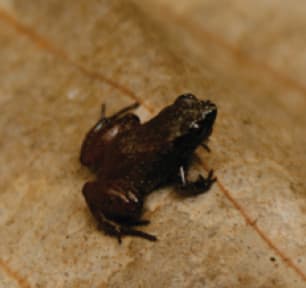
Adelophryne gutturosa
The Guiana Shield frog (Adelophryne gutturosa) is a small species of frog found across the Guiana Shield region of South America, including parts of Venezuela, Guyana, French Guiana, and Brazil. It is distinctive for its small size, smooth skin, and specific habitat requirements within rainforest leaf litter.

African clawed frog
The African clawed frog (Xenopus laevis) is a fully aquatic species native to Sub-Saharan Africa, known for its smooth, mottled skin and powerful legs. These adaptable amphibians are notable for their unique breeding behavior, ability to survive drought by burrowing, and extensive use as a model organism in scientific research, particularly in developmental biology and genetics. They are also recognized as an invasive species in many parts of the world due to their voracious appetite and resilience.
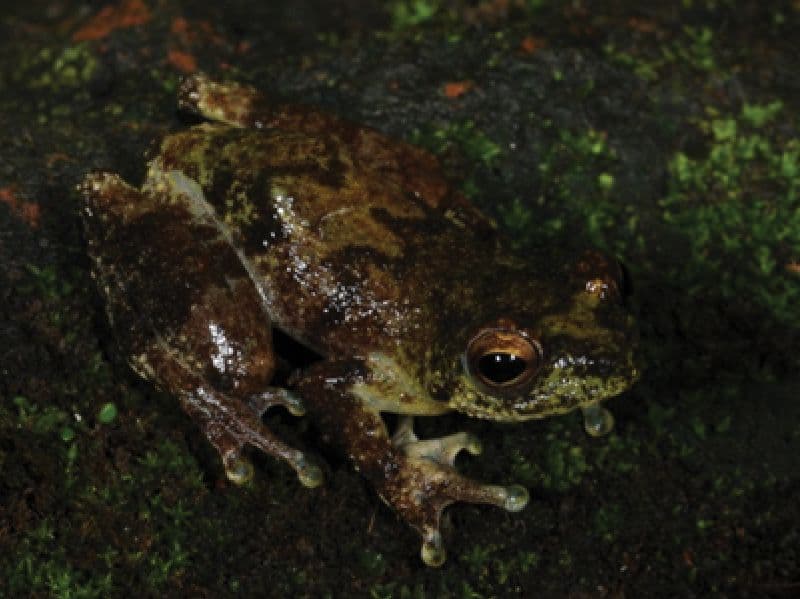
Alexteroon hypsiphonus
Alexteroon hypsiphonus, also known as the cross-banded egg-guarding frog, is a species of tree frog native to the rainforests of southern Cameroon, Gabon, Equatorial Guinea, the western Republic of the Congo, and northwestern Angola. This slender frog is distinguished by its lichen-like, granular skin that changes color from gray to dark brown, numerous black dots, and three distinctive black-bordered, reddish-brown bands. It is an arboreal species that lays its eggs on leaves above small ponds, providing a unique form of parental care as the tadpoles eventually fall into the water below.