
Agalychnis saltator
Agalychnis·Not Threatened
Agalychnis saltator, also known as the parachuting red-eyed leaf frog or misfit leaf frog, is a species of frog found in the humid and wet forests of Central America, from Honduras to Costa Rica. This arboreal and nocturnal species is distinctive for its bright red eyes with vertical pupils and its ability to 'parachute' by spreading webbing between its limbs and toes to glide between trees.
Key Facts
- ›Distinctive red eyes with vertical pupils.
- ›Arboreal and nocturnal, inhabiting forest canopies.
- ›Known for its 'parachuting' behavior to glide between trees.
- ›Breeds explosively after heavy rains in temporary pools.
- ›Found in lowland and montane humid and wet forests.
- ›Listed in CITES Appendix II due to collection for the pet trade.
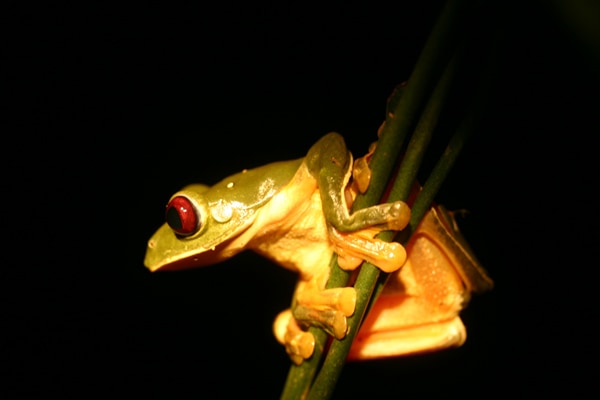
Parachuting Red-Eyed Leaf Frog, Misfit Leaf Frog
Rainforest, Wetlands, Montane Forests, Lowland Forests
Honduras, Costa Rica
Red Eyes With Vertical Pupils, Bluish-Purple Flanks, Large Suction Disks On Toes, Extensive Webbing Between Digits
About Agalychnis saltator
Agalychnis saltator: The Parachuting Red-Eyed Leaf Frog
Agalychnis saltator, commonly known as the parachuting red-eyed leaf frog or misfit leaf frog, is a fascinating amphibian species found in the humid and wet forests of Central America. Its natural range extends from north-eastern Honduras down to eastern-central Costa Rica, inhabiting diverse forest types from lowlands to montane regions.
Description and Behavior
This species is characterized by its striking red eyes, which feature vertical pupils, and its vibrant green dorsal coloration, often accented with bluish-purple flanks. Males are smaller, typically measuring 38–44 mm in snout-to-vent length, while females are larger, ranging from 52–62 mm. Agalychnis saltator is primarily arboreal and nocturnal, spending much of its time in the forest canopy. A remarkable behavior that gives it its common name is its ability to 'parachute'; by extending its limbs and spreading the skin between its toes and fingers, it can glide from considerable heights to reach plants below, a behavior often observed during mating activities.
Habitat and Reproduction
The frog's habitat consists of lowland and montane humid and wet forests, as well as adjacent premontane wet forests and rainforests. While they reside in the trees, they descend to temporary pools to breed. Agalychnis saltator is an explosive breeder, meaning reproduction is rapid and triggered by heavy rains. Breeding aggregations can be substantial, with 25–400 individuals gathering. These frogs often hang on vines that overhang temporary ponds, with males frequently outnumbering females in amplexus. The eggs are laid among mosses on these vines, leaving them vulnerable to predation at this early stage.
Conservation and Trade
Agalychnis saltator has a naturally fragmented distribution and is not considered particularly common, though it is regularly observed at its breeding sites. Habitat fragmentation due to agricultural development and logging poses a threat to local populations. The species is also collected for the illegal pet trade, leading to its inclusion in CITES Appendix II. Despite these challenges, it is not currently classified as threatened on a broader scale.
Source: Wikipedia ↗
Frequently Asked Questions
What is the Agalychnis saltator?
Agalychnis saltator is a species of frog belonging to the subfamily Phyllomedusinae. It is commonly known as the parachuting red-eyed leaf frog or misfit leaf frog.
Where is the Agalychnis saltator found?
This species is found in the Caribbean lowlands of north-eastern Honduras to eastern-central Costa Rica. Its habitat includes lowland and montane humid and wet forests, as well as adjacent premontane wet forests and rainforests.
What are the distinctive physical features of the Agalychnis saltator?
Agalychnis saltator is characterized by its striking red eyes with vertical pupils. The dorsum is typically light or dark leaf green, with bluish-purple flanks. They also possess large suction disks on their digits and extensive webbing between their fingers and toes.
How does the Agalychnis saltator reproduce?
These frogs are explosive breeders, reproducing after heavy rains. They gather in temporary pools, with males sometimes outnumbering females and engaging in amplexus. Eggs are laid on vines overhanging these pools.
Is the Agalychnis saltator endangered?
While Agalychnis saltator has a naturally fragmented distribution and is not particularly common, it is not currently considered threatened on the whole. However, habitat fragmentation due to deforestation is a local concern, and it is collected for the illegal pet trade.
Related Frogs

Agalychnis callidryas
The red-eyed tree frog (Agalychnis callidryas) is a vibrantly colored amphibian native to the rainforests of Central America and northwestern South America. Despite its striking appearance with bright red eyes, green body, and blue and yellow side stripes, it is not poisonous. Its colors are thought to serve as camouflage and a startle display to deter predators, allowing it valuable escape time.
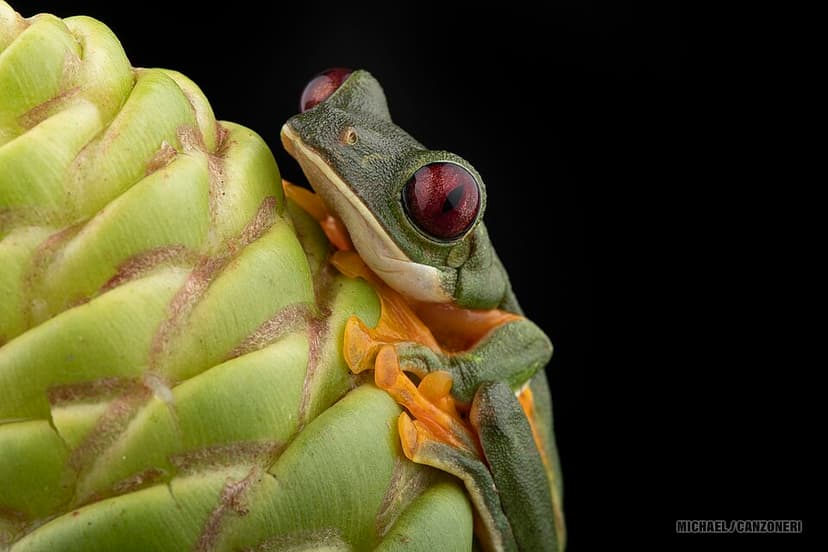
Agalychnis spurrelli
The gliding tree frog (Agalychnis spurrelli) is a species found in the humid forests and marshes of Colombia, Costa Rica, Ecuador, and Panama. It is distinctive for its ability to glide by spreading its limbs and using the extensive webbing as a parachute, and its color changes from pale green to dark green at nightfall.

Agalychnis lemur
The lemur leaf frog, also known as the lemur frog, is a critically endangered amphibian found in the rainforests of Costa Rica, Panama, and northwestern Colombia. It is distinctive for its ability to change color from vibrant green during the day to brown at night, aiding in camouflage, and for its resilience to the chytrid fungus due to unique skin properties.