
Anaxyrus terrestris
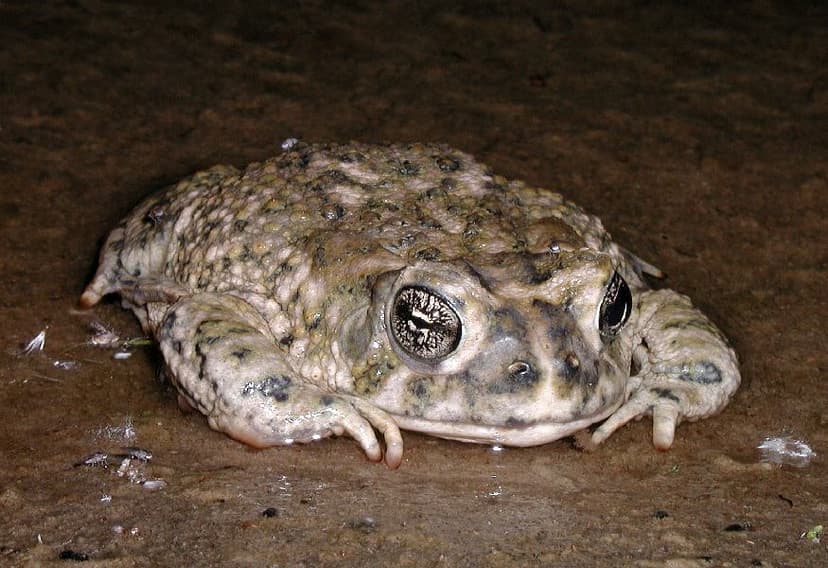
The southern toad (Anaxyrus terrestris) is a large true toad found in the southeastern United States, commonly inhabiting areas with sandy soils. It is distinguished by knobs on its head and backward-pointing spurs, and its coloration can vary from brick red to mottled gray, brown, or black. This nocturnal species spends its days in burrows and is considered a generalist in its habitat preferences.
Key Facts
- ›The largest toad in its southeastern us range, reaching up to 92 MM (3.6 in) snout-to-vent length.
- ›Possesses distinctive knobs on its head and backward-pointing spurs.
- ›Coloration varies widely, including brick red, mottled gray, brown, and black, with pale underparts.
- ›Spends daylight hours in burrows and is primarily active at night.
- ›Breeds in lowland pools, ditches, swamps, and lake margins from March to may, sometimes extending to September.
- ›Its conservation status is 'least concern' due to a wide range and adaptability.

Southern Toad
Woodland, Cultivated Land, Gardens, Suburban Areas, Sandy Soils, Wetlands, Aquatic Margins
Virginia, Florida, Louisiana, South Carolina
Hog-Nosed Snakes
Knobs On the Head, Backward-Pointing Spurs, Warty Dorsal Surface, Some Spiny, Variable Coloration
About Anaxyrus terrestris
The southern toad, scientifically known as Anaxyrus terrestris, is a prominent amphibian species native to the southeastern United States. It is the largest toad found within its geographic range, which spans from eastern Louisiana and southeastern Virginia down to Florida. This species is characterized by its plump build and distinctive physical features, including prominent knobs on its head and backward-pointing spurs that extend as far as its paratoid glands. Its warty dorsal surface, combined with a variable coloration that can range from brick red to mottled gray, brown, or black, makes it easily recognizable.
Habitat and Behavior
Southern toads are adaptable and can be found in a variety of habitats, often preferring areas with sandy soils. They are frequently observed in woodland, cultivated land, gardens, and suburban environments, demonstrating their ability to thrive even in fragmented landscapes. As a nocturnal species, the southern toad spends its days concealed in burrows, under logs, or within piles of debris, emerging at night to forage. They have been observed congregating beneath outdoor lights to catch attracted insects.
Reproduction
The breeding season for the southern toad typically occurs from March into late May, though it can occasionally persist until September. During this period, males migrate from their terrestrial habitats to lowland pools, ditches, swamps, and the margins of lakes, where they gather and call to attract females. Breeding takes place in shallow waters of both temporary and permanent aquatic environments. Females lay large clutches, with egg counts ranging from approximately 1,700 to over 16,500. The tadpoles, which feed on algae, require 30 to 55 days to develop before metamorphosing into juvenile toads. Tadpoles exhibit smaller size and reduced activity in environments with elevated salinity, and they tend to select warmer open waters for development.
Conservation and Predators
Anaxyrus terrestris is classified as 'Least Concern' by the IUCN due to its wide distribution and adaptable nature. While it faces some localized challenges, such as competition from the invasive cane toad in parts of Florida, it is not currently considered threatened. For defense, southern toads can release bufotoxin from their paratoid glands. Their natural predators include species such as the hog-nosed snake, which is known to prey significantly on adult southern toads. The species is also sometimes exploited by the pet trade.
Source: Wikipedia ↗
Frequently Asked Questions
What are the main physical characteristics of the southern toad?
The southern toad is a medium-sized, plump species. Key distinguishing features include knobs on its head and backward-pointing spurs that extend as far as the paratoid glands. Its back is covered in warts, some of which can be spiny, and its coloration varies from brick red to mottled gray, brown, and black.
Where is the southern toad found?
This species is native to the coastal plain of the southeastern United States. Its range extends from southern Virginia to Florida and Louisiana, with two isolated populations in South Carolina.
What is the habitat of the southern toad?
Southern toads are habitat generalists and can be found in various environments, including woodland, cultivated land, gardens, suburban areas, and fragmented landscapes. They often prefer areas with sandy soils and spend their days in burrows.
What does the southern toad eat?
Adult southern toads are carnivorous and feed on any small invertebrates they can find and swallow. Their tadpoles, however, feed on algae that they scrape from underwater vegetation.
How does the southern toad reproduce?
Breeding occurs in spring when males migrate to lowland pools, ditches, swamps, and lake margins. Females lay clutches containing thousands of eggs, which hatch into tadpoles that develop over 30 to 55 days before metamorphosing into juvenile toads.
What are the predators of the southern toad?
Hog-nosed snakes are known to feed heavily on adult southern toads. For defense, southern toads can release bufotoxin from their parotoid glands.
Related Frogs

American toad
The American toad (Anaxyrus americanus) is a widespread amphibian found across eastern Canada and the United States. It is characterized by its variable coloration, which can range from yellow to brown to black, and its ability to change skin color based on environmental factors. This species is known for its distinctive trilling call during breeding season and its ability to hibernate through the winter.

Anaxyrus boreas
The western toad (Anaxyrus boreas) is a large toad species native to western North America. It is characterized by a white or cream dorsal stripe, dusky gray or greenish coloring, and widely separated parotoid glands. This species is frequently encountered near water and can jump considerable distances, with breeding occurring between March and July.
Anaxyrus californicus
The arroyo toad (Anaxyrus californicus) is a species of true toad endemic to California, U.S., and Baja California, Mexico. It is characterized by its stocky build, warty skin, and distinctive horizontal pupils, and is recognized as an important indicator species for the health of its sandy wash habitats. Due to significant habitat destruction and other threats, it is currently classified as Endangered.