
Anaxyrus americanus
The American toad (Anaxyrus americanus) is a widely distributed amphibian found across eastern Canada and the United States. It is characterized by its variable coloration, which can shift based on environmental factors, and its distinctive trilling vocalization during breeding season. This species is known for its ability to burrow for hibernation and its mild bufotoxin.
Key Facts
- ›The American toad is divided into three subspecies: eastern, dwarf, and Hudson Bay.
- ›Eggs are laid in long ropes, and tadpoles develop in 2,000-20,000 per clutch.
- ›Adult toads are primarily nocturnal, but juveniles may be active during the day.
- ›They hibernate by burying themselves in the dirt during cold weather.
- ›Their diet consists mainly of invertebrates such as insects, spiders, slugs, and worms.
- ›Bufotoxin, a MILD poison, is secreted from their parotoid glands to deter predators.
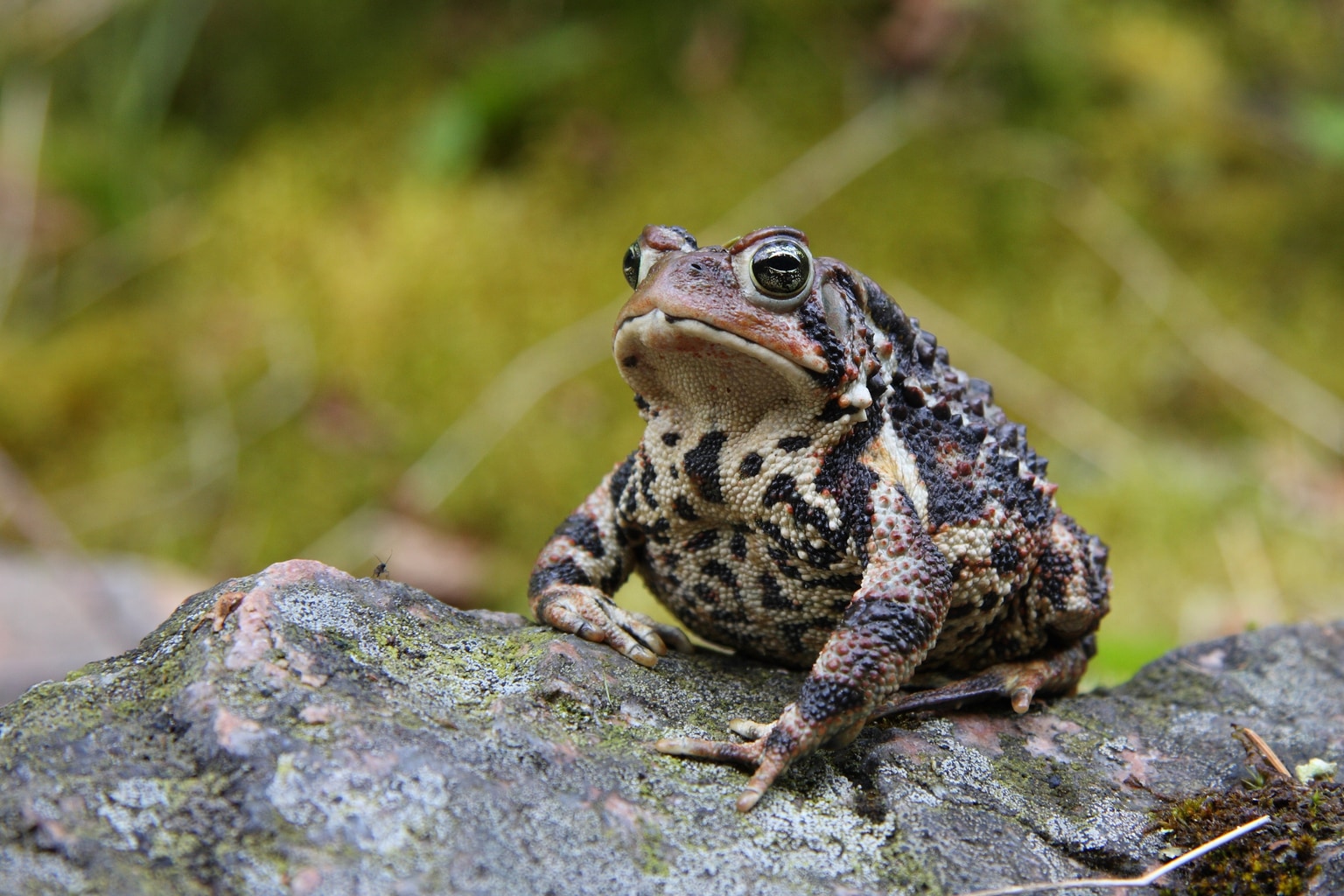
American Toad
Forest, Grassland, Wetlands, Ponds, Pools
Canada, United States
- Variable Skin Coloration
- Eastern American Toads Have 1-2 Warts In Spots and Enlarged Warts On the Tibia
- Cranial Crests In Eastern American Toads Almost Never Touch Parotoid Glands
- Belly Is Usually Spotted
- Parotoid Glands Are the Same Color As Surrounding Skin
About Anaxyrus americanus
American Toad (Anaxyrus americanus)
The American toad, scientifically known as Anaxyrus americanus, is a highly common and widespread amphibian species inhabiting the eastern half of Canada and the United States. This species is notable for its adaptability and the significant variability in its physical characteristics, particularly its skin coloration, which can range from yellow to brown to black. This coloration is not fixed and can change in response to environmental factors such as habitat colors, humidity, stress levels, and temperature. The American toad is further categorized into three subspecies: the eastern American toad (A. a. americanus), the dwarf American toad (A. a. charlesmithi), and the rare Hudson Bay toad (A. a. copei).
Life Cycle and Reproduction
Reproduction in the American toad involves the female laying eggs in two long ropes, which can collectively extend up to 60 meters. A single clutch can contain between 2,000 and 20,000 eggs. These eggs hatch within 3 to 12 days into tadpoles, which are characterized by their round black bodies and slender tails. The tadpoles undergo metamorphosis and reach adulthood in approximately 50 to 65 days. Upon completing metamorphosis, the young toads, or toadlets, may spend a brief period in the water before transitioning to a primarily terrestrial existence. They often migrate in groups to shaded areas in mid-range and upland forests bordering their natal marshes. Tadpoles are known to have a mutualistic relationship with Chlorogonium algae, which accelerates their development. To mitigate predation, tadpoles employ several strategies, including swimming in shallow, vegetated waters and forming schools during the day. They also possess toxic chemicals in their skin that deter some predators.
Adult Characteristics and Behavior
Adult American toads are primarily nocturnal but may exhibit diurnal activity, especially when it rains. They are known to be "creatures of habit," often residing within a specific area and seeking shelter in burrows, under objects like flat stones, logs, or wood piles. During colder months, they hibernate by digging backward and burying themselves in the soil of their summer habitats or finding alternative hibernation sites. The diet of adult toads consists of a variety of invertebrates, including crickets, mealworms, earthworms, ants, spiders, slugs, centipedes, and moths. The species possesses parotoid glands that secrete bufotoxin, a mild poison that makes them unpalatable to most predators. While this toxin can irritate human eyes and mucous membranes, it is generally not considered highly dangerous to humans but can be harmful to smaller animals if ingested. The call of the male American toad during the breeding season is a distinctive high trill, lasting between 6 and 30 seconds, which is thought to help females recognize potential mates and possibly kin.
Distinguishing Features and Subspecies
Distinguishing the American toad from similar species can involve examining specific physical traits. For instance, the eastern American toad typically has spots containing one to two warts and enlarged warts on its lower leg. Its cranial crests, bony ridges on the head, usually do not touch the parotoid glands, unlike some other toad species. The belly is generally spotted, though this can vary. The dwarf American toad is a smaller version, reaching about 6 cm, and is often a dark reddish color with reduced or absent spots. The Hudson Bay toad, a rare Canadian subspecies, primarily exhibits red coloring on the sides of its body and has a high number of warts. Hybridization can occur where their ranges overlap with other species such as Anaxyrus woodhousii.
Source: Wikipedia ↗
Frequently Asked Questions
What are the different subspecies of the American toad?
The American toad is divided into three subspecies: the eastern American toad (A. a. americanus), the dwarf American toad (A. a. charlesmithi), and the rare Hudson Bay toad (A. a. copei). These subspecies can vary in size, coloration, and the number of warts they possess.
How does the American toad reproduce?
American toads lay between 2,000 and 20,000 eggs in two long strings, which hatch within 3 to 12 days. Male toads produce a high trill lasting 6 to 30 seconds to attract females during the breeding period.
What do American toad tadpoles eat?
Hatched tadpoles are recognizable by their round black bodies and skinny tails. They feed on microscopic bugs, ants, spiders, slugs, and worms. They also have a mutualistic relationship with Chlorogonium algae, which aids in their faster development.
How does the American toad protect itself from predators?
Tadpoles reduce predation by swimming in shallow, vegetated water and staying close together in schools. Both tadpoles and adult toads produce toxic chemicals in their skin, including bufotoxin, which deters some predators and can be irritating or dangerous if ingested by smaller animals.
Where do American toads live and what is their habitat?
American toads are found throughout the eastern half of Canada and the United States. They require semi-permanent freshwater ponds or pools for breeding and water supply, as well as dense vegetation for cover and hunting. Their habitat ranges from forests to flat grasslands.
What is the diet of an adult American toad?
Adult American toads are carnivorous and feed on a variety of small invertebrates. Their diet includes crickets, mealworms, earthworms, ants, spiders, slugs, centipedes, moths, and other small invertebrates.
Related Frogs

Anaxyrus terrestris
The southern toad (Anaxyrus terrestris) is a large true toad found in the southeastern United States, commonly inhabiting areas with sandy soils. It is distinguished by knobs on its head and backward-pointing spurs, and its coloration can vary from brick red to mottled gray, brown, or black. This nocturnal species spends its days in burrows and is considered a generalist in its habitat preferences.

American toad
The American toad (Anaxyrus americanus) is a widespread amphibian found across eastern Canada and the United States. It is characterized by its variable coloration, which can range from yellow to brown to black, and its ability to change skin color based on environmental factors. This species is known for its distinctive trilling call during breeding season and its ability to hibernate through the winter.

Anaxyrus boreas
The western toad (Anaxyrus boreas) is a large toad species native to western North America. It is characterized by a white or cream dorsal stripe, dusky gray or greenish coloring, and widely separated parotoid glands. This species is frequently encountered near water and can jump considerable distances, with breeding occurring between March and July.