
Anaxyrus californicus
The arroyo toad (Anaxyrus californicus) is a species of true toad endemic to California, U.S., and Baja California, Mexico. It is characterized by its stocky build, warty skin, and distinctive horizontal pupils, and is recognized as an important indicator species for the health of its sandy wash habitats. Due to significant habitat destruction and other threats, it is currently classified as Endangered.
Key Facts
- ›Found in sandy or cobbly washes with swift currents in Southern California and northwestern Baja California.
- ›A stocky toad, 5 to 7.5 CM long, with greenish, grey, or salmon coloration and a light stripe across the head.
- ›Nocturnal, spending days underground, but can be seen during the day along water during mating season.
- ›Breeds in late winter and early spring after rains, with females laying an average of 4,700 eggs.
- ›Defends itself with a toxin called bufotoxin secreted from its skin, which can cause severe symptoms in attackers.
- ›Listed as Endangered on the IUCN Red List due to extensive habitat loss from human activities.
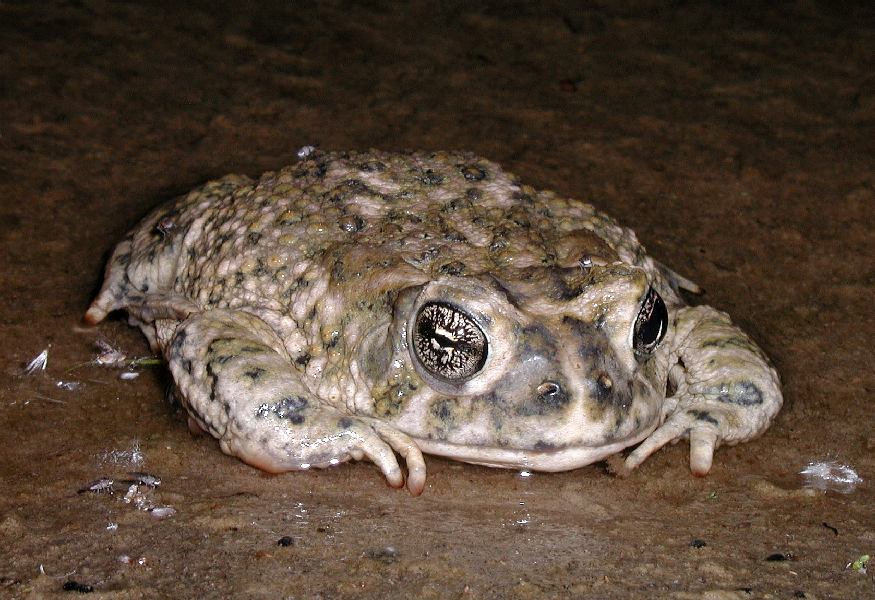
Arroyo Toad
Riparian, Arid Zones, Washes, Sandy Terrains
California, Baja California
Fish, Other Frog Species, Birds, Snakes, Insects, American Bullfrogs, Garter Snakes
Horizontal Pupils, Stocky Build, Warty Skin, Light-Colored Stripe Across Head and Eyelids, Large, Oval, Widely Separated Parotoid Glands, Red-Tipped Tubercles On Back
About Anaxyrus californicus
Anaxyrus californicus: The Arroyo Toad
The arroyo toad, scientifically known as Anaxyrus californicus, is a distinct species of true toad found only in specific regions of California, United States, and Baja California, Mexico. This amphibian is characterized by its stocky build, blunt nose, and warty skin, typically measuring between 5 to 7.5 centimeters in length. Its coloration varies from greenish, grey, or salmon on its dorsum, often marked with a light stripe across the head and eyelids, and it possesses horizontal pupils. The toad is also identified by its large, oval parotoid glands and the presence of red-tipped tubercles on its back.
Habitat and Distribution
The arroyo toad has a specialized habitat preference, favoring sandy or cobbly washes that experience swift currents, alongside adjacent upland and riparian zones. These areas are often predominantly dry creek or river beds that flow only temporarily after significant rainfall. Adults find refuge and shelter by burrowing into the sandy soil, and the species tends to favor locations with minimal vegetation. Its presence is considered a crucial indicator of the overall health of its Southern California ecosystems.
Behavior and Diet
Primarily a nocturnal species, the arroyo toad spends most daylight hours underground, emerging to forage and breed. During the dry season, it enters a state of aestivation, hibernating in soil or clay-like sand from August to January to prevent dehydration. Its diet consists mainly of ants and other small insects in its youth, expanding to include caterpillars, moths, crickets, and snails in adulthood. The arroyo toad is known to be highly sensitive to changes in water quality, making it valuable for environmental monitoring.
Reproduction and Defense
Breeding activity peaks in late winter and early spring, coinciding with seasonal rains. Males attract females with a unique mating call. Reproduction involves the female laying an average of 4,700 eggs in a two-row formation near the water's edge, with hatching occurring within four to six days. The arroyo toad possesses a defense mechanism in the form of bufotoxin, a toxin secreted from its skin that can cause severe symptoms, including irritation, pain, and potentially more serious health issues, in those that attempt to prey upon it.
Conservation Concerns
Sadly, the arroyo toad is listed as Endangered on the IUCN Red List due to extensive habitat destruction stemming from human activities such as agriculture, construction, off-road vehicle use, and mining. Introduced predators like American Bullfrogs and predatory fish, alongside drought and alterations to river hydrology, also pose significant threats. Conservation efforts are underway, including habitat restoration and community education, to mitigate the decline of this ecologically significant species.
Source: Wikipedia ↗
Frequently Asked Questions
What does the arroyo toad look like?
The arroyo toad is a stocky species with blunt noses and warty skin, measuring between 5 to 7.5 cm in length. It typically has horizontal pupils and its dorsal coloration ranges from greenish, grey, or salmon, often featuring a light-colored stripe across its head and eyelids. Red-tipped tubercles are also present on its back.
Where does the arroyo toad live?
This toad is endemic to California, U.S., and the Baja California state of Mexico. It specifically prefers sandy or cobbly washes with swift currents, along with associated upland and riparian habitats, particularly in Southern California.
What is the diet of the arroyo toad?
Young arroyo toads primarily feed on ants and other small insects. As they mature, their diet expands to include caterpillars, moths, crickets, snails, and sometimes the eggs and larvae of other arroyo toads.
How does the arroyo toad reproduce?
Breeding occurs in late winter and early spring following seasonal rains. Males attract females with mating calls near water banks. Females lay eggs in a two-row formation, averaging around 4,700 eggs, which hatch in four to six days.
What are the main threats to the arroyo toad?
The primary threats are human activities such as agriculture, road construction, off-road vehicle use, livestock grazing, and mining, all of which cause habitat destruction. Introduced predators like bullfrogs, drought, and changes in river hydrology due to dams also pose significant risks.
Is the arroyo toad venomous?
Yes, the arroyo toad possesses a toxin on its skin, primarily released from its parotid glands, known as bufotoxin. This toxin can cause serious irritation and pain, and in severe cases, cardiovascular and respiratory issues, seizures, or even death in attackers.
Related Frogs

Anaxyrus terrestris
The southern toad (Anaxyrus terrestris) is a large true toad found in the southeastern United States, commonly inhabiting areas with sandy soils. It is distinguished by knobs on its head and backward-pointing spurs, and its coloration can vary from brick red to mottled gray, brown, or black. This nocturnal species spends its days in burrows and is considered a generalist in its habitat preferences.

American toad
The American toad (Anaxyrus americanus) is a widespread amphibian found across eastern Canada and the United States. It is characterized by its variable coloration, which can range from yellow to brown to black, and its ability to change skin color based on environmental factors. This species is known for its distinctive trilling call during breeding season and its ability to hibernate through the winter.

Anaxyrus boreas
The western toad (Anaxyrus boreas) is a large toad species native to western North America. It is characterized by a white or cream dorsal stripe, dusky gray or greenish coloring, and widely separated parotoid glands. This species is frequently encountered near water and can jump considerable distances, with breeding occurring between March and July.