
Anaxyrus cognatus
The Great Plains toad (Anaxyrus cognatus) is a large toad species found across central North America, from the Canadian Prairies to northern Mexico. It is distinctive for its blotched coloration and its habitat preference for grasslands with loose soil, where it burrows underground. This species is not considered threatened despite facing pressures from habitat alteration.
Key Facts
- ›Native to central North America, including the Canadian Prairies and northern Mexico.
- ›Measures between 5.1 and 11.4 CM (2 to 4.5 inches) in length.
- ›Primarily feeds on cutworms and other various insect species.
- ›Prefers grassland habitats with loose soil suitable for burrowing.
- ›Breeds in temporary water bodies like rain pools and flooded areas, especially after heavy rainfall.
- ›Its mating call is a loud, fast, harsh chirping noise.
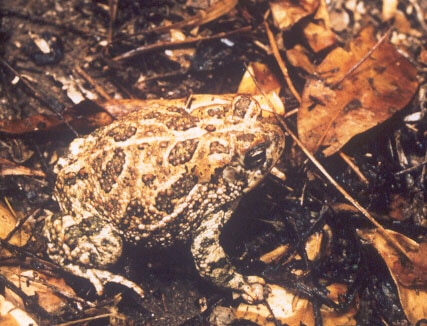
Great Plains Toad
Grasslands, Deserts, Semi-Desert Shrublands, Floodplains, Agricultural Areas
Alberta, Manitoba, Saskatchewan
- Https://En.Wikipedia.Org/Wiki/Anaxyrus_cognatus#/Media/File:Anaxyrus_cognatus_2.Jpg
- Https://En.Wikipedia.Org/Wiki/Anaxyrus_cognatus#/Media/File:Anaxyrus_cognatus_cropped.Jpg
- Https://En.Wikipedia.Org/Wiki/Anaxyrus_cognatus#/Media/File:Great_plains_toad_anaxyrus_cognatus.Jpg
Plains Garter Snake
- Grey, Brown, and Green Coloration With Darker Blotching
- Relatively Large Size For A Toad
- Adaptation For Burrowing In Loose Soil
About Anaxyrus cognatus
Anaxyrus cognatus: The Great Plains Toad
The Great Plains toad, scientifically known as Anaxyrus cognatus, is a prominent amphibian species native to the central regions of North America. Its range extends across the Canadian Prairies, encompassing southern Alberta, Manitoba, and Saskatchewan, and continues south into northern Mexico, including the Sonoran Desert and Mexican Plateau. This species is recognized for its substantial size relative to many other toads and its distinctive coloration, which typically features a blend of grey, brown, and green with darker blotches.
Habitat and Ecology
Anaxyrus cognatus is well-adapted to arid and semi-arid environments, preferring grassland habitats characterized by loose soil that allows for easy burrowing. They are also found in deserts, semi-desert shrublands, open floodplains, and agricultural areas. When not active, these toads spend their time underground. Their diet primarily consists of insects, with a notable consumption of cutworms, as well as other invertebrates like lepidopterans, dipterans, hymenopterans, coleopterans, ants, and termites. The plains garter snake (Thamnophis radix) is among its known predators, and the toad possesses chemoreceptors to detect the chemical cues left by these snakes.
Reproduction and Behavior
Breeding activities for the Great Plains toad occur during the spring and summer months, often triggered by significant rainfall. They utilize temporary water bodies, such as rain pools, flooded areas, and ponds, for reproduction. The eggs and larvae develop in these shallow aquatic environments, with metamorphosis typically taking between 17 and 45 days. In drier regions, the toad may only emerge from its burrow for brief periods when conditions are favorable, often at night. Conversely, in areas with consistent water availability and abundant rain, they can be active throughout the day. A notable characteristic is their loud, harsh, and rapidly repeated chirping mating call.
Conservation
Despite its extensive distribution, the Great Plains toad is not currently considered a threatened species. However, populations can face challenges from human activities, including road kills, agricultural practices, the expansion of suburban areas, increased drought conditions, and general urbanization, which can lead to habitat degradation and fragmentation.
Source: Wikipedia ↗
Frequently Asked Questions
What is the scientific name for the Great Plains toad?
The scientific name for the Great Plains toad is Anaxyrus cognatus. It has also been referred to by the scientific name Bufo cognatus in older classifications.
Where can the Great Plains toad be found?
This toad has a wide distribution across central North America. Its range includes the Canadian Prairies in southern Alberta, Manitoba, and Saskatchewan, and extends south into northern Mexico, encompassing the Sonoran Desert and Mexican Plateau.
What does the Great Plains toad eat?
The primary diet of the Great Plains toad consists of various species of cutworms. They also consume a range of other insects, including lepidopterans, dipterans, hymenopterans, coleopterans, ants, and termites.
What kind of habitat does the Great Plains toad prefer?
The Great Plains toad prefers grassland habitats with loose soil that is easy to burrow in. They can also be found in deserts, semi-desert shrublands, open floodplains, and agricultural areas. When inactive, they burrow underground.
When does the Great Plains toad breed?
Breeding for the Great Plains toad occurs throughout the spring and summer months. This activity is most often initiated immediately after heavy rainfall. They breed in temporary water bodies such as rain pools, flooded areas, and ponds.
What are the predators of the Great Plains toad?
A known predator of the Great Plains toad is the plains garter snake (Thamnophis radix). The toad uses chemoreceptors to sense chemical cues left by these snakes.
What is the conservation status of the Great Plains toad?
The Great Plains toad has a wide distribution and is not considered threatened. However, it may be negatively impacted by factors such as road kills, farming practices, suburban sprawl, increased droughts, and urbanization.
Related Frogs

Anaxyrus terrestris
The southern toad (Anaxyrus terrestris) is a large true toad found in the southeastern United States, commonly inhabiting areas with sandy soils. It is distinguished by knobs on its head and backward-pointing spurs, and its coloration can vary from brick red to mottled gray, brown, or black. This nocturnal species spends its days in burrows and is considered a generalist in its habitat preferences.

American toad
The American toad (Anaxyrus americanus) is a widespread amphibian found across eastern Canada and the United States. It is characterized by its variable coloration, which can range from yellow to brown to black, and its ability to change skin color based on environmental factors. This species is known for its distinctive trilling call during breeding season and its ability to hibernate through the winter.

Anaxyrus boreas
The western toad (Anaxyrus boreas) is a large toad species native to western North America. It is characterized by a white or cream dorsal stripe, dusky gray or greenish coloring, and widely separated parotoid glands. This species is frequently encountered near water and can jump considerable distances, with breeding occurring between March and July.