
Anaxyrus quercicus
The oak toad (Anaxyrus quercicus) is the smallest toad species in North America, endemic to the coastal regions of the southeastern United States. It is distinguished by its light mid-dorsal stripe, variable spots, and large parotoid glands, and it primarily inhabits sandy pine flatwoods and oak scrub. This species is mostly diurnal and known for its burrowing behavior and a distinctive chirping call produced by males during the breeding season.
Key Facts
- ›Smallest toad species in North America, measuring 19 to 33 MM in length.
- ›Found in sandy pine flatwoods, oak scrub, and maritime forests along the southeastern us coast.
- ›Primarily diurnal and spends much of its time burrowed in loose soil.
- ›Diet consists mainly of ants, beetles, and spiders.
- ›Breeding occurs in shallow pools after heavy rains, with males producing a chirping call.
- ›Conservation status is 'Least Concern' by the IUCN, though local declines can occur due to habitat loss.
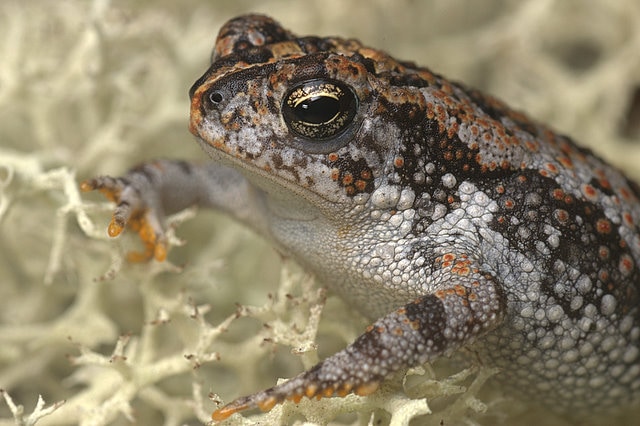
Oak Toad
Pine Flatwoods, Oak Scrub, Savanna, Maritime Forests, Wetlands
Louisiana, Mississippi, Alabama, Georgia, Florida, South Carolina, North Carolina, Virginia
Snakes, Garter Snakes, Gopher Frogs
- Smallest Toad In North America
- Light Mid-Dorsal Stripe
- Variable Brown and Black Spots
- Proportionally Large Parotoid Glands
- Male With Clear White Belly and Vocal Sac
- Female With Dark-Spotted Belly and No Vocal Sac
About Anaxyrus quercicus
Anaxyrus quercicus: The Oak Toad
The oak toad (Anaxyrus quercicus) is a small amphibian species belonging to the Bufonidae family, notable for being the smallest toad found in North America. It is endemic to the coastal regions of the southeastern United States, with its range extending from eastern Louisiana to southeast Virginia and south throughout Florida.
Appearance and Characteristics
Oak toads are easily identified by a distinct light mid-dorsal stripe, accompanied by variable brown and black spots across their bodies. A key feature is their proportionally large parotoid glands. Males can be distinguished from females by their clear white belly and a slightly distended, loose flap of skin beneath the mouth that expands into a vocal sac, used for calling. Females, in contrast, have a dark-spotted belly and lack this vocal sac.
Habitat and Distribution
This species thrives in a variety of habitats characterized by sandy soils, including sandy pine flatwoods, oak scrub, open pine and pine-oak woods, and pine or oak savannas. They are often found in moist, grassy areas near these environments, as well as in maritime forests. Oak toads also utilize vernal pools and freshwater wetlands.
Behavior and Diet
The oak toad is primarily diurnal, meaning it is most active during the day, and spends a significant portion of its time burrowed into the loose soil of its habitat. They may also remain in their burrows during winter, potentially hibernating. Their diet consists mainly of ants, beetles, and spiders, making them small, terrestrial insectivores. While ants are a preference, their diet is more diverse than many tropical frog species.
Reproduction
Breeding typically occurs in shallow pools that form after heavy rains, with the breeding season extending from April to October, peaking early on. Males use a chirping call produced from their vocal sacs to attract mates. Females lay an average of 300 to 500 eggs in short strands attached to submerged vegetation. Fertilization is external. The energy expenditure for egg production is substantial, sometimes leading to the death of females during the mating season.
Defense Mechanisms and Predation
When threatened, oak toads exhibit a defense mechanism known as unkenreflex, where they inflate their bodies. They also secrete toxins from their parotoid glands and may urinate as a deterrent. Snakes, particularly hognosed snakes, are their primary predators, with garter snakes and gopher frogs also posing a threat. Even their eggs are believed to possess some toxic properties.
Conservation Status
Globally, the oak toad is listed as 'Least Concern' by the International Union for Conservation of Nature (IUCN). However, local populations can experience declines due to habitat alteration, such as the replacement of natural landscapes with loblolly pine plantations, urbanization, and the drainage of surface water in their preferred wooded habitats.
Source: Wikipedia ↗
Frequently Asked Questions
What makes the oak toad distinctive?
The oak toad is most notable for being the smallest toad species in North America. It is further identified by a light mid-dorsal stripe, variable brown and black spots, and proportionally large parotoid glands. Males can be distinguished by their clear white belly and a vocal sac for calling.
Where can oak toads be found?
Oak toads are native to the coastal regions of the southeastern United States, with a range extending from eastern Louisiana to southeast Virginia and throughout Florida. They inhabit sandy pine flatwoods, oak scrub, open pine and pine-oak woods, and maritime forests.
What do oak toads eat?
The oak toad is a terrestrial frog that feeds on small insects and other invertebrates. Its diet primarily includes ants, beetles, and spiders. While ants form a significant portion of their food, their dietary preferences are more diverse than those of many tropical frog species.
When do oak toads breed and what is their breeding behavior?
Breeding takes place in shallow pools formed by heavy rains, typically from April to October, with the peak occurring early in the season. Males inflate a distinctive vocal sac to produce a chirping call to attract females. Females lay an average of 300 to 500 eggs in short strands attached to submerged vegetation.
What are the predators of the oak toad?
The primary predators of the oak toad are snakes, particularly hognosed snakes, which have a specialized diet of toads. Garter snakes and gopher frogs also prey on them. When threatened, oak toads employ a defense mechanism where they inflate their bodies, secrete toxins from their parotoid glands, and may urinate.
What is the conservation status of the oak toad?
The oak toad is classified as 'Least Concern' by the International Union for Conservation of Nature (IUCN). However, local populations can diminish due to habitat destruction caused by loblolly pine plantations, urbanization, and the draining of water in their preferred wooded environments.
Related Frogs

Anaxyrus terrestris
The southern toad (Anaxyrus terrestris) is a large true toad found in the southeastern United States, commonly inhabiting areas with sandy soils. It is distinguished by knobs on its head and backward-pointing spurs, and its coloration can vary from brick red to mottled gray, brown, or black. This nocturnal species spends its days in burrows and is considered a generalist in its habitat preferences.

American toad
The American toad (Anaxyrus americanus) is a widespread amphibian found across eastern Canada and the United States. It is characterized by its variable coloration, which can range from yellow to brown to black, and its ability to change skin color based on environmental factors. This species is known for its distinctive trilling call during breeding season and its ability to hibernate through the winter.

Anaxyrus boreas
The western toad (Anaxyrus boreas) is a large toad species native to western North America. It is characterized by a white or cream dorsal stripe, dusky gray or greenish coloring, and widely separated parotoid glands. This species is frequently encountered near water and can jump considerable distances, with breeding occurring between March and July.