
Argenteohyla siemersi
Argenteohyla siemersi is a species of frog belonging to the family Hylidae. Previously recognized under its own genus, it is now considered part of the genus Nyctimantis, found in southeastern Brazil and the Orinoco Basin. These tree-dwelling frogs are distinctive for the bony plate on the top of their heads, which is fused with their skin.
Key Facts
- ›Argenteohyla siemersi is now classified under the genus Nyctimantis.
- ›It is found in southeastern Brazil and the Orinoco Basin.
- ›These frogs are arboreal, typically inhabiting bromeliad cisterns.
- ›A notable feature is the bony plate on the top of their head, fused with the skin.
- ›The genus Nyctimantis was redefined in 2021 to include species formerly in Aparasphenodon and Argenteohyla.

Rainforest, Arboreal
Brazil, Venezuela, Colombia
- Bony Plate On the Top of the Head Fused With Skin
About Argenteohyla siemersi
Argenteohyla siemersi is a species of frog that is now classified under the genus Nyctimantis, belonging to the family Hylidae. Historically recognized under its own genus, Argenteohyla, recent phylogenetic studies in 2021 led to a redefinition of Nyctimantis to encompass species previously placed in Aparasphenodon and Argenteohyla, treating the latter two as synonyms.
Distribution and Habitat
This species is found in two primary regions: south-eastern Brazil and the Orinoco Basin, which spans parts of Venezuela, Colombia, and Brazil. Argenteohyla siemersi is an arboreal frog, meaning it lives in trees. Its preferred microhabitat is within the cisterns of epiphytic bromeliads, where the collected water provides a crucial environment for shelter and moisture retention.
Physical Characteristics
A notable and distinguishing characteristic of Argenteohyla siemersi, shared with other members of the genus Nyctimantis, is the presence of a bony plate on the top of its head. This cranial plate is fused directly with the skin, a feature that is significant in the classification and study of casque-headed tree frogs.
Taxonomy and Conservation
The taxonomic revision in 2021 significantly altered the classification of this species, integrating it into a broader genus. Further details regarding its specific conservation status, typical diet, breeding behavior, vocalizations, size, weight, lifespan, and known predators are not provided in the available historical records.
Source: Wikipedia ↗
Frequently Asked Questions
What is the current classification of Argenteohyla siemersi?
As of 2021, Argenteohyla siemersi is classified within the genus Nyctimantis. This reclassification was based on phylogenetic evidence, leading to the genera Aparasphenodon and Argenteohyla being treated as synonyms of Nyctimantis.
Where is Argenteohyla siemersi found?
This species is distributed across south-eastern Brazil and also occurs in the Orinoco Basin, which includes parts of Venezuela, Colombia, and Brazil.
What is unique about the head of these frogs?
A distinctive characteristic of Argenteohyla siemersi, and other frogs in the genus Nyctimantis, is the presence of a bony plate on the top of their head. This plate is fused directly with the skin.
What kind of habitat do these frogs prefer?
These frogs are tree-dwelling species. They are typically found hiding within the water-filled cisterns of epiphytic bromeliads, which provide shelter and moisture.
Related Frogs
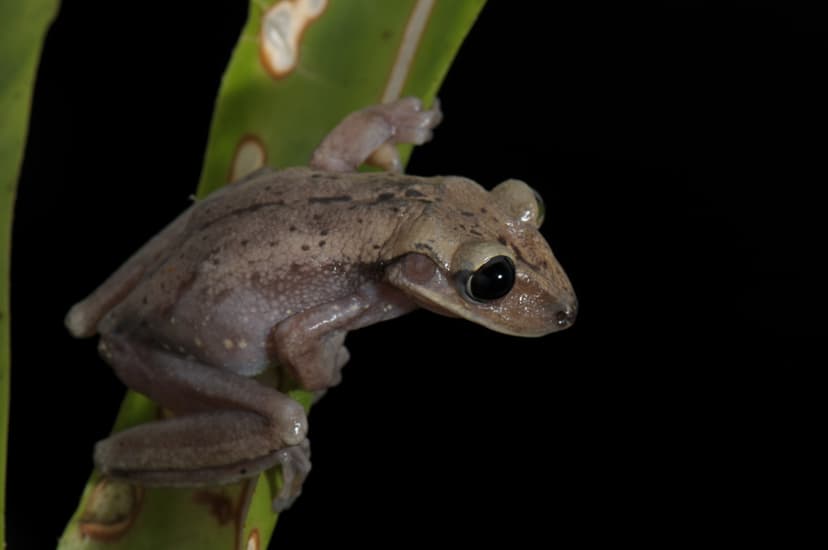
Aparasphenodon bokermanni
Bokermann's casque-headed frog, scientifically known as Nyctimantis bokermanni, is a species of frog found exclusively in Brazil's Juréia-Itatins Ecological Station and surrounding areas. This amphibian inhabits subtropical and tropical moist lowland forests, a distinctive habitat for its survival.
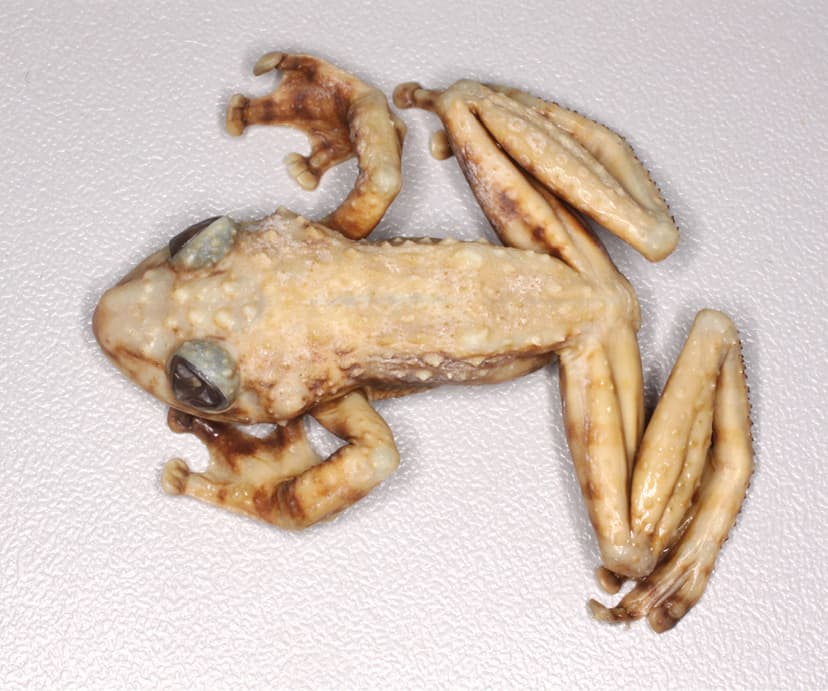
Acanthixalus
Acanthixalus, commonly known as African wart frogs, is a genus of frogs belonging to the family Hyperoliidae. These frogs are found in the rainforests of Western and Central Africa, spanning from Ivory Coast to Congo. They are distinctive for their habit of living in water-filled tree cavities and their apparent lack of vocalizations, possibly using olfactory cues for mating.
Acris blanchardi
Blanchard's cricket frog (Acris blanchardi) is a small, dark-colored frog native to North America, found from Mexico to the Dakotas and east to Ohio. It is distinctive for its warty skin, a dark triangular mark between the eyes, and a metallic clicking call during breeding season. The species is facing population declines and is considered threatened or endangered in several U.S. states.