
Acris blanchardi
Acris·Endangered (Wisconsin), Threatened (Michigan), Endangered (Minnesota - collectively with A. crepitans)
Blanchard's cricket frog (Acris blanchardi) is a small, dark-colored frog native to North America, found from Mexico to the Dakotas and east to Ohio. It is distinctive for its warty skin, a dark triangular mark between the eyes, and a metallic clicking call during breeding season. The species is facing population declines and is considered threatened or endangered in several U.S. states.
Key Facts
- ›Small frog with warty skin, typically brown, gray, tan, or olive green.
- ›Features a dark, triangular mark between the eyes for identification.
- ›Breeding males produce a distinctive metallic clicking call.
- ›Habitat includes wetlands, ponds, and areas near row crop agriculture.
- ›Considered short-lived with an average lifespan of about one year.
- ›Threatened or endangered in Michigan, Wisconsin, and Minnesota due to population declines.
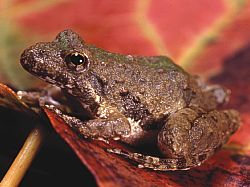
Blanchard's Cricket Frog
Wetlands, Ponds, Streams, Agriculture
Mexico, South Dakota, Ohio, West Virginia, Mississippi, Colorado, Michigan, Wisconsin, Minnesota, Texas, Ontario
American Bullfrogs, Northern Watersnakes, Raccoons
Dark, Triangular Mark Between the Eyes, Warty Skin, Metallic Clicking Call
About Acris blanchardi
Blanchard's Cricket Frog (Acris blanchardi)
Blanchard's cricket frog, scientifically known as Acris blanchardi, is a small amphibian belonging to the Hylidae family. This species is characterized by its warty skin, typically a mosaic of brown, gray, tan, or olive green, often adorned with darker bands on its legs. A prominent, dark triangular marking situated between its eyes serves as a key identifier. The frog's skin is highly vascularized, which, while facilitating physiological processes, also increases its susceptibility to diseases, making handling with bare hands inadvisable. Adults are notably small, averaging about 1.5 cm (0.6 inches) in snout-to-vent length. Some individuals exhibit striking dorsal coloration, ranging from dark red and orange to light green.
Range and Habitat
The geographical distribution of Blanchard's cricket frog is extensive, spanning from northeastern Mexico northward to South Dakota and eastward to Ohio and West Virginia, with its southeastern limits generally following the Ohio and Mississippi Rivers. These frogs thrive in aquatic environments, preferring slow-moving or stagnant waters such as wetlands, ponds, and streams. They are also frequently found in proximity to agricultural lands, particularly row crops.
Life Cycle and Breeding
Blanchard's cricket frog is considered a short-lived species, with an average lifespan of approximately one year. Breeding activities commence from mid-May and extend through mid-July. During this period, males emit a distinctive metallic clicking call. Females lay their eggs in small clusters or individually, and the tadpoles typically develop and emerge by late summer. The species' survival rate is low, with only a few individuals reaching their second breeding season. This short lifespan and limited reproductive success can lead to significant population declines if a breeding season is not productive.
Conservation Status and Threats
While not federally listed in the United States, Acris blanchardi faces significant population declines in several Midwestern states, leading to its classification as endangered in Wisconsin and threatened in Michigan and Minnesota. Contributing factors to these declines are believed to include habitat loss, exposure to chemical contaminants, and competition for resources. Research into the species' immune defense traits suggests that environmental factors such as water conductivity, surface area, and the ratio of natural to managed land can influence its skin microbiome and compromise its immune system. The precise primary cause for the widespread population decrease remains an area of ongoing investigation.
Predation
Blanchard's cricket frogs are preyed upon by several predators, most notably American bullfrogs and northern watersnakes. Raccoons are also documented as potential predators of this species.
Source: Wikipedia ↗
Frequently Asked Questions
What does Blanchard's cricket frog look like?
Blanchard's cricket frog is a small frog with warty skin that is usually brown, gray, tan, or olive green, often with darker bands on its legs. A key identifying feature is a dark, triangular mark situated between its eyes. Some specimens may also display colors like dark red, orange, or light green on their backs.
Where can Blanchard's cricket frog be found?
This species has a wide distribution, ranging from northeastern Mexico up to South Dakota, and extending eastward to Ohio and West Virginia. Its southeastern range is generally along the Ohio River and the Mississippi River.
What is the typical habitat of Blanchard's cricket frog?
Blanchard's cricket frogs are commonly found in wetlands, ponds, and slow-moving or stagnant bodies of water, such as streams. They are also found near row crop agriculture.
What are the main threats to Blanchard's cricket frog populations?
Populations are declining in certain areas, leading to threatened or endangered status in states like Michigan, Wisconsin, and Minnesota. Factors contributing to this decline are thought to include habitat loss, chemical contaminants, and competition for resources, although the major reason for the decrease remains unknown.
What is the breeding behavior of Blanchard's cricket frog?
Breeding takes place from mid-May to mid-July. Females lay small clusters or single eggs, and tadpoles emerge in late summer. Only a few frogs survive to their second breeding season.
What are the predators of Blanchard's cricket frog?
Known predators of Blanchard's cricket frog include American bullfrogs and northern watersnakes. Raccoons are also likely predators.
Related Frogs
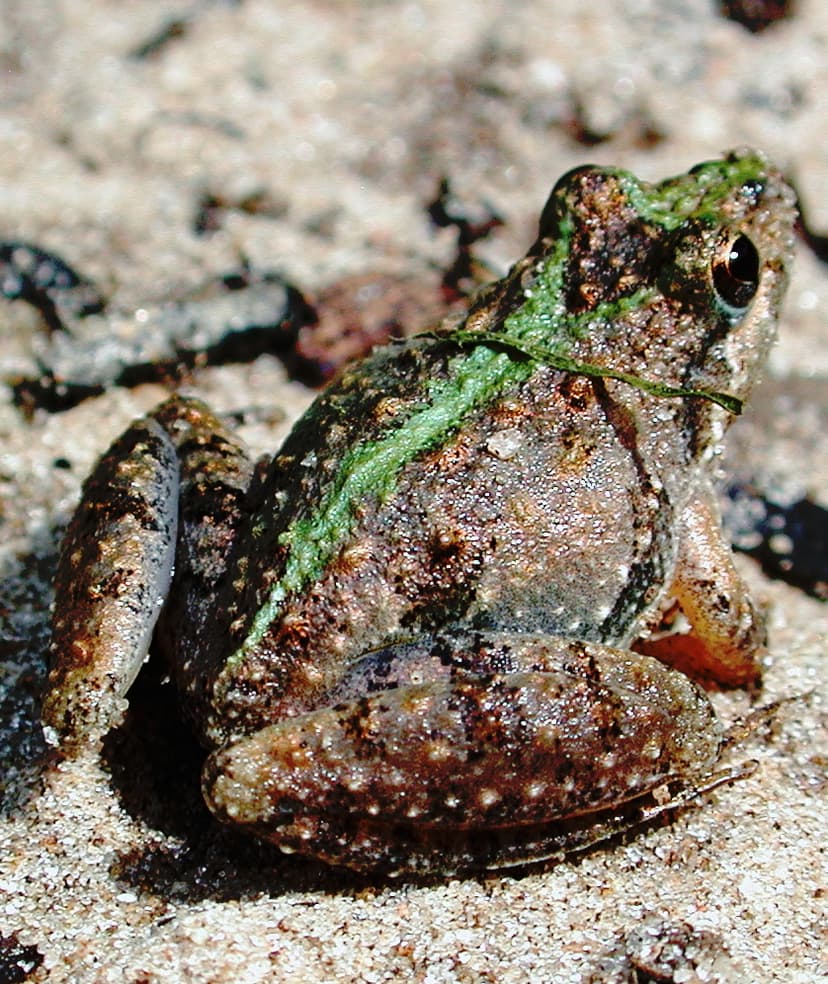
Acris
Cricket frogs, genus Acris, are small North American frogs belonging to the Hylidae family. Found from northern Mexico to southern Ontario, they are known for their cricket-like vocalizations, which play a crucial role in reproductive isolation. These frogs are notably more aquatic than other tree frogs and are strongly associated with permanent water bodies that offer surface vegetation for survival.
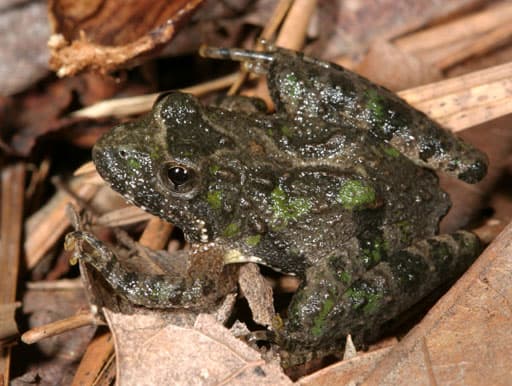
Acris crepitans
The northern cricket frog (Acris crepitans) is a small hylid frog native to the United States and northeastern Mexico. Despite being part of the tree frog family, they are terrestrial and prefer habitats near slow-moving water bodies with nearby shelter. They are distinguished by their small size, varied coloration, and a characteristic triangular mark on their head.
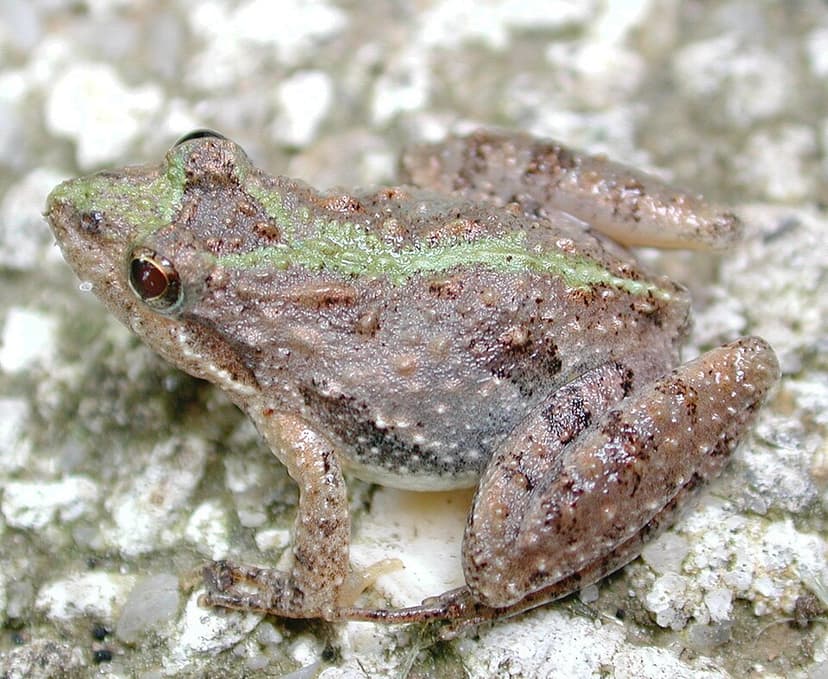
Acris gryllus
The southern cricket frog (Acris gryllus) is a small hylid frog native to the Southeastern United States. It is distinguished from its close relative, the northern cricket frog, by a more pointed snout, longer hind legs, and a sharply defined black stripe on the back of its thigh. This species is typically found in sunny, open areas near water bodies.