
Acanthixalus
Acanthixalus, commonly known as African wart frogs, is a genus of frogs belonging to the family Hyperoliidae. These frogs are found in the rainforests of Western and Central Africa, spanning from Ivory Coast to Congo. They are distinctive for their habit of living in water-filled tree cavities and their apparent lack of vocalizations, possibly using olfactory cues for mating.
Key Facts
- ›Acanthixalus frogs inhabit water-filled cavities in living trees and on tree trunks.
- ›They are found in various wooded environments, including dry and swampy forests, and cacao plantations.
- ›The genus contains two species: Acanthixalus sonjae and Acanthixalus spinosus.
- ›Adult frogs typically measure around 35 MM in snout-to-vent length.
- ›Males possess distinct features such as elongate gular glands and numerous tarsal spines.
- ›Both species appear to be mute, with speculation that they rely on olfactory orientation.
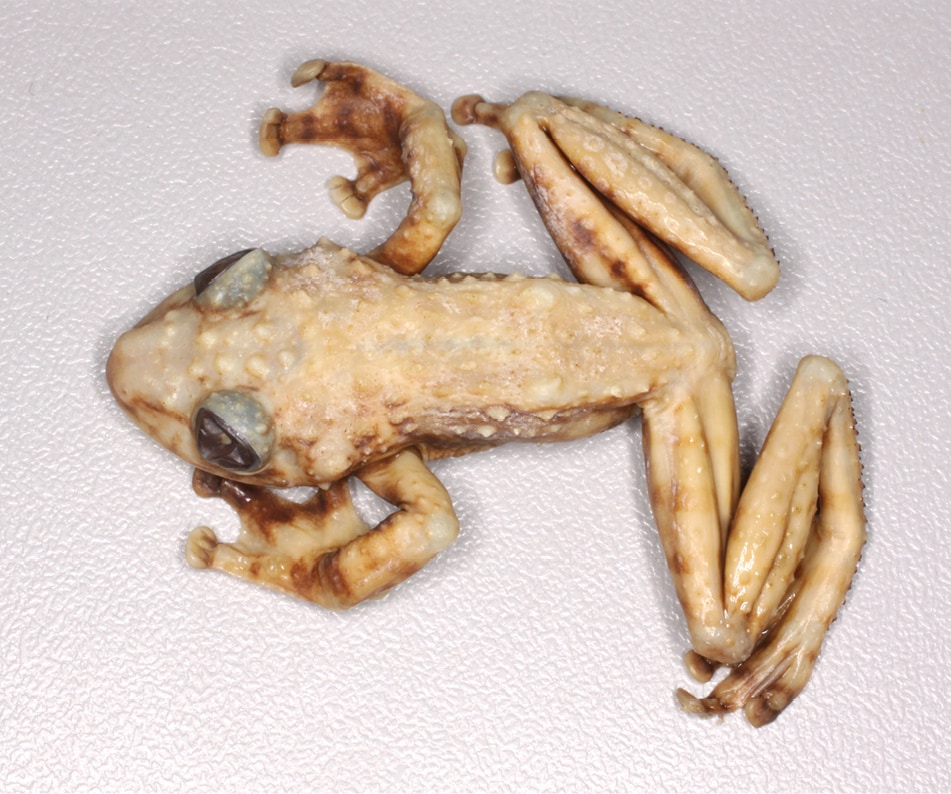
African Wart Frogs
Rainforest, Woodland, Plantation
- Males Have Elongate Gular Glands
- Males Have Larger Discs On Toes and Fingers
- Males Have A Large Number of Tarsal Spines
- Wider Relative Head Width In Males of A. Sonjae Compared To A. Spinosus
About Acanthixalus
Acanthixalus, commonly referred to as African wart frogs, is a genus of frogs belonging to the family Hyperoliidae. This genus is indigenous to the rainforests of Western and Central Africa, with its range extending from Ivory Coast to the Congo region.
Description and Characteristics
The two species within the Acanthixalus genus, Acanthixalus sonjae and Acanthixalus spinosus, are remarkably similar in their physical appearance and size. Adult frogs typically measure around 35 mm (1.4 inches) in snout-to-vent length, with the largest individuals reaching approximately 39 mm (1.5 inches). While males and females are comparable in size, males exhibit distinct features, including a pair of elongated gular glands, enlarged adhesive discs on their toes and fingers, and a greater number of tarsal spines. The most notable morphological difference between the species is the comparatively wider head width observed in males of A. sonjae.
Habitat and Ecology
Acanthixalus frogs are uniquely adapted to living in water-filled cavities within living trees and on tree trunks, often found at heights of up to 5 meters above the ground. Their habitat preferences include a variety of wooded environments, encompassing both secondary and primary forests, which can be dry or swampy. They have also been documented in cacao plantations, with the critical requirement for their habitat being the availability of substantial water-filled cavities.
The tadpoles of Acanthixalus develop within these arboreal water sources. The developmental period for the tadpoles is relatively prolonged, often exceeding three months. The diet of the tadpoles differs between species: A. spinosus tadpoles are detritivores, feeding on organic matter, while A. sonjae tadpoles seem to consume arthropods more readily. Cannibalism has not been observed in either species.
Behavior and Communication
A curious aspect of Acanthixalus frogs is their apparent lack of vocalizations. Both species are believed to be mute. Researchers have hypothesized that these frogs may rely on olfactory orientation, using scent cues, as a primary method for locating and attracting mates in the absence of auditory communication.
Source: Wikipedia ↗
Frequently Asked Questions
What are African wart frogs?
Acanthixalus, commonly known as African wart frogs, is a genus of frogs in the family Hyperoliidae. They are native to the rainforests of Western and Central Africa.
Where do Acanthixalus frogs live?
These frogs live in water-filled cavities within living trees and on tree trunks, typically found at heights up to about 5 meters above the ground. Their habitat includes primary and secondary forests, both dry and swampy, as well as plantations.
What is the size of Acanthixalus frogs?
Adult Acanthixalus frogs are relatively small, with an average snout-to-vent length of about 35 mm (1.4 inches). The largest individuals can reach nearly 39 mm (1.5 inches).
Do Acanthixalus frogs make sounds?
Both known species of Acanthixalus appear to be mute. It has been suggested that they may use olfactory orientation to find mates instead of vocalizations.
What do the tadpoles of Acanthixalus eat?
The tadpoles of Acanthixalus spinosus are detritivores, meaning they feed on organic debris. The tadpoles of Acanthixalus sonjae appear to thrive better on an arthropod diet, though cannibalism has not been observed in either species.
Related Frogs

Agalychnis lemur
The lemur leaf frog, also known as the lemur frog, is a critically endangered amphibian found in the rainforests of Costa Rica, Panama, and northwestern Colombia. It is distinctive for its ability to change color from vibrant green during the day to brown at night, aiding in camouflage, and for its resilience to the chytrid fungus due to unique skin properties.

Acanthixalus sonjae
Acanthixalus sonjae, also known as the Ivory Coast wart frog, is a frog species found in the forests of southwestern Ivory Coast and Ghana. It is distinctive for its use of large, water-filled tree holes for breeding and its ability to change color rapidly from green to black.
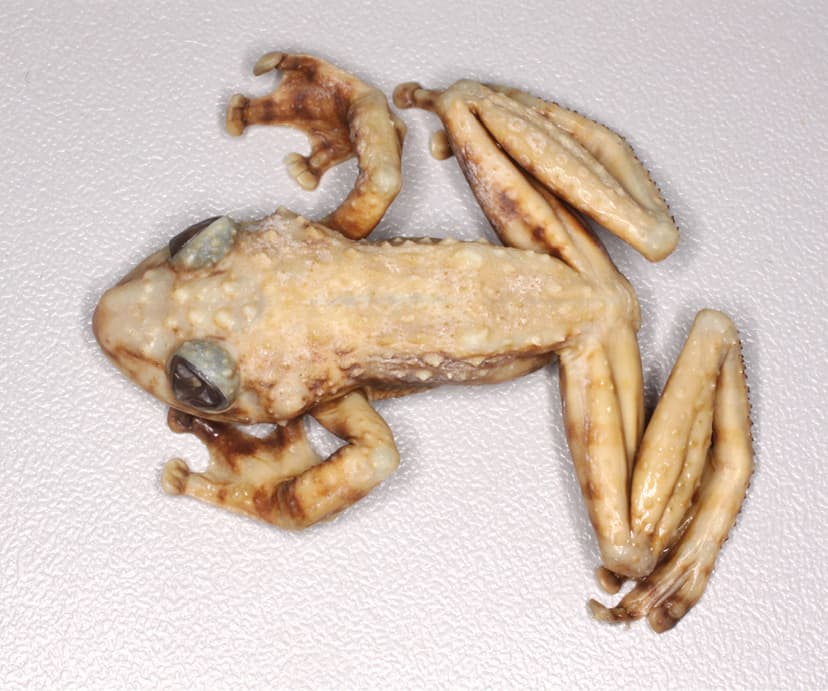
Acanthixalus spinosus
Acanthixalus spinosus, commonly known as the African wart frog, is a species of frog native to Africa, found from southeastern Nigeria to Gabon and the Democratic Republic of the Congo. It is distinctive for its warty, black or brownish-to-olive dorsum with an hourglass pattern, and the males' unique possession of strong tarsal spines and larger digital discs. This species primarily inhabits lowland rainforests, dwelling in water-filled tree holes and exhibiting predominantly aquatic behavior.