
Asian common toad
Duttaphrynus·Not Specified
The Asian common toad, also known by several other names including the Asian black-spined toad, is a widespread amphibian found across South and Southeast Asia. This species is distinguished by its warty, spiny dorsal side and prominent, toxin-secreting parotoid glands. It thrives in disturbed lowland habitats, often near human settlements, and breeds during the monsoon season.
Key Facts
- ›Grows up to 20 CM (8 inches) in length.
- ›Breeds during the monsoon season, with black tadpoles.
- ›Found in diverse Asian habitats from sea level up to 1,800m altitude.
- ›Possesses prominent parotoid glands that secrete Bufotoxin.
- ›Adults are terrestrial and often found under ground cover or near human habitations.
- ›Has been introduced to Madagascar, Wallacea, and West Papua, posing ecological risks.

Asian Black-Spined Toad, Asian Toad, Black-Spectacled Toad, Common Sunda Toad, Javanese Toad
Lowland Habitats, Agricultural Areas, Urban Areas, Riverbanks, Beaches, Ponds, Temporary Pools
Pakistan, Nepal, Bangladesh, India, Sri Lanka, Myanmar, Thailand, Laos, Vietnam, Cambodia, China, Taiwan, Hong Kong, Macau, Malaysia, Singapore, Indonesia
Prominent, Toxin-Secreting Parotoid Glands, Dorsal Surface Covered In Spiny Warts, Bony Ridges On the Head, Large Size, Up To 20 Cm Snout-To-Vent
About Asian common toad
The Asian common toad, scientifically known as Duttaphrynus melanostictus, is a widespread amphibian species found across a vast swathe of South and Southeast Asia. It is also recognized by several other common names, including the Asian black-spined toad, Asian toad, black-spectacled toad, common Sunda toad, and Javanese toad. This species is notable for its size, which can reach up to 20 centimeters (8 inches) in length, and its distinctive physical characteristics, which include a warty, spiny dorsal surface and prominent parotoid glands that secrete a milky white Bufotoxin.
Habitat and Distribution
This adaptable toad thrives in a variety of disturbed lowland habitats. Its distribution spans from northern Pakistan eastward through Nepal, Bangladesh, India (including the Andaman and Nicobar Islands), Sri Lanka, Myanmar, Thailand, Laos, Vietnam, Cambodia, southern China, Taiwan, Hong Kong, and Macau, extending to Malaysia, Singapore, and various Indonesian islands such as Sumatra, Java, and Borneo. They are found from sea level up to altitudes of 1,800 meters (5,900 ft), favoring areas like upper beaches, riverbanks, agricultural land, and urban environments, while being less common in closed forests.
Characteristics and Behavior
The Asian common toad exhibits several defining features. The top of its head is adorned with several bony ridges, and its snout is short and blunt. A particularly notable characteristic is the presence of prominent, kidney-shaped or elliptical parotoid glands on its back, which are a primary source of its defensive toxin. The dorsal side is typically yellowish or brownish with black spines and ridges, contrasting with a plain or spotted underside. Males are identifiable by a subgular vocal sac and black pads on their inner fingers, which aid in grasping females during mating. These toads are terrestrial, often seeking shelter under rocks, leaf litter, or logs, and are frequently associated with human habitations. They are often observed at night, particularly when attracted to artificial lights.
Reproduction and Diet
Breeding for the Asian common toad takes place during the monsoon season. They reproduce in still or slow-flowing bodies of water, including rivers, temporary ponds, and permanent pools. Their tadpoles are distinctively black. Observations suggest a varied diet, with known prey including scorpions and various invertebrates, which they likely hunt by night. Studies have also indicated that tadpoles can recognize kin, with those raised in sibling groups metamorphosing faster than those in mixed groups.
Ecological Concerns and Introductions
The Asian common toad is considered an invasive species in several regions outside its native range, posing significant ecological risks. It was introduced to Madagascar in 2011 and has since spread around the port of Toamasina, raising concerns about its potential impact on native wildlife due to its toxicity. Similarly, introductions to islands like Bali and Sulawesi in Indonesia, and subsequent spread to New Guinea, have raised alarms. Native predators in these areas often lack resistance to the toad's toxins, mirroring the issues caused by cane toads in Australia. The species has been detected in Australia multiple times and is considered a high-priority "unwanted species" due to its potential to disrupt ecosystems through competition, disease spread, and toxicity.
Source: Wikipedia ↗
Frequently Asked Questions
What is the Asian common toad commonly called?
The Asian common toad is known by numerous names, including Asian black-spined toad, Asian toad, black-spectacled toad, common Sunda toad, and Javanese toad. It is also referred to by its scientific name, Duttaphrynus melanostictus.
Where is the Asian common toad distributed?
This species has a vast distribution across South and Southeast Asia, ranging from northern Pakistan through Nepal, Bangladesh, India, Sri Lanka, Myanmar, Thailand, Laos, Vietnam, Cambodia, southern China, Taiwan, Hong Kong, Macau, Malaysia, Singapore, and into Indonesian islands like Sumatra, Java, and Borneo.
What kind of habitat does the Asian common toad prefer?
Asian common toads primarily inhabit disturbed lowland environments. They can be found from upper beaches and riverbanks to agricultural and urban areas, though they are less common in dense forests. They tolerate a range of altitudes, from sea level up to 1,800 meters.
What are the physical characteristics of the Asian common toad?
Adults typically reach about 20 cm in length. They are characterized by a warty, spiny dorsal surface, bony ridges on the head, and prominent, kidney-shaped parotoid glands on their backs that secrete a milky white toxin. The underside is usually unmarked or spotted.
When does the Asian common toad breed?
The breeding season for Asian common toads occurs during the monsoon. Their tadpoles are distinctively black, and large numbers of young toads may be observed after the monsoon rains have subsided.
What do Asian common toads eat?
These toads are known to consume a varied diet of invertebrates. They have been observed feeding on prey such as scorpions, and are often seen at night under street lamps, likely preying on insects attracted to the light.
Are there any ecological concerns regarding the Asian common toad?
Yes, the Asian common toad is considered an invasive species in several regions, including Madagascar and parts of Indonesia. Its toxins can be harmful to native predators that have not evolved resistance, posing a significant threat to biodiversity.
Related Frogs

American toad
The American toad (Anaxyrus americanus) is a widespread amphibian found across eastern Canada and the United States. It is characterized by its variable coloration, which can range from yellow to brown to black, and its ability to change skin color based on environmental factors. This species is known for its distinctive trilling call during breeding season and its ability to hibernate through the winter.
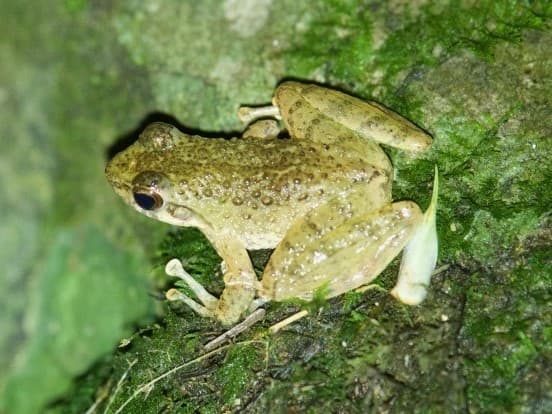
Amolops torrentis
The torrent sucker frog (Amolops torrentis) is a species of frog endemic to Hainan Island, China, found in streams and surrounding wetlands. It is distinguished by the presence of tarsal glands, a specific tympanum edge, and a tibio-tarsal articulation reaching beyond the snout. This species is characterized by its high-pitched mating calls, which females favor, and its skin glands can secrete toxins, offering a defense against predators.

Anaxyrus boreas
The western toad (Anaxyrus boreas) is a large toad species native to western North America. It is characterized by a white or cream dorsal stripe, dusky gray or greenish coloring, and widely separated parotoid glands. This species is frequently encountered near water and can jump considerable distances, with breeding occurring between March and July.