
Baltoro Glacier
Valley Glacier·Pakistan-Administered Kashmir·Asia·Alpine
The Baltoro Glacier is a major glacier located in the Karakoram range of Pakistan-administered Kashmir. It is renowned for being surrounded by some of the world's highest peaks, including K2, and serves as a critical source for the Braldo River, which eventually flows into the Indus. Scientific observations suggest the glacier is not retreating but undergoes surges, making it a dynamic and significant feature of the region.
Key Facts
- ›Located in the Karakoram range, Gilgit-Baltistan, Pakistan-administered Kashmir.
- ›Surrounded by numerous peaks over 8,000 meters, including K2.
- ›Forms the source of the Braldo River, a tributary of the Indus River.
- ›Experiences surges and shifts rather than a general retreat.
- ›Concordia, where it meets the Godwin-Austen Glacier, is a popular trekking destination.

Known For
- Proximity to K2 and other high-altitude peaks
- Concordia trekking destination
- Surging glacial activity
- Concordia
- Numerous Glacial Lakes
- Striations Carved By Moving Ice On Sidewalls
- Icefalls Where Small Valley Glaciers Meet the Main Trunk
Central Karakoram National Park
About Baltoro Glacier
Baltoro Glacier: A Giant of the Karakoram
The Baltoro Glacier is a monumental ice flow situated in the Karakoram range, within the Shigar District of Gilgit-Baltistan, a region administered by Pakistan. Its name, derived from the Balti language, reportedly means 'Bone breaker,' hinting at the formidable challenge it presents. This vast glacier is not only significant for its size but for its dramatic surroundings; it is embraced by some of the world's most formidable peaks, including K2, the second-highest mountain on Earth, and three other summits exceeding 8,000 meters within a 20-kilometer radius. The Baltoro Glacier serves as the origin for the Braldo River, which ultimately contributes to the flow of the mighty Indus River.
Geography and Dynamics
Flowing through the heart of the Karakoram, the Baltoro Glacier is flanked by the Baltoro Muztagh to its north and east, and the Masherbrum Mountains to its south. It is fed by numerous large tributary glaciers, such as the Godwin-Austen Glacier originating from K2, the Abruzzi and Gasherbrum Glaciers, the Vigne Glacier, and the Yermandendu Glacier. A key geographical feature is Concordia, the celebrated confluence of the Baltoro and Godwin-Austen Glaciers, which is a renowned hub for trekkers and climbers, often serving as the starting point for expeditions to K2 Base Camp. The glacier's trough is notably wide, and where smaller valley glaciers join the main body, they form dramatic icefalls. The steep walls of the glacier's valley bear the marks of its immense power, with striations carved by moving ice, and depressions left by its movement now host numerous glacial lakes.
Environmental Concerns and Future
While the Baltoro Glacier has long been a draw for adventurers, increased accessibility has brought with it significant environmental challenges. Issues such as littering, inadequate sanitation facilities, and the strain of transporting supplies have degraded the trekking routes. Past conservation efforts have faced difficulties in maintaining standards, and the accumulation of waste remains a persistent problem. Current initiatives, supported by international bodies like the United Nations Development Programme and the Green Climate Fund, aim to restore the cleanliness and ecological health of the region, with local communities advocating for unified management and systematic clean-up operations.
Source: Wikipedia ↗
Frequently Asked Questions
Where is the Baltoro Glacier located?
The Baltoro Glacier is situated in the Shigar District of Gilgit-Baltistan, a region within Pakistan-administered Kashmir. It flows through the Karakoram mountain range.
What are the notable mountains near the Baltoro Glacier?
The glacier is surrounded by some of the world's highest peaks. These include K2, the second-highest mountain on Earth, as well as Broad Peak, Gasherbrum I, Gasherbrum II, Gasherbrum III, Gasherbrum IV, and Masherbrum.
What is the current state of the Baltoro Glacier's movement?
Scientific observations indicate that the Baltoro Glacier is not retreating. Instead, it is experiencing surges, shifting, and flowing into neighboring glaciers, which is a dynamic process.
What river does the Baltoro Glacier feed?
The Baltoro Glacier is the source of the Braldo River. The Braldo River then joins the Shigar River, which is a tributary of the larger Indus River.
What makes Concordia a significant location on the Baltoro Glacier?
Concordia is the point where the Baltoro Glacier meets the Godwin-Austen Glacier, at an elevation of 4,600 meters. It is a famous trekking destination and a gateway to K2 Base Camp.
What environmental challenges does the Baltoro Glacier region face?
The increased tourism to the Baltoro Glacier region has led to significant environmental pressures, including littering, inadequate sanitation, and waste management issues. Efforts are underway by organizations like the United Nations Development Programme to address these problems.
Related Glaciers

Batura Glacier
Batura Glacier is one of the largest and longest glaciers found outside of the polar regions, stretching 57 km in length. Located in the upper Hunza region of Gilgit-Baltistan, Pakistan, it flows west to east and is notable for its debris-covered lower portions and proximity to the Karakoram Highway, making it a subject of scientific study.

Biafo Glacier
The Biafo Glacier is a significant glacier located in the Karakoram mountain range of Gilgit-Baltistan, Pakistan. It is renowned for its immense size, ranking as one of the largest in the Karakoram and as the world's third-longest glacier outside of the polar regions. The Biafo Glacier is a key component of a vast glacial system, forming the world's longest non-polar glacial system when combined with the Hispar Glacier, and is a popular destination for trekking.
Siachen Glacier
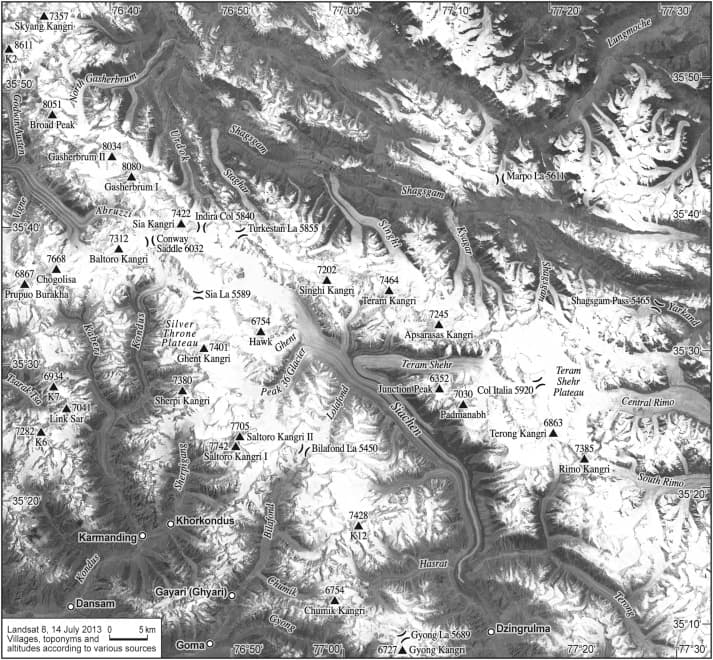
The Siachen Glacier is a major glacier in the eastern Karakoram range of the Himalayas, notable for its significant length and strategic importance. It is the longest glacier in the Karakoram and the second longest in the world's non-polar regions, feeding vital river systems like the Indus. The glacier has become a site of prolonged military dispute between India and Pakistan.