
Batura Glacier
Batura Glacier is one of the largest and longest glaciers found outside of the polar regions, stretching 57 km in length. Located in the upper Hunza region of Gilgit-Baltistan, Pakistan, it flows west to east and is notable for its debris-covered lower portions and proximity to the Karakoram Highway, making it a subject of scientific study.
Key Facts
- ›It is 57 km (35 MI) long, making it one of the longest glaciers outside polar regions.
- ›The glacier is situated in the upper Hunza (Gojal) region of Hunza District, Gilgit-Baltistan, Pakistan.
- ›Its lower sections are covered by a thick layer of rocks and gravelly moraine.
- ›The surrounding valleys have a dry climate with low annual precipitation.
- ›The glacier has retreated, exhibiting both backwasting and downwasting.
- ›It is located north of the Batura and Passu massifs.

Known For
- being one of the largest and longest glaciers outside of the polar regions
- its debris-covered lower portions
- its proximity to the Karakoram Highway
Debris-Covered Lower Portions, Moraine, Summer Villages and Pastures
About Batura Glacier
Batura Glacier is a significant glacial body located in the upper Hunza (Gojal) region of Hunza District, within Gilgit-Baltistan, Pakistan. It stands as one of the largest and longest glaciers found outside the Earth's polar regions, extending for approximately 57 kilometers (35 miles). The glacier flows from west to east, situated just north of the prominent massifs of Batura and Passu.
Characteristics and Environment
The lower sections of Batura Glacier present a striking landscape, characterized by a vast expanse of rocks and gravelly moraine. This debris cover is substantial, though a narrower strip of ice remains visible in its middle and lower parts. In contrast, the glacier's upper reaches are considerably colder, while its middle and lower sections exhibit more temperate conditions. The climate in the surrounding valleys is notably dry, with annual precipitation averaging around 10 cm, though snowfall in the higher mountains is somewhat greater, typically between 100 and 130 cm per year. The local freezing level is recorded at approximately 4,200 meters.
Scientific Interest and Change
Batura Glacier has been the focus of several scientific studies, owing to its unique properties and its strategic location near the crucial Karakoram Highway. Research has documented that the glacier has been retreating, a process involving both backwasting and downwasting. As of 1984, the glacier's terminus was measured to be about 0.5 km above the Karakoram Highway, indicating its proximity to this vital transportation route.
Source: Wikipedia ↗
Frequently Asked Questions
Where is the Batura Glacier located?
The Batura Glacier is situated in the upper Hunza (Gojal) region of Hunza District, within Gilgit-Baltistan, Pakistan. It lies just north of the Batura and Passu massifs.
How long is the Batura Glacier?
Batura Glacier is approximately 57 kilometers (35 miles) long. This considerable length makes it one of the largest glaciers found outside of the Earth's polar regions.
What are the notable characteristics of Batura Glacier?
The lower portions of the Batura Glacier are famously covered by a thick layer of debris, appearing as a grey sea of rocks and moraine. Its upper reaches are colder, while the middle and lower parts are more temperate. The glacier has also been observed to be retreating.
Why is Batura Glacier a subject of study?
Batura Glacier is studied due to its unusual properties and its close proximity to the vital Karakoram Highway. Scientific research investigates its behavior and characteristics.
What is the climate like around Batura Glacier?
The valleys surrounding Batura Glacier have a dry climate, receiving only about 10 cm of precipitation annually. Snowfall at higher elevations is somewhat higher, ranging from 100 to 130 cm per year, with the local freezing level around 4,200 meters.
Related Glaciers

Biafo Glacier
The Biafo Glacier is a significant glacier located in the Karakoram mountain range of Gilgit-Baltistan, Pakistan. It is renowned for its immense size, ranking as one of the largest in the Karakoram and as the world's third-longest glacier outside of the polar regions. The Biafo Glacier is a key component of a vast glacial system, forming the world's longest non-polar glacial system when combined with the Hispar Glacier, and is a popular destination for trekking.

Franz Josef Glacier
Franz Josef Glacier, or Kā Roimata o Hine Hukatere in Māori, is a temperate maritime glacier located in Westland Tai Poutini National Park on New Zealand's South Island. It is notable for its rapid descent from high-altitude snowfields to near sea level, allowing it to coexist with temperate rainforest and making it a significant tourist attraction. The glacier is known for its dynamic behavior, exhibiting cycles of advance and retreat influenced by precipitation patterns.
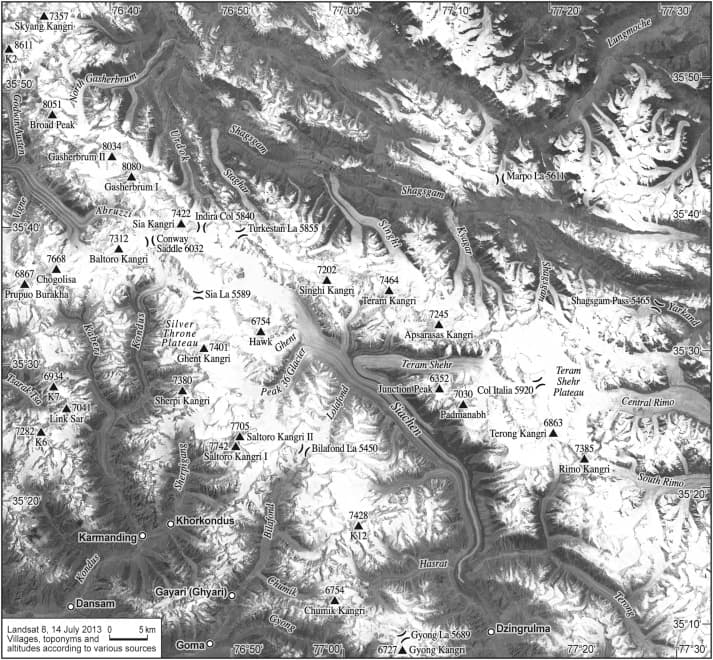
Siachen Glacier
The Siachen Glacier is a major glacier in the eastern Karakoram range of the Himalayas, notable for its significant length and strategic importance. It is the longest glacier in the Karakoram and the second longest in the world's non-polar regions, feeding vital river systems like the Indus. The glacier has become a site of prolonged military dispute between India and Pakistan.