
San Francisco Glacier
Mountain Glacier·Chile·South America·Alpine
The San Francisco Glacier is a temperate mountain glacier located in Monumento Natural El Morado Natural Park, approximately 100 kilometers from Santiago, Chile. It is a significant tourist attraction and a vital source of meltwater for Santiago, though it faces substantial retreat due to factors like black carbon pollution from mining and drought conditions.
Key Facts
- ›Located in Monumento Natural El Morado Natural Park, 100 km from Santiago, Chile.
- ›Spans an elevation range from 2,200 M to over 3,400 M.
- ›Considered a temperate mountain glacier, but its characteristics are obscured by debris cover.
- ›Faces significant retreat, with black carbon particulates contributing significantly to glacial loss.
- ›Classified as a natural monument by Chile to protect it from high melting rates.
- ›Its meltwater is crucial for Santiago, accounting for a substantial portion of the capital city's glacial melt discharge.

Known For
- Its role as a tourist attraction
- Its significant retreat due to environmental factors
- Its importance as a water source for Santiago
- Monumento Natural El Morado Natural Park
- Natural Monument By the Ministry of National Assets of Chile
About San Francisco Glacier
The San Francisco Glacier is a significant temperate mountain glacier situated within Monumento Natural El Morado Natural Park, approximately 100 kilometers from Santiago, Chile. It serves as a notable tourist attraction and plays a crucial role in the water supply for the capital city, contributing substantially to Santiago's meltwater discharge.
Glacier Characteristics and Retreat
This glacier spans a considerable elevation range, from 2,200 meters to over 3,400 meters above sea level. Despite being a temperate glacier, its surface is often covered in debris, making its specific characteristics challenging to observe. The San Francisco Glacier has experienced substantial retreat in recent decades, a trend mirrored by other glaciers in the region. This shrinkage is exacerbated by factors such as black carbon particulates, a byproduct of copper and lithium mining, which are estimated to account for nearly half of the observed retreat in the area. Furthermore, the prolonged Chilean Water Crisis, a severe drought period, has contributed to glacial shrinking, particularly between 2010 and approximately 2020.
Conservation and Ecological Impact
Recognizing the vulnerability of the San Francisco Glacier to melting, it was officially classified as a natural monument by the Ministry of National Assets of Chile on December 28th, 1994. This designation aims to protect the glacier and its surrounding environment. The glacier's meltwater is vital for Santiago, but its dwindling volume due to ablation not being offset by new snowfall is a growing concern. The ecological impact of this glacial loss extends to endemic species, such as the Andean Condor, whose foraging grounds are affected by shifting vegetation zones resulting from the reduction of high-elevation ice and snow cover.
Source: Wikipedia ↗
Frequently Asked Questions
Where is the San Francisco Glacier located?
The San Francisco Glacier is situated in the Monumento Natural El Morado Natural Park, about 100 kilometers away from Santiago, Chile. This area is a protected natural park.
What type of glacier is the San Francisco Glacier?
It is classified as a temperate, mountain glacier. However, its specific characteristics are difficult to observe due to a covering of debris.
Why is the San Francisco Glacier retreating?
The glacier is experiencing significant retreat, influenced by black carbon from mining activities and the Chilean Water Crisis, a prolonged period of low water availability. These factors have led to reduced snowfall and increased melting.
What is the importance of the San Francisco Glacier?
The glacier is a popular tourist attraction and a critical source of meltwater for Santiago. The Cajón del Maipo Basin, where it lies, provides up to 59% of the total glacial melt discharge to the capital.
What conservation efforts are in place for the San Francisco Glacier?
The San Francisco Glacier was designated a natural monument by the Chilean Ministry of National Assets on December 28th, 1994. This classification aims to protect the glacier from rapid melting.
How does the glacier's retreat affect local wildlife?
The loss of high-elevation ice and snow cover impacts endemic species, such as the Andean Condor. Their foraging grounds are altered by shifting vegetation zones due to these environmental changes.
Related Glaciers

Quelccaya Ice Cap
The Quelccaya Ice Cap, also known as Quenamari Ice Cap, is the second-largest glaciated area in the tropics, located in Peru's Andes mountains. It is a crucial source of meltwater for regional rivers and a vital archive of past climate data, preserved in its ice cores.

Batura Glacier
Batura Glacier is one of the largest and longest glaciers found outside of the polar regions, stretching 57 km in length. Located in the upper Hunza region of Gilgit-Baltistan, Pakistan, it flows west to east and is notable for its debris-covered lower portions and proximity to the Karakoram Highway, making it a subject of scientific study.
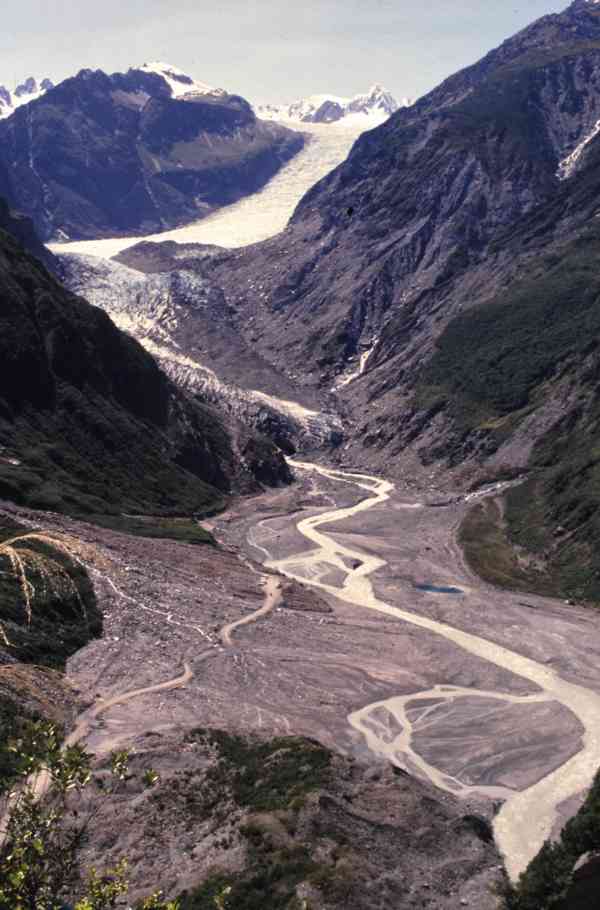
Fox Glacier
Fox Glacier, known to Māori as Te Moeka o Tuawe, is an 11.7-kilometer-long temperate maritime glacier situated in Westland Tai Poutini National Park on New Zealand's South Island. It is one of the most accessible glaciers globally, with its terminal face descending to a low elevation, making it a significant tourist attraction and a key indicator of climate change.