
Arctogalidia
Viverridae·Omnivorous, including insects, small mammals, nesting birds, fruits, frogs, and lizards.·Least Concern
The small-toothed palm civet (Arctogalidia trivirgata), also known as the three-striped palm civet, is a viverrid species native to dense forests across Southeast Asia and several Indonesian islands. Its name, Arctogalidia, translates to 'bear-weasel,' reflecting its appearance, and it is distinguished by three dark longitudinal stripes on its back and a long, fluffy tail.
Key Facts
- ›Native to dense forests from Northeast India to Southeast Asia and islands like Borneo, Sumatra, and Java.
- ›Characterized by black paws and three black longitudinal stripes on its back, which can appear as broken spots.
- ›Primarily solitary, arboreal, and nocturnal, though occasional group feeding has been observed.
- ›Omnivorous diet includes insects, small mammals, birds, fruits, frogs, and lizards.
- ›Listed as Least Concern by the IUCN, but threatened by habitat loss due to deforestation.

Dense Forests
- Blackish Grey Body
- Black Paws
- Three Black Longitudinal Stripes On the Back
- Some Individuals Have White Ear Tips
- Long, Tubular Tail
- Short Fur, Generally Tawny Or Buff Colored
- Darker Greyish Tawny Head
- Muzzle Is Brown With A White Streak From Nose To Forehead
- Coat Color Lightens With Age
- Solitary
- Arboreal
- Nocturnal
- Occasionally Observed Feeding Together In Treetops
- Occasionally Observed Resting In Physical Contact
Insects, Small Mammals, Nesting Birds, Frogs, Lizards
About Arctogalidia
The small-toothed palm civet, scientifically known as Arctogalidia trivirgata, is a viverrid species native to the dense forests of Southeast Asia, extending from Northeast India to the islands of Borneo, Sumatra, and Java. The genus name, Arctogalidia, translates to 'bear-weasel,' a nod to its physical characteristics, while its specific epithet, trivirgata, means 'three-striped' in Latin, referring to a key identifying feature.
Description and Distribution
This civet is characterized by its blackish-grey coat, black paws, and three distinct black longitudinal stripes running down its back, which can sometimes appear as broken spots. While generally tawny or buff in color, its coat lightens with age, and some individuals may exhibit white ear tips depending on their geographic origin. The species possesses a long, tubular tail and measures approximately 53 cm in body length, with a tail adding another 58 cm, and typically weighs around 2.4 kg.
Behavior and Reproduction
The small-toothed palm civet is primarily a solitary, arboreal, and nocturnal animal. Its lifestyle, spent in the treetops and active at night, makes detailed observation challenging. Despite its solitary nature, there have been rare instances of individuals observed feeding together and even resting in close physical contact. Their diet is omnivorous, encompassing insects, small mammals, birds, fruits, frogs, and lizards. Reproduction details are scarce, but it is believed they breed year-round, with females potentially having two to three litters annually, each consisting of two to three young. The gestation period is approximately 45 days.
Conservation
The small-toothed palm civet is classified as Least Concern by the IUCN, though its population is believed to be declining. The primary threats to its survival stem from habitat loss due to deforestation and agricultural encroachment on protected lands. The rarity of sightings makes population estimates difficult, contributing to ongoing debate about its precise conservation needs.
Source: Wikipedia ↗
Frequently Asked Questions
What is the scientific name for the small-toothed palm civet?
The scientific name for the small-toothed palm civet is Arctogalidia trivirgata. The genus name, Arctogalidia, means 'bear-weasel,' and the specific epithet, trivirgata, translates to 'three-striped.'
What does the small-toothed palm civet look like?
The small-toothed palm civet is typically blackish-grey with black paws and three dark stripes running down its back. Its body measures around 53 cm with a tail of 58 cm, and it weighs about 2.4 kg. Some individuals may have white ear tips, and their coat color generally lightens with age.
What do small-toothed palm civets eat?
These civets have a varied and omnivorous diet. They are known to consume insects, small mammals, nesting birds, fruits, frogs, and lizards.
Is the small-toothed palm civet social?
The small-toothed palm civet is primarily solitary, preferring to live and forage alone. However, there have been occasional sightings of them feeding together in treetops and even resting in physical contact.
What is the conservation status of the small-toothed palm civet?
The small-toothed palm civet is currently listed as Least Concern on the IUCN Red List. Despite this, their population is thought to be decreasing due to threats like deforestation and the illegal use of protected land for agriculture.
Related Hyenas, Civets & Mongooses

Civettictis
Civettictis is a genus of viverrid that encompasses the extant African civet and a recently identified extinct relative. The African civet, Civettictis civetta, is a solitary and nocturnal animal native to sub-Saharan Africa, known for its distinctive appearance and scent secretions.

Chrotogale
Owston's palm civet (Chrotogale owstoni) is a viverrid species native to Vietnam, Laos, and a small part of southern China. It is distinguished by its tawny buff-grey body with contrasting black markings on its back and tail and is currently listed as endangered due to habitat loss and over-exploitation.
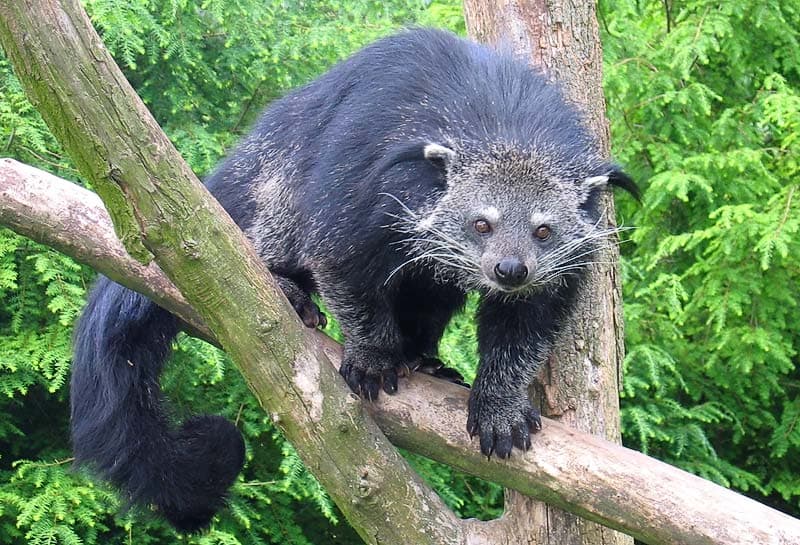
Arctictis
The binturong, also known as the bearcat, is an arboreal viverrid native to South and Southeast Asia. This species is unique for its popcorn-scented musk glands and its long, prehensile tail, which aids in its arboreal lifestyle. Primarily nocturnal, the binturong is an omnivore facing threats from habitat loss and illegal hunting, leading to its Vulnerable conservation status.