
Glasford
The Glasford crater, also known as the Glasford Disturbance, is a buried impact structure located in southern Peoria County, Illinois. Discovered in 1963, it is one of only two known meteor craters in Illinois and is significant for its potential connection to the Great Ordovician Meteor Shower and its possible influence on Earth's climate.
Key Facts
- ›Diameter: 4 kilometers (2.5 miles)
- ›Age: Estimated to be less than 430 million years old (Silurian or younger)
- ›Impact Period: Late Ordovician
- ›Location: Southern Peoria County, Illinois, USA
- ›Discovery: Identified in 1963 by the Central Illinois Light Company
- ›Morphology: Buried impact crater

About Glasford
Glasford Crater
The Glasford crater, also known by variations such as the Glasford Disturbance or Glasford Structure, is a significant buried impact crater situated in southern Peoria County, Illinois, United States. It stands as one of only two confirmed meteor impact sites within the state, making it a point of interest for geologists and researchers studying Earth's impact history.
Discovery and Characteristics
Discovered in 1963 by the Central Illinois Light Company (CILCO) during drilling operations for underground natural gas storage, the Glasford crater's presence was not immediately apparent from the surface. It is presently concealed beneath agricultural farmland, with its precise location near the intersection of Cowser and Kingston Mines roads. The crater measures approximately 4 kilometers (2.5 miles) in diameter. Its age is estimated to be less than 430 million years, placing its formation in the Silurian period or later, though the impact itself occurred in a marine environment during the Late Ordovician period.
Geological Significance and Potential Climate Impact
Geological investigations have revealed evidence such as shatter cones, indicative of a high-energy impact event. The energy released by the bolide is estimated to have been immense, possibly equivalent to thousands of nuclear bombs or multiple times the force of the Mount St. Helens eruption. Researchers, including geologist Charles Monson, have proposed a potential link between the Glasford crater and the Great Ordovician Meteor Shower. Further studies by Dr. Birger Schmitz suggest that dust dispersed from this impact event may have significantly affected Earth's climate, potentially contributing to the mid-Ordovician Ice Age. The meteorite itself is thought to have originated from the asteroid belt between Mars and Jupiter.
Source: Wikipedia ↗
Frequently Asked Questions
Where is the Glasford crater located?
The Glasford crater is situated in southern Peoria County, Illinois, in the United States. Its present-day location is near the intersection of Cowser and Kingston Mines roads, buried beneath agricultural farmland.
How large is the Glasford crater?
The Glasford crater has an estimated diameter of 4 kilometers (2.5 miles). It is one of the two known meteor craters in the state of Illinois.
When was the Glasford crater formed?
The Glasford crater is estimated to be less than 430 million years old, dating to the Silurian period or younger. It was formed in a marine environment during the Late Ordovician period.
How was the Glasford crater discovered?
The Glasford crater was discovered by the Central Illinois Light Company (CILCO) in 1963 while they were drilling wells for underground natural gas storage. It was identified as a probable impact structure.
Is the Glasford crater visible on the surface?
No, the Glasford crater is not visible from the surface. It is completely buried and covered by agricultural farmland in its current location.
What is the potential significance of the Glasford crater?
The Glasford crater may be connected to the Great Ordovician Meteor Shower. Research suggests that dust from this impact could have influenced Earth's climate and contributed to the mid-Ordovician Ice Age.
Related Impact Craters
Elbow
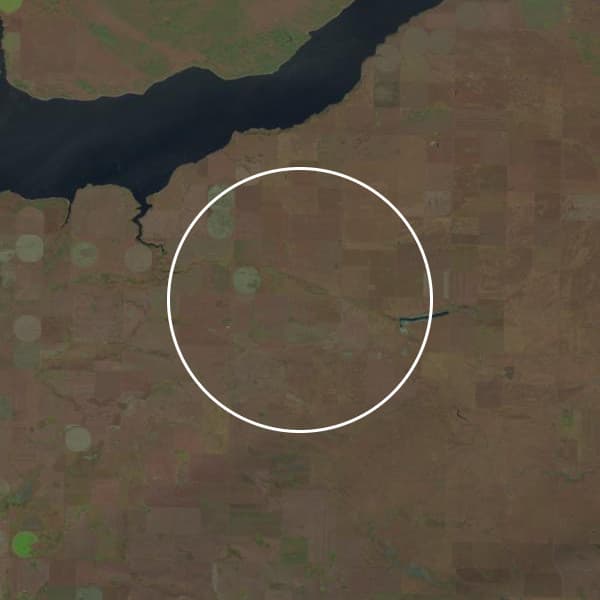
The Elbow crater is a buried impact structure located in Saskatchewan, Canada, measuring 8 kilometers in diameter. Its formation is estimated to have occurred approximately 395 million years ago during the Devonian Period. Although not visible on the surface due to younger sediment cover, its geological significance lies in its undisturbed nature for scientific study.
Kardla
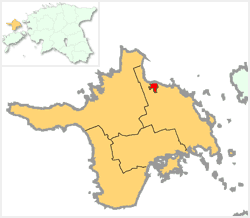
Kardla is a meteorite crater located in Estonia, measuring 4 kilometers in diameter. Estimated to be around 455 million years old, this astrobleme is not visible on the surface and is thought to have formed from the fragmentation of a large asteroid, potentially linked to other impact events in Sweden.
Tvaren
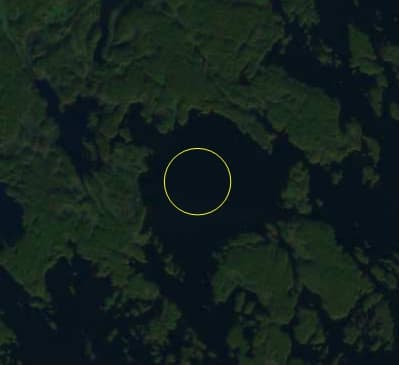
Tvären is a circular bay in Sweden that contains an ancient, buried impact crater. The crater, approximately 2 kilometers in diameter, was discovered using reflection seismology and is estimated to be around 455 million years old, dating back to the Late Ordovician period. An asteroid, 7771 Tvären, is named in honor of this geological feature.