
Kardla
Kardla is a meteorite crater located in Estonia, measuring 4 kilometers in diameter. Estimated to be around 455 million years old, this astrobleme is not visible on the surface and is thought to have formed from the fragmentation of a large asteroid, potentially linked to other impact events in Sweden.
Key Facts
- ›Diameter: 4 km
- ›Age: Approximately 455 million years (Late Ordovician)
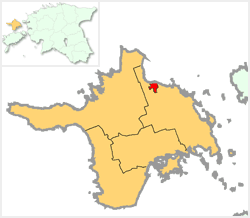
- ›Location: near Kärdla, Estonia
- ›Not exposed at the surface
- ›Associated with the breakdown of a 100km asteroid
- ›Potentially linked to Tvären and Lockne craters in Sweden
TväRen Crater, Lockne Crater
About Kardla
Kardla, also known as the Kärdla astrobleme, is a significant impact crater located in Estonia, near the town of Kärdla. This subterranean structure measures approximately 4 kilometers in diameter. Scientific estimations place its age at around 455 million years, dating its formation to the Late Ordovician geological period.
Geological Context and Significance
The formation of Kardla is thought to be linked to a larger celestial event: the fragmentation of a substantial asteroid, estimated to be around 100 kilometers in size. This cataclysmic event may have been responsible for multiple impact structures, with researchers suggesting a possible connection to the Tvären and Lockne craters found in Sweden. Unlike many surface features, the Kardla crater is not exposed and remains hidden beneath the Earth's surface, making its study reliant on geophysical and geological surveys.
Source: Wikipedia ↗
Frequently Asked Questions
What is the size of the Kardla crater?
The Kardla crater has a diameter of 4 kilometers (2.5 miles).
How old is the Kardla crater?
The age of the Kardla crater is estimated to be about 455 million years, placing its formation in the Late Ordovician period.
Where is the Kardla crater located?
Kardla crater is situated near the town of Kärdla in Estonia.
Is the Kardla crater visible on the surface?
No, the Kardla crater is not exposed at the surface and is therefore not visible today.
What is believed to have caused the Kardla impact?
The formation of the Kardla crater is associated with the fragmentation of a large asteroid, approximately 100 kilometers in size.
Are there other impact craters related to Kardla?
It is suggested that the same asteroid breakup event that created the Kardla crater may have also formed the Tvären and Lockne craters in Sweden.
Related Impact Craters

Neugrund
The Neugrund crater is a significant impact structure located off the coast of Estonia, lying at the bottom of the sea. Its formation is estimated to have occurred around 470 million years ago during the Ordovician period, though more recent research suggests a possible Cambrian origin around 535 million years ago. The crater is notable for its substantial size and the geological evidence, such as gneissic breccia boulders found on Osmussaar island, that points to a powerful impact event.

Kaali
The Kaali crater group, located on the Estonian island of Saaremaa, is a significant impact structure formed by a meteorite event. The largest of the nine craters contains Lake Kaali and is surrounded by eight smaller impact features. Its formation, estimated to be shortly after 1530-1450 BC, is notable for occurring in a populated area and has been linked to regional mythology as a sacred site.

Glasford
The Glasford crater, also known as the Glasford Disturbance, is a buried impact structure located in southern Peoria County, Illinois. Discovered in 1963, it is one of only two known meteor craters in Illinois and is significant for its potential connection to the Great Ordovician Meteor Shower and its possible influence on Earth's climate.