
Granby
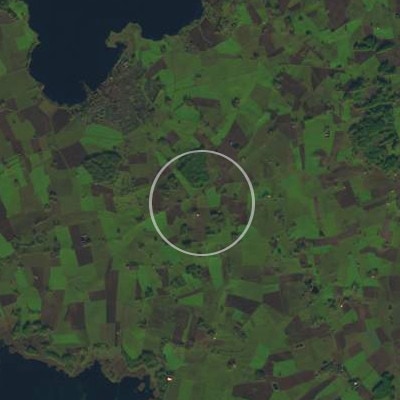
Granby is an impact crater located in Östergötland, Sweden, southeast of Vadstena. It is estimated to have formed approximately 470 million years ago during the Middle Ordovician period and has a diameter of 3 kilometers. The crater is not exposed at the surface, making its identification and study challenging.
Key Facts
- ›Located in Östergötland, Sweden, southeast of Vadstena.
- ›Estimated age of 470 million years (Middle Ordovician).
- ›Diameter of 3 kilometers (1.9 miles).
- ›Not exposed at the surface.
- ›Discovered as an impact structure through geological study.
About Granby
Granby Impact Crater
The Granby impact crater is a geological feature located in the Östergötland region of Sweden, situated to the southeast of Vadstena. This ancient impact scar is estimated to have formed around 470 million years ago, during the Middle Ordovician period. The crater measures approximately 3 kilometers in diameter.
Due to its age and geological history, the Granby crater is not exposed at the Earth's surface. This means it is buried beneath subsequent rock layers, making it invisible from ground level and requiring specialized geological surveys for its detection and study. Its existence underscores the long-term geological processes that shape our planet through extraterrestrial impacts.
Source: Wikipedia ↗
Frequently Asked Questions
Where is the Granby impact crater located?
The Granby impact crater is situated in Östergötland, Sweden, specifically to the southeast of the town of Vadstena.
How old is the Granby impact crater?
The impact event that formed the Granby crater is estimated to have occurred approximately 470 million years ago, during the Middle Ordovician geological period.
What is the size of the Granby impact crater?
The Granby impact crater has an estimated diameter of 3 kilometers (1.9 miles).
Is the Granby impact crater visible on the surface?
No, the Granby impact crater is not exposed at the surface, meaning it is buried beneath later geological deposits and not readily visible.
Related Impact Craters
Clearwater East
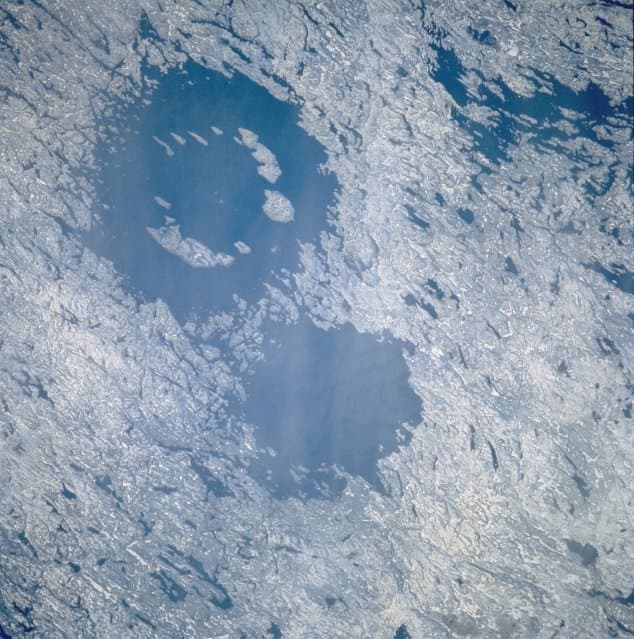
Clearwater East is one of two impact craters, forming the Clearwater Lakes in Quebec, Canada. This complex crater, with a diameter of 26 km, is estimated to be around 460-470 million years old, dating back to the Middle Ordovician period. Its central peak is submerged beneath lake water and sediments, but its presence has been confirmed through geological surveys and core drilling.

Rock Elm
The Rock Elm Disturbance is an impact crater located in Pierce County, Wisconsin, United States. The crater, approximately 6 km in diameter, is notable for its association with the discovery of reidite, a rare high-pressure mineral formed under intense impact conditions. Its age is estimated to be between 455 and 430 million years old, placing it in the Middle Ordovician Period.

Decorah
The Decorah crater, located near Decorah, Iowa, is a potential impact structure estimated to be 5.6 km in diameter. It is believed to have formed approximately 470 million years ago during the Middle Ordovician period when a meteor around 200 meters wide struck the Earth, pushing down the underlying bedrock. Despite its significant size, no surface evidence of the impact remains due to burial by the Winneshiek Shale.