
Kaali
The Kaali crater group, located on the Estonian island of Saaremaa, is a significant impact structure formed by a meteorite event. The largest of the nine craters contains Lake Kaali and is surrounded by eight smaller impact features. Its formation, estimated to be shortly after 1530-1450 BC, is notable for occurring in a populated area and has been linked to regional mythology as a sacred site.
Key Facts
- ›Consists of nine meteorite craters on the Estonian island of Saaremaa.
- ›The main crater has a diameter of 110 meters and a depth of 22 meters.
- ›Estimated formation date is shortly after 1530-1450 BC, making it around 3,500 years old.
- ›The impact energy was comparable to the Hiroshima bomb blast.
- ›Archaeological evidence suggests it was a cult site with evidence of ritual sacrifices.
- ›The meteoritic iron from the Kaali event has been identified in Bronze Age artifacts.

About Kaali
Kaali Impact Structure
The Kaali impact structure is a notable group of nine meteorite craters situated in the village of Kaali on the Estonian island of Saaremaa. The most recent scientific estimates place its formation shortly after 1530–1450 BC, approximately 3,500 years ago. This event is significant as it is one of the few known impact events to have occurred in a populated area, leaving a lasting mark on the landscape and local culture.
Formation and Characteristics
The impact event is thought to have occurred in the Holocene epoch. The meteor responsible for the Kaali craters is estimated to have had a mass of between 20 and 80 metric tonnes and an impact velocity of 10 to 20 km/s. Upon entering the atmosphere, the meteor broke into fragments. The largest fragment created the main crater, which measures approximately 110 meters in diameter and 22 meters in depth. This crater now contains Lake Kaali (Kaali järv). Eight smaller craters, ranging from 12 to 40 meters in diameter, are also associated with this bombardment and are located within one kilometer of the main crater.
The explosion generated an estimated energy of about 80 TJ, comparable to the blast of the Hiroshima bomb. This impact incinerated vegetation within a six-kilometer radius. Theories suggest that a larger fragment may have fallen into the sea, potentially triggering seismic waves and tsunamis in the Baltic Sea.
Discovery and Significance
Before the 1930s, the origin of the Kaali craters was a subject of various hypotheses, including theories of volcanic activity and karst processes. The meteoritic origins were definitively established by Ivan Reinvald between 1928 and 1937. The site is recognized for its geological significance and has been the subject of numerous studies regarding its age, formation, and the composition of its ejecta.
Kaali as a Cult Site and Mythological Connections
Beyond its geological importance, Kaali is recognized as a significant cult site. Archaeological excavations have revealed a fortified settlement dating to the pre-Roman Iron Age, suggesting the area was considered more than just a dwelling place. Unique silver treasures and a silver ring, dated between 500 BC and 450 AD, further indicate its special status. Evidence of animal sacrifices, including numerous bones of domestic animals, points to ritualistic practices within a stone wall that likely surrounded the lake.
Scholars propose that the Kaali impact event played a prominent role in regional mythology. It is considered a sacred lake, and stories from Finnish mythology, such as those in the Kalevala epic, may originate from this event. One theory posits that Saaremaa could be the legendary island of Thule, with the name Thule potentially linked to the Finnic word for fire and the folklore depicting the birth of the Kaali crater lake as the place where "The sun went to rest."
Source: Wikipedia ↗
Frequently Asked Questions
When was the Kaali crater formed?
Estimates for the formation of the Kaali impact structure vary, but the most recent data suggests it occurred shortly after 1530-1450 BC, approximately 3,500 years ago. Some analyses of silicate spherules in Estonian bogs indicate a possible age of around 7,600 years, while other studies point to a much younger age in the 4th century BC.
What caused the Kaali craters?
The Kaali craters were formed by the impact of a meteor that broke into pieces at an altitude of five to ten kilometers. The largest fragment created the main crater, while eight smaller fragments formed associated craters nearby.
What is the size of the main Kaali crater?
The largest crater in the Kaali group, which now contains Lake Kaali, has a diameter of approximately 110 meters (360 feet) and a depth of 22 meters (72 feet).
What were the effects of the Kaali impact?
The impact generated an explosion with an energy of about 80 TJ, comparable to the Hiroshima bomb. It incinerated vegetation within a six-kilometer radius. There is also speculation that a larger fragment falling into the sea could have triggered tsunamis.
Was Kaali a significant site in ancient times?
Yes, Kaali is believed to have been a cult site. Archaeological findings, including a fortified settlement and unusual silver treasures, suggest it was a place of ritual sacrifice. The lake was likely surrounded by a stone wall in ancient times.
Is there any connection between Kaali and mythology?
Scholars believe the Kaali impact event is prominently featured in regional mythology, potentially inspiring stories in Finnish mythology like those in the Kalevala epic. It was considered a sacred lake, and some theories suggest Saaremaa might be the legendary island of Thule.
Has meteoritic iron from Kaali been found elsewhere?
Yes, in 2023, archaeologists analyzed a Bronze Age arrowhead found in Switzerland. Its composition indicated it was made of meteoritic iron originating from the Kaali meteorite, demonstrating its dispersal.
Related Impact Craters
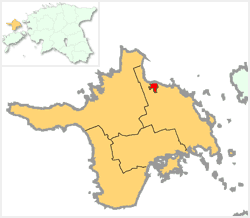
Kardla
Kardla is a meteorite crater located in Estonia, measuring 4 kilometers in diameter. Estimated to be around 455 million years old, this astrobleme is not visible on the surface and is thought to have formed from the fragmentation of a large asteroid, potentially linked to other impact events in Sweden.

Neugrund
The Neugrund crater is a significant impact structure located off the coast of Estonia, lying at the bottom of the sea. Its formation is estimated to have occurred around 470 million years ago during the Ordovician period, though more recent research suggests a possible Cambrian origin around 535 million years ago. The crater is notable for its substantial size and the geological evidence, such as gneissic breccia boulders found on Osmussaar island, that points to a powerful impact event.

Boxhole
Boxhole is a young impact crater located in the Northern Territory, Australia, approximately 180 km northeast of Alice Springs. Discovered in 1937, it is a Holocene-era impact event, estimated to be around 5,400 years old. The crater is notable for being the second impact structure described in Australia and for the discovery of nickel-bearing metallic fragments and an 82 kg iron mass.