
Neugrund
The Neugrund crater is a significant impact structure located off the coast of Estonia, lying at the bottom of the sea. Its formation is estimated to have occurred around 470 million years ago during the Ordovician period, though more recent research suggests a possible Cambrian origin around 535 million years ago. The crater is notable for its substantial size and the geological evidence, such as gneissic breccia boulders found on Osmussaar island, that points to a powerful impact event.
Key Facts
- ›Diameter of 8 km.
- ›Estimated age of approximately 470 million years (Ordovician), with recent research suggesting a possible Cambrian origin (around 535 million years ago).
- ›Located at the bottom of the sea, it is not exposed at the surface.
- ›Associated with gneissic breccia boulders found on the nearby island of Osmussaar.
- ›Potentially linked to the Ordovician meteor event, although its Cambrian age possibility modifies this theory.

KäRdla Crater
Gneissic Breccia
About Neugrund
Neugrund Crater
The Neugrund crater is a significant impact structure located beneath the sea off the coast of Estonia. It measures approximately 8 kilometers in diameter. While previously thought to have formed around 470 million years ago during the Ordovician period, more recent research indicates a potential origin in the Cambrian period, approximately 535 million years ago.
Geological Context and Evidence
This underwater crater is not visible on the Earth's surface. However, geological evidence supporting the impact event includes boulders of gneissic breccia discovered on Osmussaar, a nearby island. These boulders are believed to have been ejected by the force of the explosion.
Possible Connection to Meteor Events
It has been proposed that the Neugrund crater was formed during the Ordovician meteor event, a hypothetical scenario involving a large asteroid shifting its orbit to collide with Earth. However, the newer research suggesting a Cambrian age for the impact may necessitate a revision of this theory and its direct link to the Ordovician event.
Source: Wikipedia ↗
Frequently Asked Questions
Where is the Neugrund crater located?
The Neugrund crater is located in Estonia, beneath the sea. Evidence such as ejected boulders can be found on the nearby island of Osmussaar.
How large is the Neugrund crater?
The Neugrund crater has a diameter of approximately 8 kilometers (5.0 miles).
When was the Neugrund crater formed?
Initially, the Neugrund crater was estimated to have formed around 470 million years ago during the Ordovician period. However, more recent studies suggest a potential origin in the Cambrian period, approximately 535 million years ago.
Is the Neugrund crater visible on the surface?
No, the Neugrund crater is located at the bottom of the sea and is not exposed at the surface.
What evidence exists for the Neugrund impact?
Boulders of gneissic breccia found on the coast of Osmussaar island are believed to be ejecta from the Neugrund explosion. These rocks provide geological evidence of the impact event.
Related Impact Craters
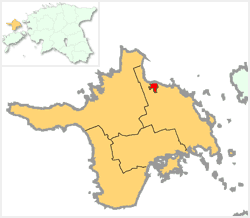
Kardla
Kardla is a meteorite crater located in Estonia, measuring 4 kilometers in diameter. Estimated to be around 455 million years old, this astrobleme is not visible on the surface and is thought to have formed from the fragmentation of a large asteroid, potentially linked to other impact events in Sweden.

Kaali
The Kaali crater group, located on the Estonian island of Saaremaa, is a significant impact structure formed by a meteorite event. The largest of the nine craters contains Lake Kaali and is surrounded by eight smaller impact features. Its formation, estimated to be shortly after 1530-1450 BC, is notable for occurring in a populated area and has been linked to regional mythology as a sacred site.

Ames
The Ames crater is a significant buried meteorite impact structure located in Major County, Oklahoma. Discovered in 1991, its geological importance is amplified by the substantial oil and gas reserves found within it, making it one of the largest of several impact craters associated with oil production in the United States.